WHIRL (What Have I Read Lately) Books is a site for readers to find books for themselves and their book clubs. Liz at Literary Masters runs book groups and literary salons where we "dig deep" into literary treasures.
Showing posts with label Literary Masters book groups. Show all posts

Thursday, December 3, 2015

Vendela Vida at a Book Talk: Sign Me Up!

I just returned from a local school's book fair where the featured speaker was Vendela Vida, author of the recently released The Diver's Clothes Lie Empty.  What a lovely person Ms. Vida seems to be, which is, of course, irrelevant, but still--I think the world needs more lovely people.  She read from her new novel, and now I can't wait to read it!

You'll remember from one of my earlier WHIRL posts that I loved her novel The Lovers. (Click here to see what I had to say about that.) This new book seems to be exploring themes of identity--of who we are and what shapes who we become.  Written in the second person, this sounds like a book Literary Masters members would love to 'dig deep' into!

Have you read The Diver's Clothes Lie Empty?  What did you think? 

Thursday, November 5, 2015

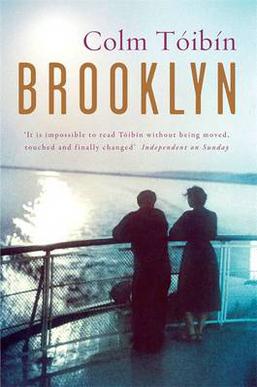
Brooklyn--the Book now Brooklyn--the Movie!

This is exciting news!  I've often thought that it would be fun to devote an entire season of Literary Masters to reading books that have been made into movies.  That way, we could all enjoy a multimedia experience of each story.

And how FUN to come up with the list!  One outstanding book that has recently been turned into a film is Brooklyn, which was written in 2009 by Irish author Colm Toibin.  I read it and loved it; I even blogged about it.  Click here for my original post.

The book won many fans and much critical acclaim.  It won the 2009 Costa Novel Award, was shortlisted for the 2011 IMPAC Dublin Award, and made it onto the longlist for the 2009 Man Booker Prize.  And now, in 2015, it has been made into a film by Fox Searchlight Pictures.  It stars Saoirse Ronan, Emory Cohen, Domhnall Gleeson, Jim Broadbent, and Julie Walters, among others.

The film is already garnering great reviews.  Here's one from Flavorwire:
http://flavorwire.com/545905/brooklyn-is-a-portrait-of-leaving-and-finding-home-so-evocative-it-might-make-you-weep

And another one from the New York Times:
 http://www.nytimes.com/2015/11/04/movies/review-resettling-the-meaning-of-home-in-brooklyn-with-saoirse-ronan.html?_r=0

And according to the Washington Post, even Colm Toibin loves the film:
 https://www.washingtonpost.com/entertainment/books/colm-toibin-loves-the-new-movie-version-of-his-brooklyn/2015/11/02/14db7ce6-8103-11e5-8ba6-cec48b74b2a7_story.html

I don't know about you, but I can't wait to see it!  Watch this trailer and I bet you'll feel the same!


Let me know if you go, and tell me what you think

Wednesday, September 23, 2015

Literary Masters Reads I Am Malala!

One of the books that Literary Masters members will be reading this month is I Am Malala, Young Readers Edition by the Nobel laureate Malala Yousafzai.  Unless you've been living under a rock, actually even if you've been living under a rock, you know that in 2012, the Taliban shot this young Pakistani girl in an attempted assassination because she was advocating for girls' rights to an education.

This is an extraordinary story told by a truly remarkable young woman.  I encourage you to read the Young Readers Edition with your children; you will be amazed.  And you may even wonder, "What can I do to help?"  Indeed, a frequently asked question in the discussion of this book is "What can be done to help Malala in her quest to help get more girls an education?"

Well, every little bit helps.  And as Malala is showing the world, one person really can make a difference!


Literary Masters is thrilled to be teaming up with Schoola, the wonderful online school fundraising site, to benefit the Malala Fund.  Malala-Schoola bags will be distributed at our Literary Masters meetings, and if the girls choose, they can fill the postage-paid bags with used clothing and drop them off at the post office or leave them on their front doorsteps for the mail man to pick up and bring to the Schoola warehouse.  Schoola will sell the clothes online and donate 40% of the sale of every item to the Malala Fund, a non-profit organization whose aim is to empower girls through education.

Now, this is all very exciting timing because the documentary film He Named Me Malala is premiering during September and October, so if you want to have a multi-media experience, watch out for the film coming to a theater near you.  Here is a  preview.

I hope you'll take the time to read this book with a young person, and even better--talk about it with them! 

Find out more about Schoola here:
and find out more about the Malala Fund here:


Tuesday, October 21, 2014

Should Your Book Club Read Life After Life by Kate Atkinson?

YES.  In fact, I don't see how you could read this book and NOT discuss it--really digging deep like we do in our Literary Masters salons--with others.  Life After Life by Kate Atkinson was the October selection for Literary Masters book groups and salons, and it was a hit!

This book not only cries out for a post-reading discussion, it also demands to be read twice.  Honestly, the second reading makes all the difference--and makes the first reading worth the time.  So what can your book club discuss?

THIS POST CONTAINS SPOILERS!!!

Warp speed plot summary:
Set mainly in England between 1910 and 1967, this novel tells the story of Ursula Todd and her family who live at Fox Corner.  The thing is, Ursula is a very unique character; she keeps dying and coming back to life.  Each time she returns, the life she leads is different from the one before. Sometimes it's slightly different, and other times it's radically different.  So what is going on?  We readers wonder this as we follow Ursula through her many lives and through the history of the time, especially the wars and the Blitz.

If this sounds like science fiction or fantasy to you, I would argue that it is not.  This book is so well done--as a piece of realistic fiction that is also perhaps a thought experiment--I urge you to give it a try.  Twice!

Your book club should "dig deep" into the following:

Two main things seem to be going on in this book: the exploration of philosophies or life beliefs, and a telling of the history of England.  As for the first:

You'll want to really ask yourselves: what is going on with Ursula?  Is she being reincarnated?  Is she living parallel lives?  Is there some sort of circularity happening, or is it more like a palimpsest?  Is the book saying anything about all of the above?  Or is it merely exploring all these concepts?  A good place to start is to ask yourselves:  Is Ursula conscious of what is going on?  Is she consciously making choices in her life that set her on a different course?

Or is she dreaming?  Or crazy?

Related to all of the above, you'll want to discuss the idea of eternal recurrence.  Read the epigraph together and talk about the importance of Nietzsche's concepts.  (If you don't have a philosophy major in your group, just do a bit of googling!)

Whatever you decide is happening with Ursula, is it also happening with the other characters?  Why, for instance, does Ursula's mother have scissors at one of the births?  What does this mean if it is happening with all the other characters?

These questions will no doubt carry you into the area of fate vs. randomness.  You'll want to discuss how much agency or free will Ursula and the other characters have.  How much free will do you think YOU have?  Is your life fated, or are you its master?  What is the book saying about this?  Is there a point to Ursula living her life over and over again?  Does she learn to improve it in any way?  Or is that irrelevant?  Is she finding ways to have agency over her fate?  Is that even possible?

Another major concept you'll want to explore is whether there is a core or essence to a person.  Is there a core to Ursula?  Is she essentially the same throughout all her lives?  Or is her identity shaped largely by her experiences?  Which points in the book do you think are pivotal with regard to Ursula's identity?

What about the other characters?  Does each one change depending on the life that s/he is experiencing?  Two interesting characters to "dig deep" into are Sylvie and Izzy.  This touches on the history of England aspect of the book also.  Think about the change from a traditional, pastoral, idyllic England (set in cozy Fox Corner) morphing into a modern, post-war, industrialized England.  Where do Sylvie and Izzy fit in this picture?  Where do the others fit, and what is the book saying about this change?

This may take you into a discussion of the role of women and what choices they had at different times of history. 

You'll want to discuss how the wars and particularly the Blitz are almost characters in the book.  There are graphic scenes of devastation in England but also in Germany, when Ursula and Frieda are victims of the Allied bombing.  What is the point of this juxtaposition?  Ursula has a crush on her Jewish neighbor in England but marries a German Nazi in another life.  Izzy's son is adopted by a German couple so could be dropping bombs on England while Teddy is dropping them on Germany.  What point is the book making?

You'll no doubt want to discuss the imagery in the book.  What significance does snow have?  What about all the animals?  Ursula means little bear, Teddy is a teddy bear, Hugh refers to Pooh bear--what's up with the bears?  What about foxes?  What does Fox Corner represent and why is it called that?  Ursula's last name is Todd, which means fox!  Yet she transforms into Miss Woolf on p.446--what does that mean?  There are many wolves, especially in the German section.  Adolf means wolf.  However, Ursula marries Jurgen Fuchs, which means fox!  And as I just mentioned, she admires and transforms into Miss Woolf!  Foxes vs. wolves--significant?

There is much more imagery to explore--you will no doubt come up with many more questions than answers!  Kate Atkinson seems to be, among other things, having fun with all the names in the book.  And you'll want to discuss all the literary references.  Is Maurice purposely named?  Are we meant to think of E.M. Forster's "homosexual novel" and thus make the connection that Maurice is a closeted gay man whose repression of his true self has resulted in his being a mean person?  Is Pamela purposely named?  Are we meant to think of Samuel Richardson's novel Pamela: Or, Virtue Rewarded?  Is she virtuous?  Does she get her reward?  Is the Miss Woolf mentioned above supposed to make us think of Virginia Woolf?

You'll want to discuss Hitler.  What role does Hitler play in this book?  Why does the book start with the scene that it does?  Does Ursula kill Hitler?

You'll also want to discuss the book as a meta-fiction.  Talk about how it's exploring the writing process itself.  You can start with the chapters titled "Snow," where every story starts over; they are like a clean sheet of paper.

This book was like a Rorschach test.  I think Stanley Fish would have enjoyed observing the many Literary Masters salons in which members read their own experiences into this novel.  The interpretations were wide-ranging and fascinating--I could go on and on discussing this book and discover new ways of looking at it each time.  In that way, it's very much like life.

There is so much more to this book, but time is flying and I must attend to other aspects of this life I am living.  Hopefully this will get you started in your discussion!  Let me know how it goes!

Tuesday, June 24, 2014

Do You Want Your Child to Read?


A silly question, right?  We all want our children to read, and ideally, we'd like them to read books! Parents who know about  Literary Masters frequently approach me and ask, "How can I get my child to read more?"  This is what I tell them:  If you want your child to read, YOU must read.  It's like Robert Fulghum, the author of All I Really Need to Know I Learned in Kindergarten, said so eloquently, "Don't worry that children never listen to you; worry that they are always watching you."

Children model their parents' behavior (scary concept, I know); what their parents DO is much more important than what their parents SAY.  So, if you want your children to read, make it clear that your home values reading.  Carve out some evening time to read and suggest your children do the same.  Even better, carve out some time to read together.  And best of all, join a Literary Masters Parent/Child book group to discuss what you've read together.  Not only will you learn something about the book--I guarantee you, you will learn something about your child!

Click here for an awesome article that Frank Bruni wrote for the NY Times.


Tuesday, May 6, 2014

A Roll of a WHIRL!

As you well know, WHIRL stands for What Have I Read Lately, and I have to say, I have been on a roll!  I won't have time to do full reviews or even "Should Your Book Club Read..." reviews--sorry!  But I can give you a "blink" of what I think.

So, What Have I Read Lately?


Someone by Alice McDermott.  Sigh.  So good.  I'm resisting returning it to the library because I want to ignore all my other books and pick this back up and read it again.  Savor it, more like it.  Irish immigrants living in Brooklyn, female narrator remembering her life.  Nothing of importance in her life--except to her, of course.  Filled with the ordinariness of life.  Just someone's life.  Five stars, if I gave stars.

Benediction by Kent Haruf.  Another quiet book to savor, this time with characters on the Colorado plains.  Spare prose, simple plot (or is it?)--another look at the ordinariness of everyday life--and how extraordinary it can be when summed up.  A dying man whose family is taking care of him--his present, his past, and how they intertwine.  Five stars, if I gave stars.

All Our Names by Dinaw Mengestu.  I've been wanting to read something by this author from Ethiopia, the recipient of the MacArthur Genius Grant.  This novel goes back and forth between Isaac in Uganda to Helen in the US Midwest.  Isaac has fled war-torn Ethiopia and Uganda and landed in the Midwest with Helen as his social worker.  Helen has never been beyond the end of her nose.  A very readable novel but not earth shattering.  Three and a half to four stars.  If I gave stars, that is.

God's Hotel by Victoria Sweet.  Our Literary Masters selection for the month of April, this non-fiction account of the only alms hospital left in the United States--Laguna Honda in San Francisco--raises some serious questions.  The author's thesis is that we should incorporate much more slow medicine (closer to pre-modern medicine) into our health care system because we would save lives and money in the long run.  Important issues here.  Literary Masters members loved the book for the most part, although there was a small minority who found the author insufferable.  Four stars.  If...

Telex from Cuba by Rachel Kushner.  Our Literary Masters selection for the month of March, this novel will take you back to the 50's with the added bonus of a trip included--to Cuba!  Here's the story of the American ex-pats and Cuban revolutionaries mixing it up--right before Castro successfully takes over Cuba.  The prose is as lush as the Cuban jungle and as intoxicating as the exc-pats' nightly cocktails.  We loved it!  Four and a half stars

The Age of Innocence by Edith Wharton.  Literary Masters read The Innocents by Francesca Segal for our February selection, which is a re-imagining of Wharton's classic.  For that review, click here.  To read these two book together is a real treat, but if you don't have the time, read this one!  It is a sparkling gem of a novel!  New York City in the late 1800's--and the social climbing involved in surviving there.  The more things change, the more they...
Five stars.

Well, what have YOU read lately?

Thursday, May 1, 2014

Should Your Book Club Read The Good Lord Bird by James McBride?

Being the founder of Literary Masters, a literary society of over 200 members (and growing rapidly--thank you, all of you!), I read A LOT.  So, perhaps I am more critical than most.  I don't want superfluous words or pages; I want tight writing.  Now, I have to thank those over at the National Book Award for introducing me to James McBride--wow, can he write!  His novel, The Good Lord Bird won the award this past year, and I just finished it.  I have already requested Song Yet Sung from the library.  This author can write--his use of language is truly inspiring--and he can spin a tale that will keep you turning the pages--and he can tug at your heartstrings while tickling your funny bone.  He really can write!  The only gripe I have with this book is that it's too long--it needed an editor.  I couldn't put the book down for the first 100 pages, but the next 200 were inconsistent--too much repetition and scenes dragged on a bit.  The last 100 pick up speed again--and when I say speed, I mean page-turning into the wee hours of the night speed.  So, that's my uber-critical take on this otherwise outstanding novel.  Is it worth reading?  Yes!  Is it worth discussing with your book group?  Yes!

So what can your book club discuss?

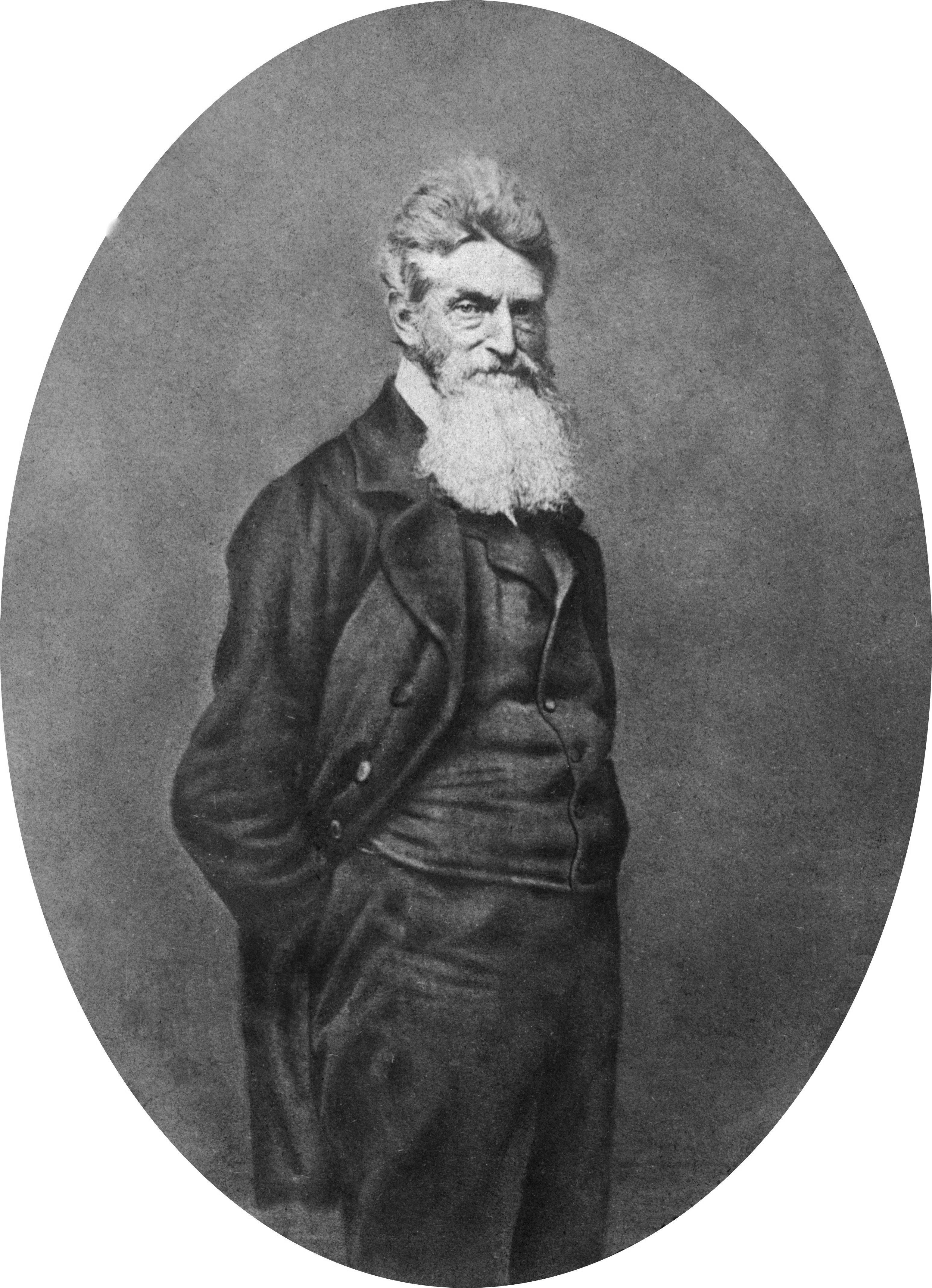
Warp-speed plot summary:  It's 1856 and Henry, a slave in Kansas Territory (where pro-slavers and anti-slavers are up against each other), meets Old John Brown, the legendary abolitionist.  Old John Brown, who sees things the way he sees them, not only gives Henry a new name--Onion, he also gives him a new gender, turning him from Henry to Henrietta.  Onion joins John Brown, or the Captain, on his quest to free all the slaves--just as God has ordained--and travels with him for the following years until the big event at Harpers Ferry, which will precipitate the Civil War.

Henry tells us the story and rips us along on his adventure much like he was ripped along by Old John Brown.  Fasten your seat belts, for you are in for a ride!

You'll want to discuss the language!!!  You'll want to savor it for sure, but you'll want to consider why the author used this sort of wild west/Huckleberry Finn/caricature style to tell his tale.  How does it affect your reading experience?  How does it affect the meaning of the book for you?  What purpose does the humor serve?

You'll want to discuss why Henry becomes Henrietta for so long, and what makes him revert to Henry.  Are identity issues being explored here?  Or is it saying more about Old John Brown's view of the world, seeing what he wanted to see.  Or is John Brown creating the world he wants?  Is Onion able to do more as a girl than a boy?  Or is the author subverting traditional notions of male/female abilities?  Is he making a statement about the time, 1856?

You'll also want to discuss why Onion is half black and half white.  Is this significant?  Onion is a child, so he can see things to which adults have become blinded.  Does his straddling the two races give him insight that others do not have?  And he is also straddling two genders, so he's got quite a lot going on.  What significance does all this hold?  And why "Onion"?

You'll want to discuss Onion in depth.  Hero?  Villain?  Neither?  Reliable narrator?  What does he learn on his journey?  What was his purpose to Old John Brown?

You'll want to discuss Old John Brown in depth also.  Hero?  Villain?  Neither?  You'll want to talk about his religious zealotry, his motivations for abolishing slavery, his tactics for doing so, and whether this portrait of him is fair.  What values and mores informed his actions?

You'll want to discuss Frederick Douglass and his portrayal in this story.  What point is being made by his characterization?

You'll want to talk about the role of slaves and the role of free blacks in dealing with slavery and abolition.  This book makes it clear that it was a complex issue, so you'll want to "dig deep" into what exactly the book is saying about this.

You'll want to discuss the title and the significance of the bird itself and of the feathers from that bird.  Are the colors significant?

You'll want to discuss whether this is an important book and why or why not.  Is it an essential addition to the literature about slavery and the civil war?  Can it help race relations today?

And of course, you'll want to talk about the messages or overall point of the book.  You'll want to ask yourselves, What is this book about???

There's lots more to discuss, but that ought to get you started!  Enjoy!


Wednesday, April 16, 2014

Should Your Book Club Read The Cellist of Sarajevo?

If, like billions of others, you regularly read this blog, you know that I love my local library.  Linda, one of the stellar librarians, recommended this book to me.  How on earth did I miss this book when it first came out in 2008?  That's when I was starting Literary Masters so I was busy, yes, but this gem of a novel would have been a great literary treasure to 'dig deep' into.  In fact, my answer to whether your book club should read The Cellist of Sarajevo is a resounding YES!

So what can your book club discuss?

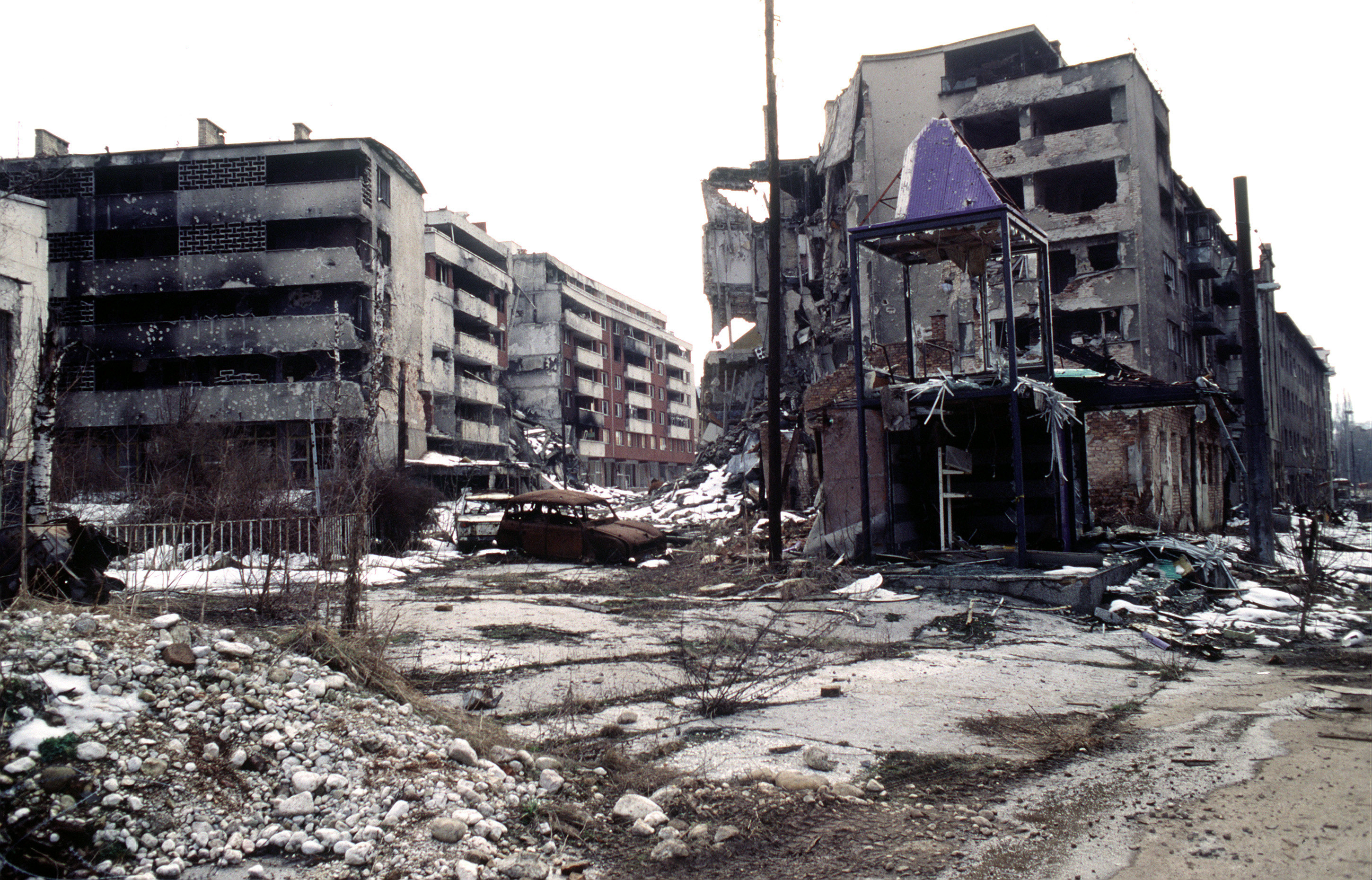
I am embarrassed to admit how little I know about the war in former Yugoslavia.  Ironically, I was living in London for many of those years, only a two hour flight from the war zone.  I remember a weekend trip we took to Italy to escape the English weather; we were soaking up the sunshine in an outdoor cafe and our waitress was a refugee from Yugoslavia.  She looked like any young English or Italian woman--educated, well-dressed, articulate, friendly--it was her accent that started our conversation with her about her origins.  At the time the war was just entering my consciousness so her plight didn't register like it should have.  I wonder what happened to her and others like her.

If you're looking for a book that will tell you all about the conflict--how it started and what went on--this is not that book.  In fact, if you know of such a book, PLEASE let me know the title!  Post it in the comments below; I am looking for a very accessible non-fiction book or novel that will shed light on what happened there and why.

What you will find in this book is, and I marvel at this, a poetic use of language describing war in a universal sense.  Don't get me wrong; we know the story is taking place in Yugoslavia--it's about the siege of Sarajevo.  But (for me) the take-aways from the story are not specific to that war; rather they speak to the humanity in all of us about all wars, all conflicts, everywhere.  I found this book to be one of the most moving novels I have read in a long time.  I look forward to re-reading it for many reasons, not least of which is so I can savor the beautiful language.

You'll want to discuss the beautiful prose and ponder the rhetorical devices the author uses.

Evidently there truly was an incident like that which happens in this book.  There was a bombing in Sarajevo where multiple people were killed and a local cellist played music for twenty-two days at the site of the massacre to honor the dead.  The author tells us in his afterword that this real-life cellist inspired the novel but he is not the cellist in the book.

There are four main characters in the book: the cellist, the sniper, the family man who goes for the water, and the family man who has sent his family to Italy.  There is, of course, the secondary but still very important characters: the men in the hills who are holding Sarajevo hostage, the men who are running the country's various factions, the middle-men who are making money off of the war, and the rest of the world which is refusing to rescue the citizens of Sarajevo.  And let's not forget the city of Sarajevo as a character.

You'll want to discuss all of the above characters--how does the situation affect them?    What is the motivation of each one?  What, if anything, do they learn?  What message do they send to the reader?  In fact, you'll want to discuss:  What is this book about?  (Not in the literal sense, but you know that already, right?)  What is the responsibility of each character?  How did each character come to be in the situation in which he finds himself?

You'll want to discuss war and conflict in general.  And how the world is a stage upon which we are all players.  What if we refuse to play our assigned role?  Who assigns us that role anyway?

You'll want to discuss the role of choices and decisions in the novel.  What is the book saying about this, and do you agree?

You'll want to discuss whether this could happen where you live.  My personal opinion is if you think not, you are delusional.  So perhaps you should talk about how we can avoid such conflicts.  Or, as the book asks, are we doomed to repeat them?

Connected to the above, you'll want to ask yourselves how you would act in such a situation.  Is there a moral component to how one should act in war?  Or does war excuse our actions with each man out for himself?  Can one remain principled during wartime?  Can one ever know the answers to these questions without being in the situation?

Whether you read The Cellist of Sarajevo with your book club or on your own, definitely read it.  It's worth it.


Friday, April 4, 2014

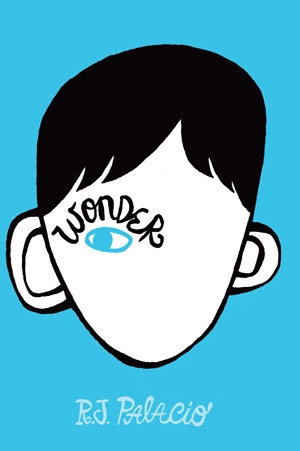
Should Your Book Club Read Wonder by R.J Palacio?

As you all know, Literary Masters are book groups and salons where we dig deep into literary treasures!  This season, one of the books that Literary Masters Parent/Child book groups read was Wonder by R.J. Palacio.  If you read one book this year and one book only, make it Wonder.  You will laugh, you will cry, and you will come away with a true sense of...wonder.  If you can grab your child, your wife, your husband, your neighbor, your personal trainer, anyone really, to read it aloud to and share in the joy of this book, all the better.  R.J. Palacio has written a gem!

So, what can your book group (even if it's just two of you) discuss?  I am just scratching the surface here; I could talk about this book over and over again and keep coming up with new subjects.  However, this should get you started:

Warp-speed plot summary:
August has a facial deformity.  A severe facial deformity, which he has had since birth.  He has been home-schooled up until now, but has decided to enter a traditional school for the first time; he will be in the fifth grade.  What a year it will be!  Told from the perspectives of August (Auggie), his sister Via, his schoolmate and friend Summer, his other schoolmate and friend Jack, Via's boyfriend Justin, and Via's childhood friend Miranda, this novel takes the reader along on Auggie's journey--a transformative trip for all.

You'll want to tackle some of the big questions that this book explores!  One of the big themes is identity.  August tells us that "...the only reason I'm not ordinary is that no one else sees me that way."  You'll want to ask yourselves: how much of who we are depends on how others see us?  What can we do when others see us in a way that feels false to us?

Auggie wishes we could all wear masks and get to know each other before seeing what each other looks like.  You'll want to talk about how important our looks are to who we feel we are.  How much do our looks define us?  What is so special regarding a face when it comes to who we are?  Do we all wear masks of a certain kind anyway?

Another big question is: what does it mean to be normal?  Auggie's sister Via says, "...we've all spent so much time trying to make August think he's normal that he actually thinks he is normal.  And the problem is, he's not."  You'll want to ask yourselves: What is normal?  How do we decide what is normal?  Who gets to say?  And is this right?  Are you normal?  Is "normal" good or bad?

Another theme to explore is kindness.  What does it mean to be kind?  Can we just be kind, or do we have to practice being kind?  Does it take effort to be kind?  This will, no doubt, bring up Mr. Browne's Precepts, which could take up an entire book club session all on their own.  I can't resist telling you here that my favorite precept is the one that Auggie came up with: "Everyone in the world should get a standing ovation at least once in their life because we all overcometh the world." 

I just teared up typing that.

On the flip side of kindness, you'll want to explore who in the story is being mean.  And is the meanness always intentional?  Via struggles in her relationship with Auggie when she enters a new school.  Is she being mean?  Is she being reasonable?  How would you feel in her shoes?

You'll want to talk about friendship and who Auggie's true friends are.   And why we are drawn to certain people as friends as opposed to others.  Do we ever want someone to be our friend because it will make us cooler in general?  Isn't this why we get excited if we come into contact with a celebrity--we feel cooler just for the fact that we've rubbed shoulders with someone who is famous?  And don't we shun unpopular or undesirable people for the same reason--because we don't to be perceived in the same way they are?  Ugliness by association?  It's an ugly concept, that's for sure.

You'll want to understand what type of friend Charlotte is to Auggie, as opposed to what type Summer is.  And what about Jack?  And how about that Julian, huh?  What's going on with him?  One of the questions posed in my Literary Masters book groups was "What character do you wish had a chance to narrate that didn't?" and the answer was overwhelmingly Julian.  Everyone was curious to find out what was going on in Julian's head.

And this is the coolest thing ever!  I guess it wasn't just Literary Masters members who were wondering this because the author is now writing an e-book, The Julian Chapter: A Wonder Story, all about Julian, to be released May 13.  HOW COOL IS THAT?  (Maybe she was listening to us, fellow LM members!)

Some of what you'll want to talk about may make you uncomfortable.  But that's good, because it means you are thinking!  How should "normal" people approach people with deformities?  Auggie doesn't like it when no one will look at him, but he doesn't want people staring at him.  Is he being fair?  Could he have done more to help others see beyond his facial deformity?  Could or should the school have done more?  What about Auggie's parents?  You'll want to talk about what kind of parents they are--again, this could take an entire book club session on its own!

If you've read all the way to here, thank you!  As you probably can tell, I LOVE this book and am enthusiastic about your reading it with your book club (however it may look in this case).  One last thing I will mention before I sign off on this very long blog post is: you'll want to talk about the artwork and the title, the epigraphs, the poetry and song lyrics.

There's more, there's much more to discuss.  But for now:

Read this book.  Enjoy.  Discuss this book.  Enjoy.  Give this book to others.  Enjoy.  This book is a wonder.


Monday, March 10, 2014

Should Your Book Club Read The Innocents by Francesca Segal?

Okay, this debut novel was the February selection for Literary Masters book groups and salons.  So, clearly, my answer is yes.  But!  To really have a special discussion, I suggest you do a pairing--read The Age of Innocence by Edith Wharton first (a brilliant, sparkling gem of a novel!) and then read its "re-imagining" The Innocents by Francesca Segal.  You are in for such a treat!

In her interviews, Segal acknowledges her debt to Wharton.  I'll say!  Reading Segal's novel, I had the same feeling I experienced while reading The Hours by Michael Cunningham (you remember--the homage to Virgina Woolfe's Mrs. Dalloway)--I kept thinking, Wow! is this bordering on plagiarism?  No one seems bothered by Segal's or Cunningham's (re)writings, however, so let's not dwell there.  You may want to discuss it a bit with your book club, though.

What I am going to do here is mention what your book club can discuss if you choose to read The Innocents on its own.  Obviously, if you read the pairing as I suggested, you can compare and contrast the two novels.  Hey! do I sense a Venn Diagram coming on?

So, what can your book club discuss?  Warning: there are spoilers below!  Don't read further unless you have finished the book or don't mind spoilers!

Warp speed plot synopsis:  Adam and Rachel have grown up together in the tight-knit Jewish community of Hampstead Garden Suburb in London.  They are now engaged and planning the lavish wedding that their family and friends expect them to have.

Enter: Ellie, the black sheep cousin who fled her home for the wickedly debauched Big Apple.  She has now returned with experiences (and a reputation) that scandalizes the small village but intrigues Adam.

Fireworks ensue...

The novel starts at shul on Yom Kippur and ends at a bris,  Your book club will want to discuss the role of the Jewish religion and/or the Jewish culture in the book.  Is this book an exploration of Jewish identity at all?  Could the story have taken place in any other tight-knit community?  Is it universal or is it uniquely Jewish and how or why?

You'll want to talk about how a community works--what the benefits of belonging to one are, but also what disadvantages go along with being part of one.  Can one ever entirely leave behind one's "village"?

You'll also want to discuss Ellie as a trope--she has left the village but now returns.  What role is she playing in the story (besides the obvious love interest)?  In other words, what does she represent?  What motivates her?  And why is Adam attracted to her?  I will say, Literary Masters members had a wide range of reaction to Ellie, from sympathy to condemnation.  One thing to consider: how she is a survivor and what that has done to her psyche--and what kind of guilt she carries.  And how that informs her life choices.

You'll want to dig deep into Adam; what does he want and why does he want it?  What has been the defining fact/event of his life?  Does he change by the end of the story?  How and why?  Who does he love, if anyone?  Is there a Madonna vs. Whore dynamic here at all?  Will Adam ever be happy?

You'll want to dig deep into Rachel also.  What does she want and why?  Many Literary Masters members balked at her shallow character.  But!  Is she as shallow as she appears?  What does she revere above all?

Speaking of appearances, you'll really want to save time to discuss the theme of appearance/image versus authenticity.  What is the novel actually saying here?

What about the other themes?  What is the novel saying about familyDuty? MarriageTrust?  What is it saying about security vs. freedom?  Or familiarity vs. the unknown?

You'll want to consider whether there is a biblical "fall" in the story.  If yes, where's the garden?  What constitutes the casting out, and is there a redemption aspect also?  Is the forbidden fruit knowledge or desire or both?

Perhaps connected to this, consider the names.  Are they significant?  So fun to think about!

And don't forget to discuss the title!  Perhaps not as straightforward as it first appears.  Segal stated in an interview that she first wanted the book to be called Observance.  Discuss!

You'll want to talk about the role of gossip in the story and how it functions within the community as well as how it functions to propel the plot.  If any of you have taken part in one of my Jane Austen Literary Salons, you should think about the role of gossip in Jane's novels!

Connected to the above, who knew what and when and how much???

Your book club can have some fun experimenting with "fan fiction"--come up with the next part of this story: do Adam and Rachel stay together and are they happy?  What happens to Ellie?  And so on...

What role does food play in this novel?  Discuss this while eating!

This debut novel has won a myriad of literary prizes such as the Costa First Novel Award, the National Jewish Book Award for Fiction, the Sami Rohr Prize for Jewish Literature, the Betty Trask Award, the Harold U. Ribalow Prize, and it was on the long list for the Women's Prize for Fiction.  Does it deserve them? 

Okay, all of this should get you started!  Enjoy, and let me know how it goes!  Thanks for checking in with WHIRL books and Literary Masters!

Friday, January 17, 2014

National Book Critics Circle Award Finalists Announced!

The short list is out for the National Book Critics Circle Award.  Click here to read the entire article in the LA Times.

The fiction finalists are:

Chimamanda Ngozi Adichie, Americanah (Knopf) A LITERARY MASTERS SELECTION: OCTOBER 2013

Alice McDermott, Someone (Farrar, Straus & Giroux)

Javier Marías, The Infatuations, translated by Margaret Jull Costa (Knopf)

Ruth Ozeki, A Tale for the Time Being (Viking)

Donna Tartt, The Goldfinch (Little, Brown)

As you know, Americanah was Literary Masters' October book; everyone loved it and we had fantastic discussions.  (For more on Literary Masters, click on link to the right of where you are now reading.)  I am currently reading The Goldfinch--not loving it as much as I thought I would (expectations, expectations) but it's early days yet.  This is one long book.

I want to read the others...

The winner will be announced in March!

Monday, December 2, 2013

More Best Books!

OK, I realize that I am a week late with this NY Times link (click here) of Notable Books of 2013, but it was Thanksgivukkuh!  Anyway, lots of ideas for books to read and to give as gifts.  Literary Masters book groups and salons have already read and discussed two books from the list: Americanah and The Woman Upstairs.  One of these days I will get around to reviewing each of these wonderful novels--and I will fill you in on the riveting discussions that we had!

This month we are reading another novel that made the NY Times list: We Are Completely Beside Ourselves.  And our LM selection for May is The Lowland.  Hmm...do you think the NY Times consulted the Literary Masters list of titles for our 2013/14 season before posting their notable books list?  You can check it out also on my website; just click here.

I've read some of the others.  I must say, the James Salter novel disappointed me (I heard a collective gasp just now), but I really liked The Dinner and have recommended it to many people.  I loved The Circle and think it is a fabulous book for discussion as it raises many pertinent issues.  It's NOT sci-fi if it's happening to us right now for real!

I didn't love Kate Atkinson's Life After Life as much as everyone else apparently has, but it is a good enough read.  I didn't think Schroder measured up to the hype.

Tenth of December: yes, do read it.  Ditto The Son, if for no other reason than to tell me what you think of it!

Here are the books on this list that I really want to read and that I hope find their way into my Christmas stocking (are you listening, Santa?):

The Goldfinch by Donna Tartt.  Her first novel The Secret History is one of my favorite books, and I am so looking forward to reading her latest, which is getting rave reviews all around.

The Good Lord Bird by James McBride, which just won the National Book Award.

The Sound of Things Falling by Juan Gabriel Vasquez

Dirty Love by Andre Dubus III

I have just started A Constellation of Vital Phenomena by Anthony Marra, but I fear I will have to return it to the library before I finish it!

Stay tuned for more end of the year "best books" lists to come!

Tuesday, November 5, 2013

The Samuel Johnson Prize: We Have a Winner!

I think you know by now that Literary Masters book groups and literary salons focus mainly on fiction, but each season we 'dig deep' into a non-fiction treasure.  My favorite so far, and I think my LM members would agree, is Nothing to Envy by Barbara Demick, which won the Samuel Johnson Prize, the UK's premier award for non-fiction work, in 2010.

The 2013 winner of this prestigious award has just been announced, so let's congratulate Lucy Hughes-Hallett, author of The Pike.  Her account of "a celebrated poet and Italian nationalist who was simultaneously repugnant and alluring" is evidently a form-breaking type of biography that escapes the restrictions of the genre.  Sounds intriguing.  The book won over an impressive shortlist of titles:


For more information on the Samuel Johnson Prize, including past winners, click here.

What good non-fiction have you read recently?

Monday, September 2, 2013

Literary Masters: The List!

Your long wait is over!  The 2013/2014 Season of Literary Masters is officially launched!  You will find the reading list below.  As you'll recall, I allowed my LM members to vote this season; they chose our eight titles from a long list of books.  Everyone had fun with this, although making a decision wasn't easy!  First, here's the long list:
  
Fiction Category: (I asked members to vote for six out of the following titles; please note that the prizes and awards are for the author, not necessarily for the title listed below.)
  1. The Son by Philipp Meyer (Guggenheim Fellowship)
  2. The Lowland by Jhumpa Lahiri (Pulitzer Prize for Fiction, Hemingway Foundation/PEN Award, O. Henry Award)
  3. The Woman Upstairs by Claire Messud (PEN/Faulkner Award for Fiction nomination)
  4. Americanah by Chimamanda Ngozi Adichie (MacArthur Foundation Fellowship, Orange Prize for Fiction)
  5. The Dinner by Herman Koch; translated by Sam Garrett (Publieksprijs Prize)
  6. The Burgess Boys by E;izabeth Strout (Pulitzer Prize for Fiction)
  7. The Round House by Louise Erdrich (National Book Award for Fiction, Guggenheim Fellowship, National Book Critics Circle Award for Fiction)
  8. How to Get Filthy Rich in Rising Asia by Mohsin Hamid (Man Booker Prize nomination)
  9. The Innocents by Francesca Segal (National Jewish Book Award for Fiction, Costa First Novel Award, Women's Prize for Fiction nomination)
  10. The Orphan Master's Son by Adam Johnson (Pulitzer Prize for Fiction)
  11. We Are All Completely Beside Ourselves by Karen Joy Fowler (California Book Award Silver Medal, PEN/Faulkner Award nomination)
  12. Telex from Cuba by Rachel Kushner (National Book Award finalist)

Oldie but Goodie Category: I asked members to vote for one of the following titles:
  1. Crossing to Safety by Wallace Stegner
  2. A Lesson Before Dying by Ernest J. Gaines
  3. A Dry White Season by Andre Brink
  4. Age of Innocence by Edith Wharton
  5. All the King's Men by Robert Penn Warren

Non-fiction Category: I asked members to vote for one of the following titles:
  1. Under the Banner of Heaven by Jon Krakauer
  2. Lean In by Sheryl Sandberg
  3. God's Hotel by Victoria Sweet
  4. The Season of the Witch by David Talbot
  5. The Worst Hard Time by Timothy Egan

How would YOU have voted?  Keep reading to find out how Literary Masters members voted!

 
 The 2013/2014 Season of Literary Masters Book Groups and Literary Salons Reading List is:
 
October: Americanah by Chimamanda Ngozi Adichie

November: The Woman Upstairs by Claire Messud

December: We Are All Completely Beside Ourselves by Karen Joy Fowler

January: Crossing to Safety by Wallace Stegner

February: The Innocents by Francesca Segal

March: Telex From Cuba by Rachel Kushner

April: God's Hotel by Victoria Sweet

May: The Lowland by Jhumpa Lahiri
 
So grab your reading glasses and join us for another fabulous season of digging deep into literary treasures!
 
To find out more about Literary Masters book groups and salons, or if you'd like to join us, please visit my website: www.literarymasters.net

  1. Publieksprijs Prize
    Publieksprijs Prize

Sunday, June 2, 2013

Summer Reading Suggestions!

As Memorial Day Weekend is the unofficial kick-off to summer (and that was a whole week ago!), I thought I would post some summer reading suggestions--brought to you by none other than the most fabulous readers ever: my Literary Masters book group members!  Here's wishing you all a wonderful summer--may you turn all the pages you wish to, both literally and figuratively!

In no particular order, enjoy these books this summer:

Life After Life by Kate Atkinson (there is another book by the same title written by a different author, which is supposed to be quite good, too)

Speedboat by Renata Adler

The Submission by Amy Waldman

A Hundred Flowers by Gail Tsukiyama

One Thousand White Women: The Journals of May Dodd by Jim Fergus

State of Wonder by Ann Patchett

11/22/63 by Stephen King


Enchantments: A novel of Rasputin's daughter and the Romanovs by Kathryn Harrison

Eleanor of Aquitaine: A Life by Alison Weir

The Lady in the Tower: The Fall of Anne Boleyn by Alison Weir

Dreams of Joy by Lisa See

Sweet Tooth by Ian McEwan


Open City by Teju Cole

The Island at the Center of the World by Russell Shorto

Where'd You Go, Bernadette? by Maria Semple

Let me know if you read anything that is absolutely un-put-down-able!

Friday, May 31, 2013

Frank O'Connor International Short Story Award--the Shortlist!

I want to read a collection of short stories with my Literary Masters book groups this coming season.  We are absolutely spoiled for choice!  Do we read something from Lydia Davis, the most recent International Man Booker Award winner?  Or perhaps we catch up on one of Alice Munro's collections?  She, too, is an International Man Booker Award winner.  Or perhaps we'll read the collection from the winner of the Frank O'Connor International Short Story Award.  The shortlist has been announced:
  • Tea at the Midland and other stories – David Constantine 
  • Siege 13 – Tamas Dobozy
  • Black Vodka – Deborah Levy
  • Black Dahlia & White Rose
  • We’re Flying - Peter Stamm
  • Battleborn - Claire Vaye Watkins
Congratulations to these authors!  The winner will be announced in early July.  For more info, click here.

Thursday, March 21, 2013

Should Your Book Club Read Schroder by Amity Gaige?

Hmm...well, this is a quick read, and it's one that book clubs will enjoy.  I will not be choosing it for my Literary Masters book groups, however.    I would recommend taking this novel to the beach or on an airplane, though--it's a compelling read.  The story is narrated by Schroder, aka Kennedy, who is writing some sort of apologia to his ex-wife (for one) because he kidnapped their daughter.

Here's what I liked about it: it was, as I said, a quick read, one I didn't have to exert too much brain power for, and I was in the mood for just that.  Yes, it's definitely a page-turner.  I wanted to find out how reliable the narrator Schroder/Kennedy is.  I wondered if we had a Humbert Humbert on our hands.  The narrator in this instance admits to his duplicity up front.  Hmm...is he believable?  Is he forgivable

I liked that I really entered the head of Schroder/Kennedy.  I think the author does a good job there.  And I felt his love for his daughter, and hers for him.

Here's what I would have liked more of: the bit about silences and pauses, and poetic reversals.  I think she could have fleshed this out much, much more and developed a much more literary novel.

I wish I knew more about Schroder's childhood and relationship with his parents.  Although the author touches on the narrator's background, she doesn't give enough information to fully or convincingly explain the psychological reasons for what he is doing. 

I wish I knew more about Schroder/Kennedy's relationship with his ex-wife.  Again, we get a bit of that, but much more would have illuminated the motives of the narrator/kidnapper and would have gotten this reader, at least, more invested in the story.  We don't get her perspective at all--or minimally, anyway--so the story feels rather flat.

I think the author has the bones of a great novel here, but I don't think she layered those bones with enough muscle, sinew, and flesh to make it a literary book.  I feel like when I try to "dig deep," I hit the skeleton pretty quickly, and that is that--on to the next book.

I do love the name Amity Gaige, though. 

Saturday, March 2, 2013

National Book Critics Circle Award--the Winners!

The National Book Critics Circle Award winners have been announced, and once again, Literary Masters book groups are ahead of the curve!  Our choice for this month is Billy Lynn's Long Halftime Walk by Ben Fountain, which just won the award in the fiction category--yahoo!!!


For more on the awards, click here.

Monday, February 25, 2013

Should Your Book Club Read Imagining Argentina by Lawrence Thornton?

Ahhh...this is a tough one.  I think this is a really important book to read, but I have to say that it is somewhat difficult, perhaps too difficult for some book clubs.  When I say "difficult," I am not referring to the structure or the plot or the story; I am thinking of  the scenes of torture that are essential to our understanding of what the book is about.

The story takes place in Argentina during the "dirty war"--from about 1976 through 1983--when a military junta, after ousting Isabella Peron, gripped the country in a state of prolonged terror.  Anyone who opposed the regime, anyone suspected of subversion, anyone related to those who opposed the regime--basically tens of thousands of people--were taken, or "disappeared," in the middle of the night.  No explanation.  The kidnapped were tortured and killed.  Yet the regime denied anything of the sort was going on.

In this novel, Carlos runs a theater group for children, but when people start disappearing, he seems to have a magical ability to imagine what has happened to them.  Worried relatives seek his knowledge and he soon develops a following.  The narrator of the story cannot explain how Carlos does this and is skeptical, swinging from suspended disbelief to cynicism, much like the reader of the novel.  Yet, the narrator (and this reader at least) ends up firmly in the camp of those who believe in Carlos' imagination--and its power to defeat the terror.

I would love it if your book club would read Imagining Argentina because I'd like to hear your thoughts on it.  It's a very beautifully written novel (in spite of the scenes of torture) whose message I'm not sure I understood.  It seems like it was saying that we must imagine our way beyond the banal, beyond the evil.  And by doing so we will transcend it.  We can do this through art, through story-telling, through spirituality or other means, but it is very important that we do it.  That we remember and tell what happened.

Let me know if your book club reads it and what everyone thinks.  And if you're not sure your book club should read it, why don't you read it first--because every individual should--that's for sure.


Tuesday, February 19, 2013

Should Your Book Club Read The End of the Affair by Graham Greene?

The answer to the question: yes, with reservation.  This novel was the February selection for Literary Masters book groups and literary salons.  It proved to be a very difficult book for a lot of members, BUT we had seriously intense and riveting discussions.  So, I say "with reservation" because, if your book club is more social than serious, your members may have trouble with the book.  On the other hand, if your book club likes to "dig deep" into great literature, this is the book for you!

So what can your book club discuss?  The following contains many spoilers, and is in no particular order.  In fact, forgive me if there's a rambling nature to this blog post, but my head is swirling with thoughts due to the many fantastic insights my LM members expressed, and I want to get them down here.

Warp-speed plot summary: Maurice Bendrix is obsessed with Sarah Miles, who is inconveniently married to the unassuming Henry.  When Sarah breaks off the affair abruptly with no explanation, Bendrix is determined to find out why.

There are many lenses through which to view this novel.  Let's take a look at a few:

The biographical lens:  Yes, this book appears to be somewhat autobiographical.  Greene's house on Clapham Common was bombed during WWII.  Greene had an adulterous relationship with a woman who seems strikingly like the character Sarah.  Greene and his lover kept diaries that they shared.  Greene converted to Catholicism but seemed to struggle with his faith.  Greene went through Jungian psychoanalysis when he was young--and this book seems to be some sort of therapy for both Greene and Bendrix.  Greene is said to have suffered from depression (and was bipolar according to some accounts) throughout his life.

However, most of us knew none of the above before we read the book, so this information colored our reading experience in retrospect.  Once we knew these details, though, we couldn't help but conflate the life of Green with the lives of his characters.  And let's not forget that we have an author, Greene, writing about an author, Bendrix, writing about the end of his affair...who comes across the diary of his lover...

The historical lens:  We all discussed how this novel was about more than a love affair; it was about a whole new world that had exploded on the scene, literally, due to two world wars.  We talked about how of course one would question his or her faith--and whether there could be a God in a world that had seen such atrocities.  Note the references to the Victorian age in the novel, and see what message you can take away.

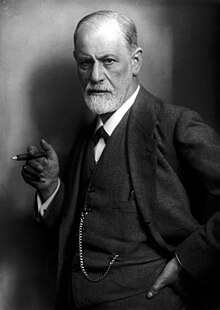
The psychoanalytic lens:  I mentioned above that Greene went through Jungian therapy, and my bet is that he read plenty of Freud.  So was it intentional on his part, or am I just reading into the novel the structure of the Oedipus Complex?  Motherless Bendrix has found his substitute in Sarah; he is the phallus for her, and the two of them are emotionally inseparable.  When Sarah, in the role of mother, leaves Bendrix, in the role of child, for the father--and in this case it's God the Father--Bendrix attempts to kill that father by denying his existence.

And if you don't like that triangle, how about this one: the Karpman Triangle, where each of three people take on a role of either Persecutor, Victim, or Rescuer.  In this relationship dynamic (which you can google to find out more about--it's really interesting) the roles are very fluid with the three individuals moving around and taking on a different role at various times.  One Literary Master member brought this to our attention; she said she was seeing these triangles all over the story!

We have more than a few feminists among us, and there was quite a lot of discussion about Sarah and what she got out of her relationship with Bendrix.  We tried to understand her in the context of the times, but she is a slippery one--we couldn't agree on her at all.  Lacan would have a field day with this!  (You know, Jacques Lacan, the "French Freud.")  Sarah needs someone to admire her--to validate her existence.  You'll want to talk about her mother and how that relationship has affected Sarah.  Interestingly, more than a few of us thought that Sarah made her vow as a way to break off her relationship with Bendrix.

No matter how you feel about Sarah, you'll want to discuss whether she truly did believe in God.  And if yes, when and why.

You'll want to explore the same question about Bendrix.

Henry is another character that will consume quite a bit of your time.  Some of us saw some homosexual tendencies in him--and in Bendrix.  Regardless, you'll want to dig deep into Henry's motivations.

This has been called a "Catholic novel" by critics.  You may or may not agree with this characterization, but you will want to discuss the miracles that occur in the story.  Are they truly miracles, or is there always a scientific explanation for what has occurred?  Are they just coincidences?

You'll want to discuss the role of suffering in the story and how it relates to love.

You'll want to discuss the language and Greene's use of opposites for effect. Not only are words and phrases contrasted; characters are as well.  We have the "high" and the "low" and you'll want to wonder why.  Speaking of characters, you'll want to carve out quite some time to discuss the secondary characters in this novel.  For example, what is the purpose of the scene with Sylvia Black?  (My answer--just a hint--focus on her initials...)

You'll want to discuss the symbolism and imagery in the story.  (Does Bendrix "rise from the dead"?)

If you've read all the way to here, kudos to you.  You're obviously a serious reader who will enjoy Greene's work.  When you've finished the novel, watch the movie (I watched the version with Julianne Moore and Ralph Fiennes).  You'll want to compare it with the book.  It's really good!

As always, let me know how your book club gets on--and enjoy!