WHIRL (What Have I Read Lately) Books is a site for readers to find books for themselves and their book clubs. Liz at Literary Masters runs book groups and literary salons where we "dig deep" into literary treasures.
Thursday, March 30, 2017
Literary Masters and Creatubbles: Exploring Books by Creating Art
Are you familiar with Creatubbles? It's a safe, secure, and incredibly cool platform where children (and grown-ups) can save, share, and explore artwork from around the world. Literary Masters recently partnered with Creatubbles so that LM members can now illustrate our monthly book and share it with other art lovers.
Today Liz of Literary Masters is honored to be interviewed by Creatubbles and highlighted on their State of the Art blog. We discuss how books can be deeply explored by appreciating and analyzing any illustrations in a work of literature as well as by creating our own art that illuminates what that book means to us. If you like this interview, feel free to spread the word. More readers connecting deeply to books via artwork--that's a good thing!
Please visit the Literary Masters page on Creatubbles and feel free to share your creative side with us!
Sunday, March 26, 2017
Should Your Book Club Read Dear Ijeawele, or A Feminist Manifesto in Fifteen Suggestions by Chimamanda Ngozi Adicie?
Should Your Book Club Read Dear Ijeawele, or A Feminist Manifesto in Fifteen Suggestions by Chimamanda Ngozi Adicie? Yes. Especially if your book club members have a month where there's a lot going on outside book club (did I hear you just say "That's every month!"?) because this book is SHORT but very, very thought-provoking.
The book is a letter to Ms. Adicie's friend, who has just given birth to her baby girl Chizalum and has asked Adicie for advice on raising her as a feminist. The book is that letter, offering 15 suggestions, each of which heads its own chapter. The entire book is only 63 pages and you can finish it well under an hour. Or you can savor it and think deeply as you read. Or you can return to it, dipping into its wisdom as and when you like. You may want to order copies to give as gifts to new--and old--mothers. Or to daughters. Or sons! To fathers and husbands.
I agree with much of the book, and there are parts of the book that I am still mulling over. One stark piece of advice that I disagree with, however, is under the suggestion "Teach Chizalum to read." Obviously I don't disagree with that advice! However, Adicie goes on to say, "If all else fails, pay her to read." I must say, I strongly disagree with this.
There are many, many ways to teach a child to read and to foster the love of reading. Paying money, in my opinion, sends the wrong message. I'd prefer children to be intrinsically motivated to read, rather than extrinsically.
As I said, this is my opinion. I am guessing, though, that there are studies with data out there about this. Just using common sense, though, what happens to a child who has been 'rewarded' to read when that money is no longer paid? I presume the argument is that the child will have developed the habit of reading and therefore will continue to do so even without remuneration.
Hmm. Maybe.
Contrast this idea, though, with a child who has actually developed the appreciation and love of books and reading for their value, not because of the value of $$$. A child who finds books and reading worthwhile and a reward in itself will be a life-long reader. That's my strong bet, anyway.
You all know I am open-minded, however, so if you disagree, please feel free to weigh in--I'd love to hear from you!
The book is a letter to Ms. Adicie's friend, who has just given birth to her baby girl Chizalum and has asked Adicie for advice on raising her as a feminist. The book is that letter, offering 15 suggestions, each of which heads its own chapter. The entire book is only 63 pages and you can finish it well under an hour. Or you can savor it and think deeply as you read. Or you can return to it, dipping into its wisdom as and when you like. You may want to order copies to give as gifts to new--and old--mothers. Or to daughters. Or sons! To fathers and husbands.
I agree with much of the book, and there are parts of the book that I am still mulling over. One stark piece of advice that I disagree with, however, is under the suggestion "Teach Chizalum to read." Obviously I don't disagree with that advice! However, Adicie goes on to say, "If all else fails, pay her to read." I must say, I strongly disagree with this.
There are many, many ways to teach a child to read and to foster the love of reading. Paying money, in my opinion, sends the wrong message. I'd prefer children to be intrinsically motivated to read, rather than extrinsically.
As I said, this is my opinion. I am guessing, though, that there are studies with data out there about this. Just using common sense, though, what happens to a child who has been 'rewarded' to read when that money is no longer paid? I presume the argument is that the child will have developed the habit of reading and therefore will continue to do so even without remuneration.
Hmm. Maybe.
Contrast this idea, though, with a child who has actually developed the appreciation and love of books and reading for their value, not because of the value of $$$. A child who finds books and reading worthwhile and a reward in itself will be a life-long reader. That's my strong bet, anyway.
You all know I am open-minded, however, so if you disagree, please feel free to weigh in--I'd love to hear from you!
Sunday, March 19, 2017
AWOL Blogger: Buried Under Her Books!
Have you been missing my posts? THANK YOU! I'm sorry that I haven't written any recently. No excuses, just the reality that I've been...READING. I will try to post at the end of the current Literary Masters season. I promise! Meanwhile, let me swiftly bring you up to date with what's been happening with Literary Masters members.
We've been enjoying THE LIST so far! The Underground Railroad by Colson Whitehead was a hit all around; even members who found it difficult to read at times still appreciated its worth. Some of us, including yours truly, loved the fantastical elements in it, which carried truth to the reader in an entirely new way.
Everyone agreed that Rose Tremain's The Gustav Sonata is a little gem of a book. We found so much to talk about! I look forward to blogging about that one. Rose Tremain is a real crafts person; not a word is wasted. And there is so much beneath the surface!
December was our month for a classic, and we read Graham Greene's The Quiet American. Every time I read that book, I close it and say "That is SUCH a good book." Literary Masters members agreed! And it was the perfect book to read after last season's The Sympathizer by Viet Thanh Nguyen. If you're looking for a pairing, this is a good one.
We then moved on to our nonfiction selection for the season: Black Flags: The Rise of ISIS by Joby Warrick. Everyone agreed--this should be required reading. Everyone learned a lot and our discussions were intense!
This month we are discussing the most gorgeous novel: The Whistling Season by Ivan Doig. After a few pages, I sat back, relaxed, and thought "Ah...I am in good hands." This is "poetry under the prose"--so much so that I reread passages just to experience them again. I can't wait to "dig deep" into this book with all our wonderful Literary Masters members!
You can always visit the Literary Masters website to see what members are reading--or have read. When are you going to join a Literary Masters book group?
Friday, September 30, 2016
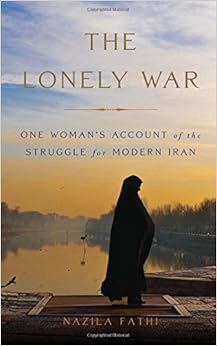
Should Your Book Club Read The Lonely War by Nazila Fathi?
Should your book club read The Lonely War by Nazila Fathi? The answer is absolutely yes! This wonderful memoir was the 2015-16 season's nonfiction selection for Literary Masters book groups and salons, and almost everyone loved it. I say 'almost' because some people only 'liked it a lot'. Some avid nonfiction readers said it was the best nonfiction book they had read in ages. Everyone agreed that it is worth reading and also important reading, considering what's going on in the world today.
So, what can your book club discuss?
Warp-speed plot summary: Nazila Fathi was born in Tehran in 1970 and was all of nine years old when the revolution occurred and ushered in a whole new world for the Iranian people. Although many families fled the country, Nazila's stayed, and she grew into adulthood in the new Islamic state. Fluent in English, Nazila was eventually hired to write for the New York Times until she and her family (her husband and two children) were forced to flee the country in 2009. In this memoir, Nazila takes the reader through her journey as well as the journey of the country of Iran and its people. As the years progress, we witness the growing pains of each as they grapple with new identities.
You'll want to talk about how/whether this book has affected your view of Iran and the Iranian people. Literary Masters members are well educated and very engaged in world affairs, but still, almost everyone said they learned quite a bit about the revolution and the people involved--and about what the Iranian people wanted. You'll want to discuss the Iranians' desire for democracy--and what has happened to it since 1979. You'll want to think about how US and British historical actions (think Moussadeq) affected the Iranian's attitude toward the West and helped contribute to bringing about the revolution. You'll want to connect all of this to today's world, of course--a long conversation in itself!
Related to the above, you'll want to discuss what you think Iran's main problem is. And you'll definitely want to discuss what it is that you admire about Iran.
You'll want to discuss the class system in Iran and how the regime used it to further their aims. Was is a mutually beneficial relationship? Who came out ahead and who came out behind as a result of all the tumult? Ask yourselves: How responsible is the class system for the revolution? Also ask yourselves: Does anything like this exist in America?
You'll want to talk about the various ideologies vying for power in Iran. Talk about how those who are in power get and remain there. Also, talk about the ways ordinary citizens survive or thrive under the various power structures. Also, talk about university students and technology--and the power that resides there!
You'll want to talk about Iran in relation to its neighbors. Talk about how you think Iranians feel about themselves in comparison to other countries in the region. And how they feel about their political leaders, both historical and current.
You'll want to talk about national security vs. individual freedoms: how do you feel about this debate with regard to our country after reading this book? How do we balance the two? If one side deserves more weight than the other, how do we keep it in check so we don't topple over?
You'll want to discuss Ms. Fathi's parents and how they dealt with all the changes they were going through. If there was one criticism of the book from Literary Masters members, it was that they wanted to know more of the personal experiences of the family. (Sequel, Ms. Fathi?)
You'll want to talk about the experience of women in Iran. Try to look at is AS a woman in Iran. And of course, look at it AS a western woman (or whatever you may be). This was quite the discussion in all Literary Masters groups! You will definitely want to discuss the veil!
You'll want to talk about oil and its effect upon the people of Iran.
You'll want to talk about Ms. Fathi. Do you think she offers a balanced view or is she biased in her telling of Iran's recent history? The subtitle is "One Woman's Account of the Struggle for Modern Iran." Is she acknowledging bias on her part? Does her memoir connect you to the Iranian people or to Islam or to Iranian culture or to anything/anyone else in a new way?
You'll want to talk about the relationship between the author and her maid. How do you feel about the choices Ms. Fathi makes? How do you feel about the choices the maid makes?
Well, this should get you started! Let me know how your book club enjoys discussing this wonderful memoir!
So, what can your book club discuss?
Warp-speed plot summary: Nazila Fathi was born in Tehran in 1970 and was all of nine years old when the revolution occurred and ushered in a whole new world for the Iranian people. Although many families fled the country, Nazila's stayed, and she grew into adulthood in the new Islamic state. Fluent in English, Nazila was eventually hired to write for the New York Times until she and her family (her husband and two children) were forced to flee the country in 2009. In this memoir, Nazila takes the reader through her journey as well as the journey of the country of Iran and its people. As the years progress, we witness the growing pains of each as they grapple with new identities.
You'll want to talk about how/whether this book has affected your view of Iran and the Iranian people. Literary Masters members are well educated and very engaged in world affairs, but still, almost everyone said they learned quite a bit about the revolution and the people involved--and about what the Iranian people wanted. You'll want to discuss the Iranians' desire for democracy--and what has happened to it since 1979. You'll want to think about how US and British historical actions (think Moussadeq) affected the Iranian's attitude toward the West and helped contribute to bringing about the revolution. You'll want to connect all of this to today's world, of course--a long conversation in itself!
Related to the above, you'll want to discuss what you think Iran's main problem is. And you'll definitely want to discuss what it is that you admire about Iran.
You'll want to discuss the class system in Iran and how the regime used it to further their aims. Was is a mutually beneficial relationship? Who came out ahead and who came out behind as a result of all the tumult? Ask yourselves: How responsible is the class system for the revolution? Also ask yourselves: Does anything like this exist in America?
You'll want to talk about the various ideologies vying for power in Iran. Talk about how those who are in power get and remain there. Also, talk about the ways ordinary citizens survive or thrive under the various power structures. Also, talk about university students and technology--and the power that resides there!
You'll want to talk about Iran in relation to its neighbors. Talk about how you think Iranians feel about themselves in comparison to other countries in the region. And how they feel about their political leaders, both historical and current.
You'll want to talk about national security vs. individual freedoms: how do you feel about this debate with regard to our country after reading this book? How do we balance the two? If one side deserves more weight than the other, how do we keep it in check so we don't topple over?
You'll want to discuss Ms. Fathi's parents and how they dealt with all the changes they were going through. If there was one criticism of the book from Literary Masters members, it was that they wanted to know more of the personal experiences of the family. (Sequel, Ms. Fathi?)
You'll want to talk about the experience of women in Iran. Try to look at is AS a woman in Iran. And of course, look at it AS a western woman (or whatever you may be). This was quite the discussion in all Literary Masters groups! You will definitely want to discuss the veil!
You'll want to talk about oil and its effect upon the people of Iran.
You'll want to talk about Ms. Fathi. Do you think she offers a balanced view or is she biased in her telling of Iran's recent history? The subtitle is "One Woman's Account of the Struggle for Modern Iran." Is she acknowledging bias on her part? Does her memoir connect you to the Iranian people or to Islam or to Iranian culture or to anything/anyone else in a new way?
You'll want to talk about the relationship between the author and her maid. How do you feel about the choices Ms. Fathi makes? How do you feel about the choices the maid makes?
Well, this should get you started! Let me know how your book club enjoys discussing this wonderful memoir!
Friday, September 16, 2016
Literary Awards Season!
I just love this time of year, as you all know! Long lists and shortlists are out, and there is so much to 'dig deep' into! If you missed it, the 2016-17 Literary Masters LIST has been posted, and our October selection The Underground Railroad by Colson Whitehead has also landed on the long list for the National Book Award for fiction, while our May choice The Sellout by Paul Beatty is now short listed for the Man Booker Prize.
Here are the long list titles for the National Book Award:
The Underground Railroad by Colson Whitehead
Another Brooklyn by Jacqueline Woodson
Sweet Lamb of Heaven by Lydia Millet
News of the World by Paulette Jiles
Imagine Me Gone by Adam Haslett
The Association of Small Bombs by Karan Mahajan
The Throwback Special by Chris Bachelder
What Belongs to You by Garth Greenwell
Miss Jane by Brad Watson
The Portable Veblen by Elizabeth McKenzie
And here are the titles on the short list for the Man Booker Prize:
The Sellout by Paul Beatty
Hot Milk by Deborah Levy
His Bloody Project by Graeme Macrae Burnet
Eileen by Ottessa Moshfegh
All That Man Is by David Szalay
Do Not Say We Have Nothing by Madeleine Thien
Don't you just LOVE this time of year? Let me know what you're reading from the above lists!
Here are the long list titles for the National Book Award:
The Underground Railroad by Colson Whitehead
Another Brooklyn by Jacqueline Woodson
Sweet Lamb of Heaven by Lydia Millet
News of the World by Paulette Jiles
Imagine Me Gone by Adam Haslett
The Association of Small Bombs by Karan Mahajan
The Throwback Special by Chris Bachelder
What Belongs to You by Garth Greenwell
Miss Jane by Brad Watson
The Portable Veblen by Elizabeth McKenzie
And here are the titles on the short list for the Man Booker Prize:
The Sellout by Paul Beatty
Hot Milk by Deborah Levy
His Bloody Project by Graeme Macrae Burnet
Eileen by Ottessa Moshfegh
All That Man Is by David Szalay
Do Not Say We Have Nothing by Madeleine Thien
Don't you just LOVE this time of year? Let me know what you're reading from the above lists!
Tuesday, September 13, 2016
Why Read to a Child?
I am so moved by the story of a woman who passed away this week. And I didn't even know her. Anna Dewdney was just 50 years old, the mother of two girls, and an author of the very popular picture book series Llama Llama. This headline of a story in The Washington Post caught my eye: "This beloved children's author didn't want a funeral. She said read to a child instead."
The WAPO article refers to an opinion piece that Anna Dewdney wrote for the The Wall Street Journal in 2013. It's titled "How Books Can Teach Your Child To Care," and it eloquently lays out the argument that we should read to our children, and promote their reading, not just for literacy's sake, but because reading stories develops empathy in children. Here is an excerpt:
"However, empathy is as important as literacy. When we read with a child, we are doing so much more than teaching him to read or instilling in her a love of language. We are doing something that I believe is just as powerful, and it is something that we are losing as a culture: by reading with a child, we are teaching that child to be human. When we open a book, and share our voice and imagination with a child, that child learns to see the world through someone else’s eyes. I will go further and say that that child then learns to feel the world more deeply, becoming more aware of himself and others in a way that he simply cannot experience except in our laps, or in our classrooms, or in our reading circles.
We learn empathy as children, through our interactions with the people in our lives and by experiencing the world around us. When we read books with children, we share other worlds, and even more importantly, we share ourselves. Reading with children makes an intimate, human connection that teaches that child what it means to be alive as one of many beings on the planet. We are naming feelings, sharing experience, and expressing love and understanding, all in a safe environment. When we read a book with children, then children – no matter how stressed, no matter how challenged – are drawn out of themselves to bond with other human beings, and to see and feel the experiences of others. I believe that it is this moment that makes us human. In this sense, reading makes us human."
Perhaps this resonates with me so much because of what I do. Time and again in our Literary Masters Parent/Child book groups, I see the ability of stories to open the eyes and minds of our members as we explore sometimes difficult issues via the safe space of fictional characters. Time and again we try to 'get inside the head' of the villain so we can understand his or her motivations. Time and again we ask ourselves "What would we do in this situation?" Having these discussions makes us think about ourselves in relation to others; we become more empathetic as we imagine how it must it feel, or how it would be. We explore our own feelings and as we come to know ourselves better, we become more curious about others' feelings. In essence, we are learning to care.
You can read Anna Dewdney's obituary here. And yes, instead of a funeral, she asked that you read to a child. Wow. Talk about empathy.
Monday, June 20, 2016
Summer Reading!
This Must Be the Place by Maggie O'Farrell: Ah...this may be a little unfair because this title hasn't been released in the States yet. However, by the end of July you should be able to get your hands on this wonderfully charming novel--highly recommended! You'll ponder marriage, parenthood, and the many selves each of us contain as you read what is, at its core, a thoroughly enjoyable love story.
A Man Called Ove by Fredrik Backman: Another charmer, this time from a Swedish author, whose debut novel is taking the world by storm. About a grumpy man. Well, really about the stories each of us has hidden within, and about friendship, and connection. Enjoy!
My Brilliant Friend by Elena Ferrante: If you're one of the few people on the planet who hasn't read this gorgeous book about two Italian friends, you have a treat in store! Actually, four treats, because it's the first of four sumptuous Neapolitan novels. Be prepared to ignore loved ones for a long while.
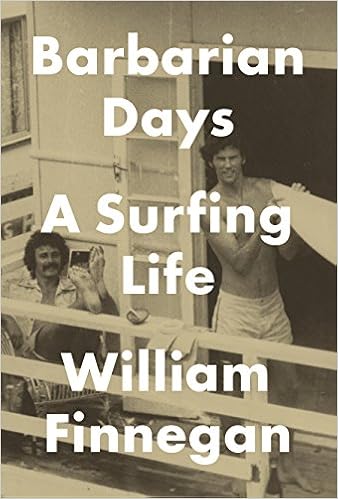
Barbarian Days: A Surfing Life by William Finnegan: Well, we had to put this book as a beach read, right? Even if you're not a surfer, you'll enjoy the journey this author takes you on in this autobiography that won the Pulitzer Prize. He opens your eyes to new cultures and to, yes, the wonderful world of waves. Have fun!
Disrupted by Dan Lyons: No doubt you read an earlier WHIRL Books post about this hilarious memoir here. For fans of the HBO series Silicon Valley (and if you're not a fan, what is wrong with you???) and also for everyone who looks around the beach and thinks, "where did all these young people come from, and just how do they think they are making the world a better place?" Laugh out loud with some serious questions explored.
The Upstairs Wife: An Intimate History of Pakistan by Rafia Zakaria: If you can't visit Pakistan this summer, it can visit you. Exploring the personal as well as the public aspects of life in Pakistan, this eye-opener is a great nonfiction choice for the summer.
Everything I Never Told You by Celeste Ng: A gripping novel about a family whose daughter is found dead. How much did they really know about her? How much do they really know about each other? One of those books that absolutely lingers for days after finishing it.
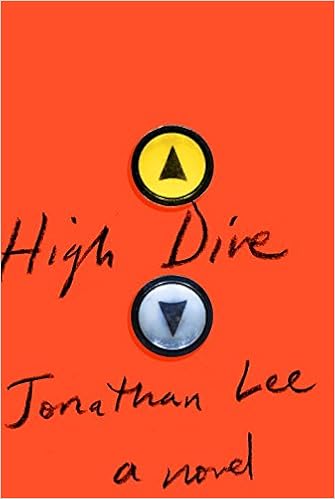
High Dive by Jonathan Lee: Suspenseful and thrilling in its blending of fact and fiction. Remember the bomb that went off in Brighton, England, in 1984 in an attempt to assassinate the British Prime Minister and her cabinet? Meet the characters (invented by Lee) who will take you back there.
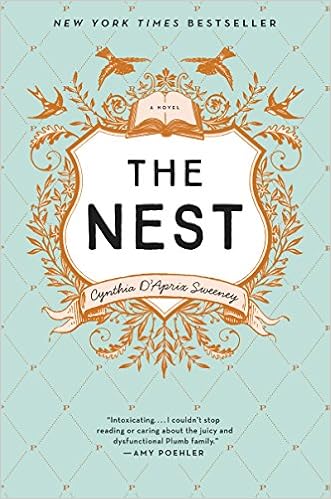
The Nest by Cynthia D'Aprix Sweeney: We loved the writing in this debut novel, and the four siblings, negotiating their lives around a future inheritance (i.e. the 'nest') will make lots of our own families look better by comparison. :-) A quick, breezy, enjoyable read.
I Do Not Come to You by Chance by Adaobi Tricia Nwaubani: This award-winning debut novel from Nigeria was part of our Literary Masters 2015-16 season, and it was a hit! You may not think you want to read a story about email scamming, but you will change your mind as the pages fly by! So funny but once again, important themes are mined. The best novel that book clubs don't know about.
Well, this ought to take care of your page-turning needs until we post our list! That should be some time in late August, so STAY TUNED!
Do you have any titles you'd like to recommend for summer reading? We'd love to hear from you!
Thursday, April 7, 2016
Should Your Book Club Read Disrupted by Dan Lyons?
I don't always have the time to post about every book that I think book clubs should read. However, one book that I highly recommend is The Circle by Dave Eggers. Everyone who uses the internet or is involved with technology should read that book. Every night while reading it I would think, "This is science fiction," and then the next morning I would read the newspaper and realize, "Actually, The Circle is realistic fiction--this is all happening right now!"
Another book that I think book clubs should read is Disrupted by Dan Lyons. If you're a fan of the series Silicon Valley (HIGHLY RECOMMENDED), you may know that Lyons writes for that show. I 'binge-watched' the entire series in one go and then ran around telling everyone I know to watch it. So, when I saw that Lyons had written a book, I picked it up.
Warp-speed plot summary: This is a memoir about Lyons' time after he gets fired from his job as an editor at Newsweek. He's 52 with a wife and two children and his career has suddenly come to a screeching halt. He's a journalist and the world of journalism is done--as is he. So he does what many 'older' workers have to do: he reinvents himself and enters the unknown and surreal world of tech start-ups. He lands a job at Hubspot, a 'hot' start-up, as "marketing fellow," and his experiences there are what he writes about. Lyons takes the reader on an hilarious and eye-popping journey as he acts as anthropologist and tour guide visiting an exotic and possibly dangerous tribe.
So, what can your book club discuss?
There is a lot to talk about, so in no particular order:
Another book that I think book clubs should read is Disrupted by Dan Lyons. If you're a fan of the series Silicon Valley (HIGHLY RECOMMENDED), you may know that Lyons writes for that show. I 'binge-watched' the entire series in one go and then ran around telling everyone I know to watch it. So, when I saw that Lyons had written a book, I picked it up.
Warp-speed plot summary: This is a memoir about Lyons' time after he gets fired from his job as an editor at Newsweek. He's 52 with a wife and two children and his career has suddenly come to a screeching halt. He's a journalist and the world of journalism is done--as is he. So he does what many 'older' workers have to do: he reinvents himself and enters the unknown and surreal world of tech start-ups. He lands a job at Hubspot, a 'hot' start-up, as "marketing fellow," and his experiences there are what he writes about. Lyons takes the reader on an hilarious and eye-popping journey as he acts as anthropologist and tour guide visiting an exotic and possibly dangerous tribe.
So, what can your book club discuss?
There is a lot to talk about, so in no particular order:
- You'll want to discuss the company culture and what that means. What kind of corporate culture is good? It's fascinating to think about how companies used to treat employees and how much that has changed, especially at technology companies in the Silicon Valley. How did this happen? What does it say about us as people, as a society? Is the way things are now better than they used to be? Is labor, as Lyons states, still being exploited by capital, but this time while wearing a big smiley face?
- Related to the above, talk about how a company gets its employees to "drink the Kool Aid." And then discuss how a company gets its customers to guzzle the same drink down. Do you think many companies really DO make the world a better place?
- Also related to the above, talk about the greed involved in all of this. What is the motivation of the various characters involved? Also discuss the flaunting of wealth. What do you think of this? Areas such as the San Francisco Bay Area have been greatly impacted by the tech companies, in both good and bad ways. Talk about this. We always hear about the housing prices making it unaffordable for 'ordinary' people to live in the area, but what about the values of the City? Is the immense wealth and its unabashed display impacting citizens' values and what they deem important, and how they behave?
- You'll want to discuss ageism. Well, you may not want to discuss it, but you should. It's real and it affects many people. Are you part of the problem? Do you think young people are smarter than old? Are they naturally better at understanding technology? Can they learn things that older people can't? How old is 'old' to you? How can we stop ageism? Or are the ageists right?
- You'll want to discuss the elephant in the room. How stupid do tech executives, their spin doctors, venture capitalists, and their spin doctors, as portrayed by Lyons, think we are? Do you think Lyons' depiction of these people is accurate? Is it high time someone pointed out the ridiculousness of the bubble, or is it, as a couple of execs claim in the story, not a bubble but "an unprecedented long boom"? What about the business model as Lyons describes it: "grow fast, lost money, go public."? How are companies (which are made up of people) getting away with this?
- You'll want to discuss the idea of marketing, PR, spin, and sales. Can truth exist in such an environment? Where is the responsibility of the press in all of this? Does an objective press even exist, or is every journalist also being 'spun'?
- There is a LOT of psychology in this book. People are playing 'mind games'--manipulating employees, investors, and customers. Other people seem to willingly let themselves be exploited. You'll want to discuss this. What are the motivating factors behind the roles the characters elect to play? What about the role you're playing? Lyons refers to a Silicon Valley adage--if we use online services, we are not the customers, we are the products--we exist solely to be packaged up and sold to advertisers. How do you feel about that?
- You'll want to discuss the author. Clearly, this is HIS story, and no one at Hubspot has a chance to speak up for him or herself. How much can we trust Lyons? Although he can be self-deprecating and admittedly acerbic, is he being completely honest with us? How about with himself? He criticizes the frat-boy culture, but then whoops it up with writers who don't seem any different. Is this a case of "Do as I say, not as I do"? Is the "tribe" that he feels more comfortable in vastly different when it comes to ageism, sexism, racism, and all the other --ism's? How much of what he goes through at Hubspot is his own fault? Is he being fair to Hubspot?
- You should also talk about how vulnerable we all are with regard to our data being online. How do you feel about Lyons' statement: "Even the people who supposedly manage our data have no idea where all of it resides or who has access to it."? Does it make you want to bury your head in the sand further?
Thursday, December 3, 2015
Vendela Vida at a Book Talk: Sign Me Up!
I just returned from a local school's book fair where the featured speaker was Vendela Vida, author of the recently released The Diver's Clothes Lie Empty. What a lovely person Ms. Vida seems to be, which is, of course, irrelevant, but still--I think the world needs more lovely people. She read from her new novel, and now I can't wait to read it!
You'll remember from one of my earlier WHIRL posts that I loved her novel The Lovers. (Click here to see what I had to say about that.) This new book seems to be exploring themes of identity--of who we are and what shapes who we become. Written in the second person, this sounds like a book Literary Masters members would love to 'dig deep' into!
Have you read The Diver's Clothes Lie Empty? What did you think?
You'll remember from one of my earlier WHIRL posts that I loved her novel The Lovers. (Click here to see what I had to say about that.) This new book seems to be exploring themes of identity--of who we are and what shapes who we become. Written in the second person, this sounds like a book Literary Masters members would love to 'dig deep' into!
Have you read The Diver's Clothes Lie Empty? What did you think?
Tuesday, November 24, 2015
I Loved Brooklyn the Movie! AND the Book!
Further to my post below on the wonderful book Brooklyn being made into a movie, I can tell you it's terrific! If you're looking for a family film over the holidays, this one is a winner. Here's a video clip about the film you may enjoy:
I went with some women from my personal book club, and now we are re-reading the book for this month's selection.
Enjoy!
Enjoy!
Wednesday, November 18, 2015
Wonder--ful Paris!
You all know how much I love the book Wonder by R.J. Palacio, right? If not, here's my post on it--and my call for you to read it! There's a part in the book where Auggie's mom tells him that "...there are more good people on this earth than bad people, and the good people watch out for each other and take care of each other." I couldn't stop thinking about this when I saw the following clip on the news. A father is discussing the events of last Friday in Paris with his son near the site where people have been leaving flowers and candles:
How WONDERFUL is this? And WONDROUS! He made me feel better, too.
Thursday, November 5, 2015
Brooklyn--the Book now Brooklyn--the Movie!
This is exciting news! I've often thought that it would be fun to devote an entire season of Literary Masters to reading books that have been made into movies. That way, we could all enjoy a multimedia experience of each story.
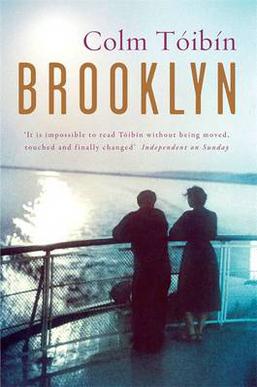
And how FUN to come up with the list! One outstanding book that has recently been turned into a film is Brooklyn, which was written in 2009 by Irish author Colm Toibin. I read it and loved it; I even blogged about it. Click here for my original post.
The book won many fans and much critical acclaim. It won the 2009 Costa Novel Award, was shortlisted for the 2011 IMPAC Dublin Award, and made it onto the longlist for the 2009 Man Booker Prize. And now, in 2015, it has been made into a film by Fox Searchlight Pictures. It stars Saoirse Ronan, Emory Cohen, Domhnall Gleeson, Jim Broadbent, and Julie Walters, among others.
The film is already garnering great reviews. Here's one from Flavorwire:
http://flavorwire.com/545905/brooklyn-is-a-portrait-of-leaving-and-finding-home-so-evocative-it-might-make-you-weep
And another one from the New York Times:
http://www.nytimes.com/2015/11/04/movies/review-resettling-the-meaning-of-home-in-brooklyn-with-saoirse-ronan.html?_r=0
And according to the Washington Post, even Colm Toibin loves the film:
https://www.washingtonpost.com/entertainment/books/colm-toibin-loves-the-new-movie-version-of-his-brooklyn/2015/11/02/14db7ce6-8103-11e5-8ba6-cec48b74b2a7_story.html
I don't know about you, but I can't wait to see it! Watch this trailer and I bet you'll feel the same!
Let me know if you go, and tell me what you think!
And how FUN to come up with the list! One outstanding book that has recently been turned into a film is Brooklyn, which was written in 2009 by Irish author Colm Toibin. I read it and loved it; I even blogged about it. Click here for my original post.
The book won many fans and much critical acclaim. It won the 2009 Costa Novel Award, was shortlisted for the 2011 IMPAC Dublin Award, and made it onto the longlist for the 2009 Man Booker Prize. And now, in 2015, it has been made into a film by Fox Searchlight Pictures. It stars Saoirse Ronan, Emory Cohen, Domhnall Gleeson, Jim Broadbent, and Julie Walters, among others.
The film is already garnering great reviews. Here's one from Flavorwire:
http://flavorwire.com/545905/brooklyn-is-a-portrait-of-leaving-and-finding-home-so-evocative-it-might-make-you-weep
And another one from the New York Times:
http://www.nytimes.com/2015/11/04/movies/review-resettling-the-meaning-of-home-in-brooklyn-with-saoirse-ronan.html?_r=0
And according to the Washington Post, even Colm Toibin loves the film:
https://www.washingtonpost.com/entertainment/books/colm-toibin-loves-the-new-movie-version-of-his-brooklyn/2015/11/02/14db7ce6-8103-11e5-8ba6-cec48b74b2a7_story.html
I don't know about you, but I can't wait to see it! Watch this trailer and I bet you'll feel the same!
Let me know if you go, and tell me what you think!
Wednesday, September 23, 2015
Literary Masters Reads I Am Malala!
One of the books that Literary Masters members will be reading this month is I Am Malala, Young Readers Edition by the Nobel laureate Malala Yousafzai. Unless you've been living under a rock, actually even if you've been living under a rock, you know that in 2012, the Taliban shot this young Pakistani girl in an attempted assassination because she was advocating for girls' rights to an education.
This is an extraordinary story told by a truly remarkable young woman. I encourage you to read the Young Readers Edition with your children; you will be amazed. And you may even wonder, "What can I do to help?" Indeed, a frequently asked question in the discussion of this book is "What can be done to help Malala in her quest to help get more girls an education?"
Well, every little bit helps. And as Malala is showing the world, one person really can make a difference!
Literary Masters is thrilled to be teaming up with Schoola, the wonderful online school fundraising site, to benefit the Malala Fund. Malala-Schoola bags will be distributed at our Literary Masters meetings, and if the girls choose, they can fill the postage-paid bags with used clothing and drop them off at the post office or leave them on their front doorsteps for the mail man to pick up and bring to the Schoola warehouse. Schoola will sell the clothes online and donate 40% of the sale of every item to the Malala Fund, a non-profit organization whose aim is to empower girls through education.
Find out more about Schoola here:
This is an extraordinary story told by a truly remarkable young woman. I encourage you to read the Young Readers Edition with your children; you will be amazed. And you may even wonder, "What can I do to help?" Indeed, a frequently asked question in the discussion of this book is "What can be done to help Malala in her quest to help get more girls an education?"
Well, every little bit helps. And as Malala is showing the world, one person really can make a difference!
Literary Masters is thrilled to be teaming up with Schoola, the wonderful online school fundraising site, to benefit the Malala Fund. Malala-Schoola bags will be distributed at our Literary Masters meetings, and if the girls choose, they can fill the postage-paid bags with used clothing and drop them off at the post office or leave them on their front doorsteps for the mail man to pick up and bring to the Schoola warehouse. Schoola will sell the clothes online and donate 40% of the sale of every item to the Malala Fund, a non-profit organization whose aim is to empower girls through education.
Now, this is all very exciting timing because the documentary film He Named Me Malala
is premiering during September and October, so if you want to have a
multi-media experience, watch out for the film coming to a theater near
you. Here is a preview.
I hope you'll take the time to read this book with a young person, and even better--talk about it with them!
and find out more about the Malala Fund here:
Saturday, August 29, 2015
The Literary Masters Reading List for the 2015/2016 Season is Posted!
The 2015/2016 Season of Literary Masters is officially kicking off today with the announcement of the reading list on the Literary Masters website. You can visit and learn all about Literary Masters book groups and salons by clicking here. And if you just want to see the reading list, here it is below. Why not read along with Literary Masters? Enjoy!
Controversy.
According to the Merriam-Webster dictionary app, controversy is “a
discussion marked especially by the expression of opposing views.” Well,
the 2015/2016 Literary Masters season is sure to be filled with all
sorts of viewpoints! As always, our salons encourage debate and a
spirited exchange of ideas. Our hope, of course, is that we come away
from each meeting having learned from fellow members and with a more
open, informed, and empathetic viewpoint. After all, isn’t that why we
read and gather to talk about our books? Get ready to wade into a few
controversies, fellow members!
Literary Masters 2015/2016 Season
October: Go Set a Watchman by Harper Lee. To call the publication of this book a controversy
is an understatement. Like it or hate it, Pulitzer Prize-winning Harper
Lee’s second novel has generated one of the largest (and divisive)
literary conversations in ages. And we’ll be taking part!
November: Redeployment by Phil Klay. This time it’s the subject matter that is controversial; these stories written by an Iraq war veteran will take us to a place that none of us have been to—but where we’ve sent plenty of fellow Americans. We should talk about this, right? What’s not contested is the merit of this book; it won the National Book Award and the National Book Critics Circle Award, among others.
December: The Children Act by Ian McEwan. Can you force a sick child to accept medical treatment? Should you? What if that child’s religion forbids it? And who gets to decide? These and other controversial topics will be covered in our salons during December.
January: The Sympathizer by Viet Thanh Nguyen. The protagonist of this thought-provoking novel will undoubtedly make you look at the Viet Nam war (and America’s role in it) in a whole new light. Just how much responsibility does America bear, and how guilty should we feel? A controversial war, and a novel sure to generate a lot of debate.
February: Ragtime by E.L. Doctorow. There is universal sentiment that the literary world lost a lion when E.L. Doctorow passed away this year. However, this novel is full of controversy, both in its structure and its themes. We will have fun “digging deep” into this literary treasure, which won the National Book Critics Circle Award.
March: The Lonely War: One Woman’s Account of the Struggle for Modern Iran by Nazila Fathi. Is there anything about Iran that isn’t controversial? This memoir is our nonfiction selection for the season, written by a native Iranian and NY Times correspondent. This is sure to open a few eyes. Ben Affleck isn’t the only one who can transport us to Iran and back!
April: I Do Not Come to You By Chance by Adaobi Tricia Nwaubani. This debut novel won its Nigerian author the Commonwealth Prize for Best First Book as well as the Betty Trask First Book Award. Set in Nigeria, the hilarious story (with some serious undertones) pits education against corruption as we enter the world of Nigerian email scamming. With a controversial nod to Western affluence and influence, this novel will, if nothing else, make you look at your emails with new appreciation!
May: Purity by Jonathan Franzen. Okay, just the author’s name generates controversy. But we’ll be closing out the season discussing the work of another literary…well, if not a lion, then at least a literary cub. Perhaps we’ll have to don our feminist hats to decide once and for all whether Franzen is a misogynist. Perhaps we should invite Oprah to a salon?
November: Redeployment by Phil Klay. This time it’s the subject matter that is controversial; these stories written by an Iraq war veteran will take us to a place that none of us have been to—but where we’ve sent plenty of fellow Americans. We should talk about this, right? What’s not contested is the merit of this book; it won the National Book Award and the National Book Critics Circle Award, among others.
December: The Children Act by Ian McEwan. Can you force a sick child to accept medical treatment? Should you? What if that child’s religion forbids it? And who gets to decide? These and other controversial topics will be covered in our salons during December.
January: The Sympathizer by Viet Thanh Nguyen. The protagonist of this thought-provoking novel will undoubtedly make you look at the Viet Nam war (and America’s role in it) in a whole new light. Just how much responsibility does America bear, and how guilty should we feel? A controversial war, and a novel sure to generate a lot of debate.
February: Ragtime by E.L. Doctorow. There is universal sentiment that the literary world lost a lion when E.L. Doctorow passed away this year. However, this novel is full of controversy, both in its structure and its themes. We will have fun “digging deep” into this literary treasure, which won the National Book Critics Circle Award.
March: The Lonely War: One Woman’s Account of the Struggle for Modern Iran by Nazila Fathi. Is there anything about Iran that isn’t controversial? This memoir is our nonfiction selection for the season, written by a native Iranian and NY Times correspondent. This is sure to open a few eyes. Ben Affleck isn’t the only one who can transport us to Iran and back!
April: I Do Not Come to You By Chance by Adaobi Tricia Nwaubani. This debut novel won its Nigerian author the Commonwealth Prize for Best First Book as well as the Betty Trask First Book Award. Set in Nigeria, the hilarious story (with some serious undertones) pits education against corruption as we enter the world of Nigerian email scamming. With a controversial nod to Western affluence and influence, this novel will, if nothing else, make you look at your emails with new appreciation!
May: Purity by Jonathan Franzen. Okay, just the author’s name generates controversy. But we’ll be closing out the season discussing the work of another literary…well, if not a lion, then at least a literary cub. Perhaps we’ll have to don our feminist hats to decide once and for all whether Franzen is a misogynist. Perhaps we should invite Oprah to a salon?
Sunday, July 12, 2015
Well, just in case you needed more evidence that reading and being part of a book group are good for you, here's an article by David Brooks of The New York Times that should satisfy you and set you looking for the nearest Literary Masters book group or salon! Feel free to pass it along!
Wednesday, June 3, 2015
Bailey's Women's Prize for Fiction 2015: We Have a Winner!
Well, I didn't see this one coming. Congratulations to Ali Smith for winning this year's Bailey's Women's Prize for Fiction for her unusual novel, How To Be Both! For more info, click here.
Friday, May 29, 2015
Bailey's Women's Prize for Fiction
There are a lot of literary prizes being awarded these days. I tend to look at prize-winning authors and books as a filter. I know this is a flawed method, but in a world with so many books and so little time, I have to rely on something to help me whittle down my choices.
One of the prizes I follow is the Bailey's Women's Prize for Fiction. The 2015 winner will be announced June 3rd. The short list is:
- Rachel Cusk for Outline
- Laline Paull for The Bees
- Kamila Shamsie for A God In Every Stone
- Ali Smith for How To Be Both
- Anne Tyler for A Spool of Blue Thread
- Sarah Waters for The Paying Guests
Saturday, March 21, 2015
Should Your Book Club Read A History of Loneliness by John Boyne?
I read this book in two days, and would have finished in one if other duties hadn't insisted upon my attention! Wow, you think a subject like the sex scandals of the Catholic Church have been done and dusted, and then you pick up a book like this and realize...where is the outrage??? Yes, your book club should read and discuss this! Also, it's a very gripping and superbly crafted story.
So, what can your book club talk about?
Warp-speed plot summary: It's Ireland, and we're taken by the narrator from his childhood through his time as a priest in both Ireland and Rome as he reflects upon the Church's sex scandals, pondering all the while the culpability of those involved.
Father Odran Yates is our narrator, and you will no doubt spend a lot of time figuring him out. Is he reliable? Is he telling the reader the truth? Is he telling himself the truth? Is he the priest that his best friend Tom accuses him of being? Or is he someone else? Why does Odran join the priesthood, and why does he stay there? What is he getting out of it? Why is he telling us his story?
This may lead you to talk about the role of priests and other religious leaders. What is their appropriate role? What is their value? Are they anachronisms? What makes a good priest?
You'll want to talk about the structure of the book. Does the form carry any meaning to the reader? Is the structure an integral part of what the book is saying? Would this be a completely different book if it were told as a linear narrative? How does the story's structure express the theme of remembering? Yes, you'll definitely want to consider the remembering that Odran is doing. What purpose does it hold? Is it healing? Or does it re-tramautize?
Should there be a collective remembering? Or have we all heard enough about such scandals? Is this an important book to read?
Why do you think this book is titled the way it is? Is there more than one explanation? What about the epigraph? How does this affect your understanding of the book? How does it inform Odran's telling of the story?
One of the themes you'll want to 'dig deep' into is that of how our childhoods shape who we are. And how far can we take this as an excuse for our adult behavior? How long can we blame our parents for how they raised us?
What do you think of Odran's parents? Are they simply doing what any Irish Catholic parents of the 1960's and '70's would do? Are they good parents? Or are they blind, unthinking sheep? And what about all the parents of the boys who were abused? Is it fair to say that no one could have realized what was going on except in hindsight?
What do you think of Odran's sister? Why does he spend so much time telling us about her?
DENIAL. You'll certainly want to discuss this. Who was in denial? Who truly didn't know? Is it even possible that one couldn't know? Or suspect? Or is that how we feel now because of everything we do know, now that the scandal has come to light? You should also talk about the culpability of those who chose or choose to remain in denial.
You'll certainly want to talk about secrecy and its ability to protect those in power. While you're reading the book, count how many times the words "embarrass" and "shame" show up. Talk about the psychology of using those very words by those who should have been experiencing embarrassment and shame--a colossal understatement, I realize--against their victims.
Power. Oh, yes, you will want to discuss this. Who has it. How they get it. And how they keep it. What happens to those who have it. What happens to those who don't.
You'll want to talk about Ireland and its relationship with the Catholic Church. Oh, and you'll want to talk about the Catholic Church. This could, obviously, take up the entire meeting. Talk about institutions in general. Who is in control? The individuals within them or the system itself?
Talk about Odran's experience in Rome. Why do you think he tells us about his time there? What do you make of what Odran tells us about his sexuality?
Is the book excusing anyone? Is it explaining anything? Does it add to your understanding of the sex scandals? Does it make you more empathetic/sympathetic toward anyone? Does it make you angry and want to DO something? Is it indicting anyone? Is it indicting YOU?
So, what can your book club talk about?
Warp-speed plot summary: It's Ireland, and we're taken by the narrator from his childhood through his time as a priest in both Ireland and Rome as he reflects upon the Church's sex scandals, pondering all the while the culpability of those involved.
Father Odran Yates is our narrator, and you will no doubt spend a lot of time figuring him out. Is he reliable? Is he telling the reader the truth? Is he telling himself the truth? Is he the priest that his best friend Tom accuses him of being? Or is he someone else? Why does Odran join the priesthood, and why does he stay there? What is he getting out of it? Why is he telling us his story?
This may lead you to talk about the role of priests and other religious leaders. What is their appropriate role? What is their value? Are they anachronisms? What makes a good priest?
You'll want to talk about the structure of the book. Does the form carry any meaning to the reader? Is the structure an integral part of what the book is saying? Would this be a completely different book if it were told as a linear narrative? How does the story's structure express the theme of remembering? Yes, you'll definitely want to consider the remembering that Odran is doing. What purpose does it hold? Is it healing? Or does it re-tramautize?
Should there be a collective remembering? Or have we all heard enough about such scandals? Is this an important book to read?
Why do you think this book is titled the way it is? Is there more than one explanation? What about the epigraph? How does this affect your understanding of the book? How does it inform Odran's telling of the story?
One of the themes you'll want to 'dig deep' into is that of how our childhoods shape who we are. And how far can we take this as an excuse for our adult behavior? How long can we blame our parents for how they raised us?
What do you think of Odran's parents? Are they simply doing what any Irish Catholic parents of the 1960's and '70's would do? Are they good parents? Or are they blind, unthinking sheep? And what about all the parents of the boys who were abused? Is it fair to say that no one could have realized what was going on except in hindsight?
What do you think of Odran's sister? Why does he spend so much time telling us about her?
DENIAL. You'll certainly want to discuss this. Who was in denial? Who truly didn't know? Is it even possible that one couldn't know? Or suspect? Or is that how we feel now because of everything we do know, now that the scandal has come to light? You should also talk about the culpability of those who chose or choose to remain in denial.
You'll certainly want to talk about secrecy and its ability to protect those in power. While you're reading the book, count how many times the words "embarrass" and "shame" show up. Talk about the psychology of using those very words by those who should have been experiencing embarrassment and shame--a colossal understatement, I realize--against their victims.
Power. Oh, yes, you will want to discuss this. Who has it. How they get it. And how they keep it. What happens to those who have it. What happens to those who don't.
You'll want to talk about Ireland and its relationship with the Catholic Church. Oh, and you'll want to talk about the Catholic Church. This could, obviously, take up the entire meeting. Talk about institutions in general. Who is in control? The individuals within them or the system itself?
Talk about Odran's experience in Rome. Why do you think he tells us about his time there? What do you make of what Odran tells us about his sexuality?
Is the book excusing anyone? Is it explaining anything? Does it add to your understanding of the sex scandals? Does it make you more empathetic/sympathetic toward anyone? Does it make you angry and want to DO something? Is it indicting anyone? Is it indicting YOU?
Friday, March 13, 2015
National Book Critics Circle Awards: Winners Announced!
I love the National Book Critic Circle Awards! How could I not? On their website under Mission Statement it reads: "The National Book Critics Circle honors outstanding writing and fosters a
national conversation about reading, criticism and literature.
"...fosters a national conversation about reading..." Hm...remind you of anyone you know?
Literary Masters is all about fostering the love of reading and the love of talking about what we read with others!
Congratulations to the winners! For all the info on the NBCC, click here. Make sure to check out how they select the winners.
For a snapshot of the winners in each category, continue reading:
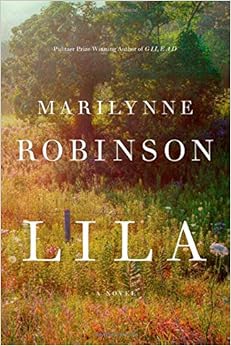
Fiction: Lila by Marilyn Robinson. I can't wait to read this book! (I can't believe I haven't done so yet.)
Autobiography: Can't We Talk About Something More Pleasant? by Roz Chast. For my review of this wonderful, laugh out loud, cry all day, graphic memoir, click here.
Criticism: The Essential Ellen Willis by Ellen Willis
General Nonfiction: The Problem of Slavery in the Age of Emancipation by David Brion Davis
John Leonard Prize for outstanding debut book in any genre: Redeployment by Phil Klay. You know that I am a big fan of this collection of short stories! I will try to post about it sometime soon!
Biography: Tennessee Williams: Mad Pilgrimage of the Flesh by John Lahr. (What a wonderful title!)
Poetry: Citizen: An American Lyric by Claudia Rankine
Ivan Sandrof Lifetime Achievement Award: Toni Morrison (I'm thinking it's time to read another of her wonderful novels!)
Nona Balakian Citation for Excellence in Reviewing: Alexandra Schwartz
"...fosters a national conversation about reading..." Hm...remind you of anyone you know?
Literary Masters is all about fostering the love of reading and the love of talking about what we read with others!
Congratulations to the winners! For all the info on the NBCC, click here. Make sure to check out how they select the winners.
For a snapshot of the winners in each category, continue reading:
Fiction: Lila by Marilyn Robinson. I can't wait to read this book! (I can't believe I haven't done so yet.)
Autobiography: Can't We Talk About Something More Pleasant? by Roz Chast. For my review of this wonderful, laugh out loud, cry all day, graphic memoir, click here.
Criticism: The Essential Ellen Willis by Ellen Willis
General Nonfiction: The Problem of Slavery in the Age of Emancipation by David Brion Davis
John Leonard Prize for outstanding debut book in any genre: Redeployment by Phil Klay. You know that I am a big fan of this collection of short stories! I will try to post about it sometime soon!
Biography: Tennessee Williams: Mad Pilgrimage of the Flesh by John Lahr. (What a wonderful title!)
Poetry: Citizen: An American Lyric by Claudia Rankine
Ivan Sandrof Lifetime Achievement Award: Toni Morrison (I'm thinking it's time to read another of her wonderful novels!)
Nona Balakian Citation for Excellence in Reviewing: Alexandra Schwartz
Tuesday, March 3, 2015
Should Your Book Club Read The House of Mirth by Edith Wharton?
The House of Mirth by Edith Wharton was this season's classic selection for Literary Masters book groups and salons. Most members loved the book, but not all. A few found the writing too dense, too flowery, too old-fashioned. Hm...well, the majority of us loved it and thought it was brilliant. Many members said they can't wait to read more Wharton! So, YES, your book club should read this literary treasure!!!
So, what can your book club discuss? Please note there are some SPOILERS BELOW!!!
SO MUCH!!! but in order to have a reasonable length post, I'll just go over a few topics, just to get you started!
Warp-speed plot summary: It is the Gilded Age in New York City and the stunningly beautiful Lily Bart is running out of time to find a rich husband who will secure her future. Her options are plentiful and dazzling at first, but Lily is holding out. For whom? For what? As the story progresses, Lily's suitors become fewer and much less alluring. Complicating matters is Lily's dire financial situation as well as the rumors swirling about her behavior. Will Lily's Prince Charming arrive in time? Will Lily save herself? If you think this story sounds vapid, you are seriously mistaken! This novel is so layered and nuanced; it will get you thinking--and keep you thinking!
AND DON'T TRY TO CHEAT BY WATCHING THE MOVIE! Part of the pleasure of The House of Mirth is the prose. You WILL want to discuss this. Wharton is witty, ironic, satirical, but best of all she evokes visions in your mind as you read. It's as if scenes are playing out, one after the other. All inspiring writers would do well to study the craft of Edith Wharton! I kept thinking about Jane Austen's writing as I read this novel, and I also thought of the scenic quality of Somerset Maugham's The Painted Veil. It is no wonder that these authors' works are turned into films; they are masters at the "screenplay" style!
There are many interpretations of this novel, so if you want to do some research, you'll find feminist, psychoanalytic, deconstructive, and Marxist readings of it, to name a few. It's not necessary to read any of them, of course; you can simply discuss your own "reading" of House of Mirth, but I am highlighting here that your book club may all "see" the story very differently. That's one of the beauties of the book!
You'll want to "dig deep" into Lily. What motivates her? What does she want and why? Does she even know what she wants? Do her desires change over the course of the novel? Talk about how Lily has been raised and how this has affected her. Talk about the other influences in her life also. Who/what has defined who Lily is?
Is Lily a sympathetic character? The answer to this seems to color a lot of how readers feel about the entire story, so it's a simple but important question. What makes her sympathetic or not? Does she have a moral compass?
You'll want to invite Lily to lie down on the couch! What is going on with her and the decisions she makes? Is she being self-destructive? Why? Is her behavior being motivated by unconscious desires? Is she an early feminist? How would she have become one? Is she simply clueless as to the consequences of her actions? Or does she know exactly what she's doing? Is she a case of arrested development?
Is Lily a victim of the times and society in which she lives? Or is she complicit in her demise?
Does Lily end her life on purpose or accidentally?
If there is one point in the novel where you would put Lily on a different path, where would that be?
You'll want to talk about LOVE in this story. Does anyone love anyone else? Connected to this, no doubt you'll talk about marriage and how it is portrayed. How do the husbands fare? How do the wives fare? You'll talk about the transactional nature of marriage, and who gets what from the deal.
Power is a huge theme in this novel, so you should talk about this! What gives the characters their power? Money? Beauty? Reputation? Personal contacts?
Money is also prominent in the story. Old money versus new money is one of the major themes and plays out in every way: how the characters live, entertain, travel, dress, emote--how they come about their money--in virtually every aspect of their lives. Yes, you can "dig deep" into what the book is saying about money, class hierarchy, and their complicated relationship.
Related to the above, you may want to discuss the time period of the novel and the changes that were going on during the Gilded Age. This may give you some interesting insight into the story. Ask yourselves, what is the book saying about the values and mores and the high society people of the Gilded Age?
You will of course want to discuss the other characters! How do you feel about Seldon? Does he truly love Lily? What does he desire and why? Is there any "good" character in the story? How do you feel about Carrie Fisher? How do you feel about Rosedale? Wow--these are complicated characters!
Here's something to debate: When Rosedale tells Lily he will marry her if she brings down Bertha Dorset, the next morning Lily knows her decision. However, we as readers do not. Does Lily decide to do what Rosedale has suggested? What stops her from doing so? Or has she decided upon waking that she cannot?
You should discuss Gerty and her purpose in the novel!
I am leaving out SO MANY characters here that you'll want to discuss, each one representing a different strata of society--make sure you "dig deep" into each one!
Save time to discuss the imagery in the novel!!! Notice the theme of imprisonment, note the water imagery, note the references to mythology! Note how nature is portrayed and the characters' relationship to it. Note the architecture and the clothing! What about the names?
What about the title? It is taken from Ecclesiastes: "The heart of the wise is in the house of mourning; but the heart of fools is in the house of mirth." How does this influence your understanding of this book? The original title was A Moment's Ornament, and Wharton's working title was The Year of the Rose. What do you think of this?
We are just scratching the surface here!!! However, I've probably tried your patience by making you read this far. One more thing, though: make sure to discuss what this book is about. Why do we read it year after year? What is it saying? Is it relevant to us today? (I think so!!!) Is it an important novel?
Let me know how your book club gets on with this literary treasure!!!
Subscribe to:
Posts (Atom)