WHIRL (What Have I Read Lately) Books is a site for readers to find books for themselves and their book clubs. Liz at Literary Masters runs book groups and literary salons where we "dig deep" into literary treasures.
Showing posts with label Book Clubs. Show all posts

Saturday, August 29, 2015

The Literary Masters Reading List for the 2015/2016 Season is Posted!

The 2015/2016 Season of Literary Masters is officially kicking off today with the announcement of the reading list on the Literary Masters website.  You can visit and learn all about Literary Masters book groups and salons by clicking here.  And if you just want to see the reading list, here it is below.  Why not read along with Literary Masters?  Enjoy!

Controversy. According to the Merriam-Webster dictionary app, controversy is “a discussion marked especially by the expression of opposing views.” Well, the 2015/2016 Literary Masters season is sure to be filled with all sorts of viewpoints! As always, our salons encourage debate and a spirited exchange of ideas. Our hope, of course, is that we come away from each meeting having learned from fellow members and with a more open, informed, and empathetic viewpoint. After all, isn’t that why we read and gather to talk about our books? Get ready to wade into a few controversies, fellow members!

Literary Masters 2015/2016 Season

October: Go Set a Watchman by Harper Lee. To call the publication of this book a controversy is an understatement. Like it or hate it, Pulitzer Prize-winning Harper Lee’s second novel has generated one of the largest (and divisive) literary conversations in ages. And we’ll be taking part!

November: Redeployment by Phil Klay. This time it’s the subject matter that is controversial; these stories written by an Iraq war veteran will take us to a place that none of us have been to—but where we’ve sent plenty of fellow Americans. We should talk about this, right? What’s not contested is the merit of this book; it won the National Book Award and the National Book Critics Circle Award, among others.

December: The Children Act by Ian McEwan. Can you force a sick child to accept medical treatment? Should you? What if that child’s religion forbids it? And who gets to decide? These and other controversial topics will be covered in our salons during December.

January: The Sympathizer by Viet Thanh Nguyen.   The protagonist of this thought-provoking novel will undoubtedly make you look at the Viet Nam war (and America’s role in it) in a whole new light. Just how much responsibility does America bear, and how guilty should we feel? A controversial war, and a novel sure to generate a lot of debate.

February: Ragtime by E.L. Doctorow. There is universal sentiment that the literary world lost a lion when E.L. Doctorow passed away this year. However, this novel is full of controversy, both in its structure and its themes. We will have fun “digging deep” into this literary treasure, which won the National Book Critics Circle Award.

March: The Lonely War: One Woman’s Account of the Struggle for Modern Iran by Nazila Fathi. Is there anything about Iran that isn’t controversial? This memoir is our nonfiction selection for the season, written by a native Iranian and NY Times correspondent. This is sure to open a few eyes. Ben Affleck isn’t the only one who can transport us to Iran and back!

April: I Do Not Come to You By Chance by Adaobi Tricia Nwaubani. This debut novel won its Nigerian author the Commonwealth Prize for Best First Book as well as the Betty Trask First Book Award. Set in Nigeria, the hilarious story (with some serious undertones) pits education against corruption as we enter the world of Nigerian email scamming. With a controversial nod to Western affluence and influence, this novel will, if nothing else, make you look at your emails with new appreciation!

May: Purity by Jonathan Franzen. Okay, just the author’s name generates controversy. But we’ll be closing out the season discussing the work of another literary…well, if not a lion, then at least a literary cub.   Perhaps we’ll have to don our feminist hats to decide once and for all whether Franzen is a misogynist. Perhaps we should invite Oprah to a salon?

Monday, September 2, 2013

Literary Masters: The List!

Your long wait is over!  The 2013/2014 Season of Literary Masters is officially launched!  You will find the reading list below.  As you'll recall, I allowed my LM members to vote this season; they chose our eight titles from a long list of books.  Everyone had fun with this, although making a decision wasn't easy!  First, here's the long list:
  
Fiction Category: (I asked members to vote for six out of the following titles; please note that the prizes and awards are for the author, not necessarily for the title listed below.)
  1. The Son by Philipp Meyer (Guggenheim Fellowship)
  2. The Lowland by Jhumpa Lahiri (Pulitzer Prize for Fiction, Hemingway Foundation/PEN Award, O. Henry Award)
  3. The Woman Upstairs by Claire Messud (PEN/Faulkner Award for Fiction nomination)
  4. Americanah by Chimamanda Ngozi Adichie (MacArthur Foundation Fellowship, Orange Prize for Fiction)
  5. The Dinner by Herman Koch; translated by Sam Garrett (Publieksprijs Prize)
  6. The Burgess Boys by E;izabeth Strout (Pulitzer Prize for Fiction)
  7. The Round House by Louise Erdrich (National Book Award for Fiction, Guggenheim Fellowship, National Book Critics Circle Award for Fiction)
  8. How to Get Filthy Rich in Rising Asia by Mohsin Hamid (Man Booker Prize nomination)
  9. The Innocents by Francesca Segal (National Jewish Book Award for Fiction, Costa First Novel Award, Women's Prize for Fiction nomination)
  10. The Orphan Master's Son by Adam Johnson (Pulitzer Prize for Fiction)
  11. We Are All Completely Beside Ourselves by Karen Joy Fowler (California Book Award Silver Medal, PEN/Faulkner Award nomination)
  12. Telex from Cuba by Rachel Kushner (National Book Award finalist)

Oldie but Goodie Category: I asked members to vote for one of the following titles:
  1. Crossing to Safety by Wallace Stegner
  2. A Lesson Before Dying by Ernest J. Gaines
  3. A Dry White Season by Andre Brink
  4. Age of Innocence by Edith Wharton
  5. All the King's Men by Robert Penn Warren

Non-fiction Category: I asked members to vote for one of the following titles:
  1. Under the Banner of Heaven by Jon Krakauer
  2. Lean In by Sheryl Sandberg
  3. God's Hotel by Victoria Sweet
  4. The Season of the Witch by David Talbot
  5. The Worst Hard Time by Timothy Egan

How would YOU have voted?  Keep reading to find out how Literary Masters members voted!

 
 The 2013/2014 Season of Literary Masters Book Groups and Literary Salons Reading List is:
 
October: Americanah by Chimamanda Ngozi Adichie

November: The Woman Upstairs by Claire Messud

December: We Are All Completely Beside Ourselves by Karen Joy Fowler

January: Crossing to Safety by Wallace Stegner

February: The Innocents by Francesca Segal

March: Telex From Cuba by Rachel Kushner

April: God's Hotel by Victoria Sweet

May: The Lowland by Jhumpa Lahiri
 
So grab your reading glasses and join us for another fabulous season of digging deep into literary treasures!
 
To find out more about Literary Masters book groups and salons, or if you'd like to join us, please visit my website: www.literarymasters.net

  1. Publieksprijs Prize
    Publieksprijs Prize

Wednesday, May 23, 2012

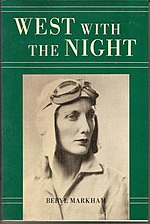
Should Your Book Club Read West With the Night by Beryl Markham?

How long have I had this book on my TBR shelf, and who gave it to me?  I have a vague recollection of someone in my graduate program handing it to me saying she had more copies at home, and that everyone should read this book.  Ernest Hemingway would agree, evidently.  He wrote to Maxwell Perkins that Beryl Markham could "write rings around all of us who consider ourselves writers" and implored Perkins to get the book and read it because "it is really a bloody wonderful book."

I thoroughly agree with Mr. Hemingway.

This bloody wonderful book is not so much a story as a collection of vignettes; it is Beryl Markham's (Beru to the indigenous Africans) memoir about growing up in Kenya when it was still British East Africa.  What I love about the book is...everything.  So, should your book club read it?  I don't know.  I don't feel like I need to discuss it with anyone, yet I do feel that it will be a book I return to again and again to experience it as much as possible.  I wonder if the fact that it is a memoir, a genre I don't read often, makes me feel like I just enjoyed a journey with someone (the author) and therefore don't feel the need to discuss it with others.  Hmm, I don't know; I'll have to give that some thought.

I do highly, highly recommend the book--five stars without a doubt--so read it on your own or with others, if you choose.  If you are an aspiring writer, you should run to your nearest book store to get this book.  Then you should read it out loud so that the language--clay in the hands of the master sculptress Markham--makes a lasting impression on you.

The setting is so vivid, you will feel like you are in Africa, and Markham's evident love and respect for that country gives it a quality that brings it to life in a lovely way.  Her descriptions will make you want to go there to see the places that she played in as a child and worked in as an adult  For example, Lake Nakuru with its throngs of pink flamingos.  I never do this, but I was so intrigued by Markham's description of that place, I "google imaged" it.  Check it out:


And what a adventurous childhood Markham had!  From encounters with lions to wild boar hunting with native friends, Markham recounts her tales with just the right amount of suspense and intrigue.  Talk about intrepid--this is not your everyday little league upbringing.  I am amazed Markham survived some of her adventures!

When she starts to fly over the bush to track elephants for wealthy tourists who want to shoot them, one realizes that this is, indeed, a life lived in a different era.  Colonialism, WWII looming, the frontiers of the skies to be conquered...Markham just touches on the rich history of the geo-politics of Africa at this time.

What Markham does not cover in the memoir is her personal life.  I was surprised when I googled her to find out that she was married three times, and allegedly had romantic involvement with some of the characters in her tale.  Hmm, interesting what she decided to leave out of the memoir.

Bottom line:  if you liked Let's Not Go to the Dogs Tonight, another wonderful memoir by Alexandra Fuller, I think you will like this book.  And if you haven't read Let's Not Go to the Dogs Tonight, you really should!

Friday, March 2, 2012

Should Your Book Club Read We the Animals by Justin Torres?

We the Animals is a wonderful little book, one you can easily read in one or two evenings.  It's about three little boys of mixed-race descent growing up in a household of little income, even less parenting, but, one has to believe, a lot of love.  There's not a traditional plot; rather, each chapter is a window into the life of this heart-wrenching family.

This is, as I said, a short novel, which I like, but it's a beautiful one.  The language is almost poetic, and considering that the book is narrated by the youngest brother, the contrast between what he says and how he says it lends a level of poignancy to the story that serves it well.  One can't help but feel for these little boys, their over-worked and self-effacing mother, and their well-intentioned but frustrated, macho dad.

I don't want to give anything away, but the end of the book, though in some ways shocking, comes as no surprise at all.  It left me wondering, "when, oh when, will we know what happens to them?  When is the sequel?"

So, should your book club read it?  I'd say this is a book most everyone will like, or at least appreciate, but the lack of traditional plot may pose a problem for those book clubs that don't approach their discussion in a structured way.  I won't be selecting this for our Literary Masters book groups, but that is not to detract from the novel.  I highly, highly recommend it for individuals, and if your book club reads it, do let me know how 'deep' a discussion you end up having.

Monday, February 27, 2012

Should Your Book Club Read In the Country of Men by Hisham Matar?

Absolutely yes!  This book is a winner and whether you read it on your own or with your book club, you should definitely read it.  It was written in 2006 and was shortlisted for the Man Booker Prize.  It won the Europe and South Asia Region of the Commonwealth Writer's Prize for Best First Book.  And it was Literary Masters selection for the month of February.  I must thank my brother--yes, the one who never visits libraries--for bringing this wonderful novel to my attention.

Warp speed plot synopsis:

The narrator, a grown man, looks back through the eyes of his nine year-old self, and tells us the story of  living under Gaddafi's regime in Libya.  Suleiman's father is a dissident, risking his life and those of his family, to rebel against the dictator.  Suleiman's mother wants nothing to do with such trouble; she is more concerned with her own private rebellion--against the men who forced her into a hurried and arranged marriage against her will.  Suleiman, or Slooma to his loved ones, navigates the private trials and tribulations in his home and personal world, against the backdrop of an all-seeing, all-powerful public power.  As he tries to understand and take control of his little world, Slooma will open the door of his home and his family, letting that public and terrifying power in with lasting consequences for everyone.

So, what can your book club talk about?:

Well, you will definitely want to talk about Suleiman.  He is, without a doubt, one of the more interesting narrators I've come across.  You'll want to explore his motivations for making the decisions he takes.  There are emotional, psychological, and pragmatic explanations for his actions, but they don't all point to the same motivation.  He is, in a word, slippery.

What is he responsible for?  What did he do intentionally and what did he do unwittingly?  Was he a victim, or is he pathological?

Is he an unreliable narrator?  Yes, in the sense that he is telling us his story from memory, and memory is by definition unreliable.  However, is there more to this?  Is he telling us his story as a way of justifying his actions?

You will want to explore the Oedipal themes in the story.  This may help illuminate Suleiman's motivations.

You will definitely want to explore the character of the mother.  She's another incredibly interesting character.  What motivates her?  Her love for her son, or her lust for independent power?  Note the story-telling motif running throughout the story.  Note the parallels between Scheherazade and Suleiman's mother.  Who chooses slavery over death?

The theme of betrayal pervades this book.  You'll want to discuss whether any of it is justifiable.  You'll also want to consider the pleasure that some of the characters take in submitting to authority.  What is the psychology behind this?

The imagery and symbolism in this novel are beautiful; the author began the book as a poem, and one can see this in the tropes he employs.  You'll want to talk about the significance of the mulberries, and why the only remaining mulberry tree is in Rashid's garden.  Why does Suleiman eat so many, and why does the sun make him sick?  What does the sun represent?  What does Bahloul the beggar represent?  What about the sea?

You'll want to consider whether the book is asking the question:  how complicit are the characters in their own imprisonments?

You will want to talk about the title.  At length.

This book was written before the Arab Spring and the overthrow of Gaddafi.  You'll want to talk about whether we respond to it differently, knowing what we now know about how history has played out.

You'll want to talk about the moral dilemma:  does one sacrifice one's family for the sake of the larger good, or protect one's family at all costs?

I could go on, but I think this should get you going--happy reading, and have a great book club meeting!

Friday, December 16, 2011

Should Your Book Club Read To the Lighthouse by Virginia Woolf?

This is not an easy book.  It is, however, a brilliant book.  So, forgive my equivocation, but I think my answer to should your book club read To the Lighthouse depends upon...your book club.  I will say that this book almost demands to be read with others so that you can talk about it and make sense of it.

To the Lighthouse was Literary Masters' December selection, and I found our discussions fascinating.  Like a mirror held up to each individual reader, this book seemed to reflect unique and personal responses.  Each LM member seemed to have a different interpretation of the parts, as well as the whole, of the story, much like the characters within had each an individual response to their lives.  Thus, we readers were like the characters in the book, constructing our perception of reality through the prism of our own perspectives.

I could spend days here going over the themes of the book, and analyzing the imagery, and discussing the characters, and so on.  And the thing is, I could spend each day looking at the above through a different lens: one day I could view the book through a historical context; one day I could do a Freudian reading, one day I could do a feminist reading, one day I could look at it through an existentialist lens, one day I could just analyze the symbolism, one day I could just analyze the colors...I think you get my point.


So what can your book club talk about if you read To the Lighthouse?

Many critics feel this book is highly autobiographical, so that may be a starting point for you if you are up for doing a little research.  Even if you don't, though, you'll want to discuss the relationships in the book.  Why does Mrs. Ramsey refuse to say 'I love you' to Mr. Ramsey?  Whom does Lily love?  What does Lily feel toward Mrs. Ramsey?  What does James want?

Actually, that's a good place to start.  What does each character desire?  This may lead you to what I consider an overarching theme of the book, one of the main things this book is "about."  And what does each character do with that desire?  And what does that say about human nature?

Each reader in your book club may have a different answer to "what is this book about?" and each one may be right.

Talk about the significance time plays in the story.  What is it saying about time?  How do the characters feel about time?  What is each character's relationship with time?  Perhaps you could consider the most important thing in each character's life and go from there.

Talk about the imagery and symbolism.  For example, what significance do windows hold?  What about the lighthouse?  Note all the gardens, trees, and other natural phenomenon and how they relate especially to Mrs. Ramsey.  What is the significance of that?  Talk about the house; many of my LM members felt that the house was a character in itself.  What do the waves represent, if anything?  Honestly, I could go on and on, but the above is probably enough to get your book club going.

This book is absolutely poetic and you may want to read passages just for the beauty of the language.  You'll definitely want to talk about the unique structure: Virginia Woolf was a pioneer of 'stream of consciousness,' so you as reader will be inside the flowing thoughts of the characters.  How does this affect you?  And how does this form embed the themes of the book?

I highly recommend this book.  It speaks to the reader on an individual level as well as speaking to us all on a universal level of things that are timeless.  This is probably why it is on every list of "must read" books.  It demands a little more work on the reader's part, but the rewards are well worth it.

Sunday, November 27, 2011

Should Your Book Club Read A Visit from the Goon Squad by Jennifer Egan?

A rather controversial choice--some members loved it and some did not--A Visit from the Goon Squad by Jennifer Egan was Literary Masters' selection for November, and the bottom line is: yes, this is an excellent choice for your book club, but you need to have a focused, disciplined discussion to get the most out of this very dense book.  This blog post should help you.

One reason this book is so dense is its structure, and you'll want to explore that at some length.  In an interview, Egan says she wanted to structure the book like a record album, with an "A" side and a "B" side.  Explore this issue, and quite a bit comes up.  You may want to consider the 'collection of chapters' as a type of record album--with some 'songs' that you like more than others.  Also, consider how each chapter relates to music in its message, mood, and tone.

Some of the themes of the book are actually expressed through the structure, and this will be illuminated if you really 'dig deep' as we do in our LM literary salons.  For example, one theme we discussed was how we are all separate yet connected.  Egan wanted each chapter to be able to stand on its own, which each one does, but taken in the context of all the stories, each chapter takes on that much more resonance and meaning. 

One of the most interesting chapters is the one done as a power-point presentation.  Now, your book club will want to talk about what this entire book is saying about technology and its effect on us individually and as a society, but this chapter particularly brings up the idea of the pause and what that signifies.  Now think about all the chapters--what does the "pause" mean?  This brings up all sorts of different and wonderful interpretations!


I found one of the main themes of the book to be redemption.  Each of us has an "A" side that eventually, for a variety of reasons--and your book club will want to explore these reasons with regard to each character--stops.  But, after a pause of some sort, the music starts up again, and you're on your "B" side.  Another allusion to the record album that will get your book club talking!

You'll want to consider how this is a book about time.  And also about time and music.  Egan says that nothing can bring you back in time like hearing a song from your past.  How are the characters relating to/ considering their pasts?  Read the epigraph and discuss how it relates to the book.  Egan says that she was heavily influenced by Marcel Proust's Remembrance of Things Past while writing A Visit from the Goon Squad, so your more literary book club members will want to weigh in here.

Consider the title!  and discuss!  What is the "goon"?  You should have more than one interpretation of this most interesting question!

Another theme you'll want to explore is authenticity versus artifice.  Just how much "spin" is going on in each chapter?  Ha!  Another allusion to the record album--I love it!  Many of my members found this to be a depressing topic to delve into, especially as we considered the last chapter where technology is used to an extreme to manipulate everyone's desires--and no one seems to be aware of it.  Just how much free will do we have?  How mediated are we in our daily lives? 

This novel is very much an exploration of identity--what it is, how we acquire it, why and how we refashion it.  You can spend an entire meeting discussing this one topic.

I'm just scratching the surface (no pun intended!) in this blog post as to what your book club can discuss when it comes to this highly entertaining and deeply literary book.  One thing you can do to really "dig deep" is take one or two stories and concentrate on them.  My favorite is "Safari, " but each one is brilliant in its own right.  Happy reading!

Thursday, November 3, 2011

Should Your Book Club Read The Painted Veil by W. Somerset Maugham?

Yes!  And if you're not in a book club, poor soul that you are, you should still read this fabulous novel on your own.  It's a beautiful, lyrical, thought-provoking book that I read in two days.  I would have finished it in one sitting, but I forced myself to slow down to enjoy the language and to think about the themes.  I loved this book.  I understand there's a film out there based on the book, but I don't think I'll see it--I don't want to ruin a good thing.

Warp-speed plot summary: 

Kitty, beautiful, spoiled Kitty has married fairly "well" in order not to be left on the shelf forever.  Walter, sweet, sincere, but achingly dull, has offered her a secure if not wildly passionate life in Hong Kong, where he is posted as a bacteriologist.  Once there, Kitty makes up for the lack of passion in her marriage through her adulterous affair with Charlie, the charming and handsome assistant colonial secretary, an appropriately glamorous post--much more exciting than being a bacteriologist.

However, in the opening scene--really one of the best opening scenes in literature, don't you think?--Walter has found out about Kitty and her lover.  And, I won't give more away, but Kitty ends up in the cholera-stricken area of China, where she is forced to deal with a life that doesn't revolve around superficial beauty and charm--a life where Kitty will need to dig deep within herself to find resources that she may just not even have.

So, what can your book club discuss?

There are so many angles at which to approach this novel.  For one, it's a love story.  You can discuss the different types of love in the novel and how they change.  That could take an entire evening!

There is spirituality and philosophy in the novel.  The characters have had to choose how they wish to live.  Which path is right?  Or is there a right path?  And how do we find that path? 

This novel is filled with deep questions.  What makes life worth living?  What is this novel saying about beauty?  What is it saying about morality?

The language of the novel is beautiful--I for one, am going to read more of W. Somerset Maugham--and you can dig into the imagery and symbolism.  What does the temple represent?  What does the title mean?  What does Walter's enigmatic response to Kitty mean? 

You'll of course want to discuss the characters and their relationships--all of them!

And you'll want to ask yourselves--what is this book about?  What is it really about?  I think you'll be amazed by the answers.

The more I think about it, the more I think I just may select this book for a future Literary Masters book group or salon!

Monday, October 3, 2011

Should Your Book Club Read The Road by Cormac McCarthy?

Although I found The Road by Cormac McCarthy absolutely stunning, I hesitate to recommend it for book clubs.  I highly, highly recommend it for individuals, and I would even like to discuss it with someone else who has read it, but paradoxically, I cannot suggest you select it for your reading group because...

Well, I'm not sure exactly why.  After all, Oprah selected it for her book club, and who am I to argue with Oprah?  Let's just say that I think there are other novels better suited for book group reading, others that I would suggest instead of this one.  I am currently reading another novel by Cormac McCarthy, All the Pretty Horses, so I'll let you know if you should choose that one for your group.  Let me finish it and I'll get back to you.

The Road is a quick read, but one that lingers long after you finish it.  It's the story of a man and his son who are traveling down a road in what seems to be a post-apocalyptic America.  We don't know what has caused the destruction, but the devastation is so intense and so pervasive, every moment for the duo is a struggle to survive, and every additional day of survival is a questionable achievement in itself.  After all, to live like this, wouldn't the alternative be better?

Two things pulled me along through the novel (in fact, I couldn't put the book down): one was McCarthy's poetic prose.  For a long time I had avoided him because I thought he was too grim and violent, but I am so glad that I overcame my squeamishness.  His writing should not be missed.  (Has anyone ever compared him to Hemingway?)

The relationship between the son and his father was the other thing that captivated me.  Whatever monumentally destructive event occurred, it took place before the boy was born, so his entire world has been constructed by his father.  (The mother has, well, you'll have to read the book to find out.)  The two are searching for other "good guys" but apparently the bad guys, and they are really bad, are more numerous.  Can you imagine living in a world where every single movement of every single day has the stress of life or death importance upon it?  McCarthy helps you imagine it, and for me, just doing that--imagining living that way--was a seriously intense reading experience.

Yes, this novel is bleak, but it's also filled with hope.  It's grim, but it's also filled with beauty.  Yes, it shows the absolute worst of mankind--no doubt.  But there is something to counter that, and I'll let you find out for yourself what it is.  This is one of the best books I've read this year, and I know that I am accused of liking dark literature, but I feel confident recommending this book to anyone--it's just that good.

Thursday, September 15, 2011

Should Your Book Club Read Amaryllis in Blueberry by Christina Meldrum?

Should your book club read Amaryllis in Blueberry by Christina Meldrum?  A resounding "yes!" is the answer.  This intriguing novel is the ideal choice for a book club; it's a compelling read, the writing is beautiful, and there is a lot to discuss.  In fact, the publisher, Simon & Schuster, realizing the appeal Amaryllis in Blueberry would have for book clubs, produced a paperback in order to make it more affordable, and completely skipped the hardcover stage.

You may not know Meldrum's work because her first novel, Madapple, was pegged for the YA (young adult) market, where it received immediate and widespread critical and commercial success, landing as a finalist on more than one prize shortlist.  (And you know how I like literary prizes!)  Amaryllis in Blueberry is her first "grown up" novel, although I think this is a "crossover" book, one that would appeal to the "young adult" market as well as to the "adult" market.  Hmm..not sure that's what we're called, but you know what I mean, right?

Quick synopsis:

Dick and Seena Slepy are married, but we get the feeling that their marriage has become a sort of prison for them.  Each is unhappy in his/her own way, and we soon learn that each has a secret that is feeding this unhappiness.  Dick decides that the only way to escape his miserable situation is to go to Africa as a medical missionary, and he drags his family--his wife and four daughters--along.

The oldest three girls each have the first name of Mary, but are called by their middle names, and each one harbors a corrosive secret of her own.  The youngest daughter, Amaryllis, is called Yllis, and early in the book, Amaryllis seemingly discovers yet another family secret and opens it up to the family, unleashing an unforeseen chain of events that will change each and every one of them.

So, what can your book club discuss?

There are lots of secrets in this book, and much to discover.  Meldrum weaves mythological stories into the plot of the book, and does it so well and so seemingly effortlessly that the reader ends up learning not only about the Slepy family, but also about age-old stories, and why we tell them.  The book explores all sorts of stories, from religion to science to family legends to stories we tell ourselves to get through the day, and your book club will want to discuss the how and why of these tales.

Another theme running through the novel is truth or Truth--what it is, whether it exists, how we reach it, and how we hold onto it.  This is quite a philosophical novel, but done in an understated way, through the very compelling main story.  A philosophical page-turner, if you will.

Meldrum is a beautiful writer, and some of her prose reads almost like poetry.  Your book club will have a blast with the imagery--note the literary nod to Conrad with the light/dark imagery, and have fun deciphering the symbolism in the story--do the characters represent someone or something other than themselves?  What does Africa represent?  Can we do a Freudian reading of this novel?  Pay attention to the names and how they give meaning to the tale. 

In the end, this novel seems to be about redemption, about hope, about having a second chance.  As the Slepy family returns to America, forever changed by their stay in Africa, they seemed poised to take on a life without secrets.  Or do they?  Which secrets remain?  This is something your book club will want to discuss!

Bottom line:  yes, your book club should read Amaryllis in Blueberry--it's a perfect choice--and I am looking forward to more writing from this incredibly talented author!

Tuesday, May 24, 2011

Should Your Book Club Read Three Stages of Amazement by Carol Edgarian?

If you're looking for the bottom line, here it is: absolutely yes.  This is a perfect book for book clubs, and if you don't belong to one and you're reading it on your own, you'll still love it.

Quick plot overview:
The story takes place during one pivotal year, 2009, the first year of Obama's presidency.  The country is reeling from the financial crash of late 2008, but people are still clinging to the hope they've pinned on a new president and on the American dream that is, let's face it, their birthright.  Charlie, a surgeon, and his wife Lena, a documentary film maker, want their little slice of entitlement and Charlie knows how they can get it.  He's going to build a medical robot that can be used in remote locations and the venture capitalists in California will fund it and they will all live happily ever richer.

So Charlie and Lena move to San Francisco "ready for luck."  They have "made their deal.  Charlie would give everything to Nimbus and Lena would handle the rest."  The slight glitch is that "the rest" is quite a bit, and this puts a strain on the marriage that it may not survive.

Meanwhile, in a beautiful mansion in Pacific Heights in San Francisco, live Cal and Ivy.  Cal is Lena's estranged uncle, a fact that concerns Charlie immensely.  Because guess who wants to invest in Nimbus and make Charlie and Lena super successful and wildly wealthy?  You guessed it--Uncle Cal.  Charlie is caught between a rock and a hard place, and without giving anything away, let's just say he risks getting crushed between the two.

The plot thickens as we meet Alessandro, the mysterious Italian who works for Cal but who was once Lena's lover.  Alessandro's job puts him in a position to have a direct impact on Charlie's success--and on his marriage with Lena. 

The opening line of Three Stages of Amazement begins "The modern marriage has two states, plateau and precipice..."  And yes, this novel is about marriage.  It's not about the wedding, nor the divorce.  It's about that in-between part, the real thing, marriage.  What creates a marriage, what's the glue that holds a marriage together, what a marriage does to the couple in it...you could spend an entire meeting over just this issue, but this novel is also about so much more.  What else can your book club talk about when discussing it?

The title, for starters.  The book is divided into three sections: Silence, Disbelief, and Talk.  I was fortunate enough to attend an evening where the bright and beautiful Carol Edgarian spoke about her book, and when asked about the title, she tied it to how people react when they are amazed by something.  First, silence--kind of a stunned silence.  Next, the brain's not really accepting it, so there's disbelief.  Finally, as we process what's going on, we begin to talk.

I love this explanation because it works on so many levels for this book.  Many of the characters go through the three stages of amazement on a personal level as they confront various events of their lives, but also the entire country is going through the same three stages following the catastrophic crash of the financial markets.  Carol Edgarian does an amazing job of capturing the zeitgeist of that little slice of time between when those cataclysmic events occurred and when people finally accepted those events as real, permanent, and part of a new way of life.  You can view this novel as a coming-of-age story for an entire country, when innocence was lost and disillusionment set in.

No doubt you'll want to discuss the characters in depth, and as you do so, see how each character's desire is playing a role in the story. And their principles.  And their secrets.  And how all three of these interact to create unexpected results.  A major theme in the book is whether or not we have any control over our lives; is there such a thing as fate, destiny, luck, or are we asserting our own will?

As summer approaches, it is perfect timing to read this book.  It's fast-paced enough to read on a trip, but literary enough to keep you interested and engaged.  A "cerebral beach read"--now that's the ticket!  Whether you go to the beach alone or with your book club, you'll enjoy Three Stages of Amazement.

Friday, May 20, 2011

Should Your Book Club Read The 1000 Autumns of Jacob de Zoet by David Mitchell?

This bursting-at-the-seams novel was the May selection for Literary Masters book groups.  It proved to be a polarizing choice.  Perhaps it's the time of year; I, like many others, feel like my head is inside a Magi-mixer--and the switch is on!  Some members (myself included) loved the book, and others found it really hard going.  Everyone appreciated the opportunity to discuss it, though.  So, if you're here for the bottom line, I would say: this is a book worth reading, and if you do read it, you'll want to talk about it with others, so yes, your book club should read it!

Our groups talked about so many things, one main concern: what on earth is this novel about?  You've got the first plot--the Dutch on Dejima island in Japan at the turn of the nineteenth century, based on real events--and then there's the second plot--the sisters and monks living in the mountaintop shrine.  And then the British frigate, again based on true events, arrives--almost a third plot--and helps tie everything together.  It's an adventure story par excellence, and it's also full of big ideas for your book club to explore.

We cover about twenty years--from 1799 until 1819 or thereabouts, yet all the major concerns of the century will be crammed in the story.  Science versus superstition, tradition versus modernity, West versus East, exploration versus exploitation, and much, much more.

Several overarching themes were discussed:
  • The idea of man being a complicated creature, a mix of both good and evil.  Are we just the sum of our deeds?  Is morality an absolute, or is it relative and dependent upon our culture?
  • The idea of life being a zero-sum game, and we are all just living by the law of the jungle.  It's always all about power--who has it, who can grab it, how to use it.  Betrayal is pervasive throughout the story, which makes sense when it's an eat or be eaten world. 
  • Stories, myths, and why we tell themAnd how they form who we are.  Whether we realize it or not.  Refer to page 244 for a great quote on this.
  • How we (often times blindly) hold onto a belief or ideology that justifies any and all of our actions.  How hard it is to let go of our beliefs because they form our identity and they give us power.  Refer to page 205 for a wonderful quote on this.
  • How very difficult it is to communicate, especially across cultural or other divides.  The power that an interpreter has, and the huge consequences that can arise from misinterpretation.
  • Imprisonment in a time of exploration.  Think about it--lots of the characters either chose their own prison or were put in one by someone else.
This book is bursting with metaphors, but one I loved was the birth at the beginning of the novel--a wonderfully symbolic scene.   And we all loved the language, especially the haiku-like 'interruptions'--usually tied to nature--that underscored the action.  For example, when the villagers don't want to know about what's going on in the shrine on p.182, the line reads "She hears the ancient hush of falling snow," and then later, when the truth is being uncovered on p. 236, the line reads "Someone sweeps snow in the courtyard with a stiff-bristled broom."  How gorgeous is that?

There's lots more to this book, but this ought to get you started with some ideas to discuss with your book club.  Happy reading!

Monday, May 2, 2011

Bad Nature, Or With Elvis in Mexico by Javier Marias

Wow, this seemingly simple story packs a powerful punch.  I am constantly lamenting the gaps in my literary life, and one embarrassingly deficient area of knowledge for me is the Spanish-speaking world of literature.  I am trying to rectify this, and one author that I've had on my radar for awhile but had never read is Javier Marias.  I mean, Orhan Pamuk has said that Marias should win the Nobel prize for literature, and Orhan should know--he's won it himself.

One of my favorite bloggers suggested I start with this book.  And I can see why.  This is a quick little book; in fact, one can easily read it in a day.  I think it will take much longer than that to process, however.

Quick plot overview:
The narrator is being hunted.  He makes this abundantly clear to us in the first five pages of the story.  In a kind of stream-of-consciousness style, he tells us just how hunted he is.  For the rest of the story, we learn why there are people out to get him, but the story is so funny, I forgot about his being hunted at all.

The narrator is in Mexico to shoot a movie with Elvis Presley.  There is, as one can imagine, quite a large contingent of people accompanying Elvis, and our narrator is there for one purpose: as a diction coach.  His job is to see that Elvis pronounces the letter "c" as it is pronounced in Spain; Elvis doesn't want to have a Mexican accent.  An easy job, as it turns out; as our narrator tells us, "Mr. Presley had to pronounce very few Spanish phrases in the course of the film..."

We learn that Mr. Presley is quite a nice guy, but is rather restless as well.  When they aren't shooting the film, he and his entourage go out in search of a good time. Our narrator is with them, but he's no longer a diction coach.  Instead, much to his dislike, he is forced into the role of translator.  Seeing as they've all stumbled into a local bar full of hostile thugs who are intent upon insulting Elvis and his companions, the job of translator is a dangerous one indeed.  Our narrator must relay the messages from Elvis to the thugs and vice-versa, all the while trying to keep the peace. 

And all of a sudden, this quirky amusing novella becomes seriously intense and psychologically deep.  And impossible to put down.  Suffice to say, I closed the final page and my hands were practically trembling.  The power of words.  The power of image. The power of the medium.  What is real.  What we believe.  I've been pondering all this and more thanks to Bad Nature, or With Elvis in Mexico.  And the fact that Javier Marias worked as a translator for years--wow, that just adds more brilliance to an absolute gem of a novel.

The next Marias novel I want to try is A Heart So White.  How about you?  Which Marias novel is your favorite?

Monday, April 25, 2011

Should Your Book Club Read The Calligrapher by Edward Docx?

This book was recommended to me by one of my favorite bloggers to use for my Literary Masters book groups.  Although I don't think I'll be putting it on my list for next season, I can highly recommend the book for your individual reading pleasure, and you may even enjoy a rousing discussion about it with your personal book club.

Quick plot overview:
The narrator, Jasper Jackson, is a calligrapher by profession.  Living in north London, Jasper has been commissioned by a wealthy American media tycoon to transcribe thirty poems from John Donne's Songs and Sonnets.  Now if you know little to nothing about calligraphy and the same amount about Donne and his poetry, you are in for a treat.  More about that later, however.

Jasper Jackson is a bit of a womanizer as it turns out, and he doesn't restrict himself to one amour at a time.  Constancy seems to be a bit of a problem for Jasper.  But then again, Jasper hasn't really found his true love yet.  Until one day, when he is gazing out his window onto the garden below, where he spies a woman so outrageously beautiful, he compares her to Helen of Troy.  He also calls her, for lack of the words to do her true justice, a "real hottie."  Immediately he is smitten, no make that obsessed, and it becomes his sole ambition to meet her--and more.

Now, at the start of every chapter, there's a poem by John Donne, and even if you've never read his poetry, you can figure out the gist of what it means and then, and this is the clever part, you will know what's going to happen in that chapter.  If the way I've just described it makes it sound corny or cheesy, that's my fault because it's really done well.  Occasionally within a chapter Jasper discusses Donne's poetry and what it means, or how difficult it is to definitively pin down, but this never comes across as heavy-handed.  Instead, I found myself enjoying learning a bit about this 17th century poet and his work.

This novel is quite funny at times, although at first I felt like I was reading a guy's novel (I couldn't get too excited about Jasper's musings about woman and his wooing of them) and wondered if I would stick with it.  I'm glad I did, not only because it rapidly improved and then easily hooked me, but also because there's a couple of unexpected twists in the story that lend it depth.  And when considered in the broader context that encompasses Donne's poetry, one can see how these twists make a lot of sense.  It makes for a very clever, or as the Brits say, a brilliant package.

I highly recommend this book for a fun literary read, and I think most book clubs will find enough in it to carry an evening's conversation.  I will be keeping my eyes open for more Edward Docx for sure.

Saturday, April 16, 2011

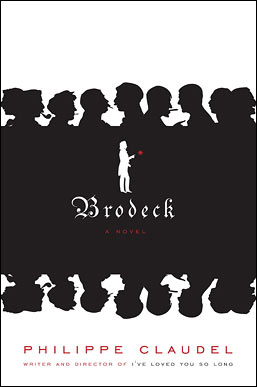
Brodeck's Report by Philippe Claudel

I chanced upon this book when I was reading about past winners of the Independent Foreign Fiction Prize.  Brodeck's Report (Brodeck, A Novel in the US) won this award in 2010, but for some reason, it had never crossed my radar.  When I saw that the author also wrote the film I've Loved You So Long, I put down all my other reading to pick up this novel.  If you haven't seen I've Loved You So Long, you are really missing out.  And if you have seen it, you know exactly what I mean.

Brodeck's Report did not disappoint me.  Yet, I hesitate to recommend it to all.  (I think I'm suffering from being accused of reading only heavy or depressing books, an accusation that is not true.  Well, not 100% true, anyway.)  How do I even describe this book?

Reading it was like being in a dream.  I wasn't exactly sure where the setting was.  A tiny isolated village somewhere in the fluid-boundary zone of Europe, around the Germany/France border or the Austria/Hungary border.  The time is post WWII, although this, too, is fluid as we follow the meanderings of the narrator's memory as he tells us his story.  The characters are sometimes real, but hard to pin down.  They felt sort of ephemeral to me.  And at times I felt I was reading a fable or allegory.

But at the same time, I couldn't put this book down, and the messages it carried were very real and clear.

Quick plot summary: Brodeck has been charged with writing a report about the events surrounding the death of a nameless character he refers to as "the other."  The people who have ordered him to write the report have actually murdered "the other," and they intimidate Brodeck into cooperating.  However, as a means of resistance, Brodeck writes two reports, and the book we are reading is the "true" one.  Or so one would think.  Make of that what you will; at any rate, Brodeck starts his narrative with this disclaimer:

"I'm Brodeck and I had nothing to do with it.  I insist on that.  I want everyone to know.  I had no part in it, and once I learned what had happened I would have preferred never to mention it again, I would have liked to bind my memory fast and keep it that way, as subdued and still as a weasel in an iron trap."

Ah yes, but it is terribly difficult to "bind memory," and in the midst of writing his report, Brodeck reminisces about his time in a concentration camp, from which he has recently returned.  Resisting his captors was not an option for Brodeck at the camp.  Instead, he performed the role that the sadistic guards demanded of him: he acted, quite literally, like a dog.  This he did in order to survive and return home to his beloved Amelia and Fedorine.

As it turns out, Amelie has not been left unscathed in the village as she awaited Brodeck's return.  And it isn't just the invading soldiers who are culpable; local villagers are to blame as well.

As Brodeck writes his reports, it becomes obvious to him and to the reader that he is in danger.  The villagers who murdered "the other," and who have ordered Brodeck to write his report, do not trust him.  "The other" was murdered because he held up a mirror to each person in the village.  Now we fear Brodeck will meet the same end for shining a light on the villagers' crimes.  Philippe Claudel is a master at building tension; I found this book to be a literary page-turner as I read furiously to find out what would happen.

Questions of who is to blame, who is complicit, how to survive, what we choose to remember, whether we even can choose to remember, how history becomes "fact,"--all this and much more is in this intriguing novel.  It would generate a great discussion for a book club, but I'm not sure everyone would enjoy reading it.  If heavy subjects don't put you off, and if you're drawn to atmospheric writing, then you'll probably like it.  Whether you read it or not, do not miss the film I've Loved You So Long.  And bring your tissues.

Saturday, March 19, 2011

Should Your Book Club Read A Room With A View by E.M. Forster?

An Edwardian comedy of manners in the mode of Jane Austen, this little gem can be read as a simple love story--sweet, endearing, and a glimpse back in time.  Yet, dig deep, and you will find this book to be very profound.

Quick plot review:  Young and innocent Lucy Honeychurch has traveled from her country home in England to the land of art and passion--Florence, Italy--with her older cousin and chaperone, Charlotte Bartlett.  They arrive at the Pension Bertolini, run by a Cockney from London, to find that their room has--no view!  Two other guests, Mr. Emerson and his son George, offer to swap rooms, as theirs has a view and "women like looking at a view; men don't."

Charlotte Bartlett is horrified.  How very improper!  If they accept Mr. Emerson's generosity, and let's face it, Mr. Emerson is really not the sort of person one is used to associating with, they will be obligated to him.  And Charlotte, who must protect the purity of her charge Lucy, cannot allow that.

Yet Mr. Emerson persists and asks the questions which is perhaps being asked by the book itself--addressed to everyone about everything--"Why?"

We tour Florence and its surroundings with Lucy and the other characters from the Pension Bertolini and witness a murder on the Piazza Signoria.  But what can this mean? the reader wonders.  Thank goodness Mr. Emerson's son, George, was there to rescue Lucy when she fainted from her shock.  Not so, thinks Lucy.  Something has happened on that piazza, but not only to the poor Italian who was stabbed.  Something has happened to Lucy--and she is changed forever.

What has happened to her, you ask?  Well, that's something your book club can--and should--discuss at length.  For this scene (and Forster, like Jane Austen, writes in beautifully rendered scenes) is central to the book--on many levels.  For this book is about so much--

Yes, it's a coming of age story on one level.  But not only for Lucy.  This was a time of tremendous change in England, when the gentle countryside was being invaded by urban grit, industry was crowding out agricultural life, and the class system was becoming destabilized.  So you can read the novel as a coming of age story for England itself as it moved, inexorably, from the Victorian era into the modern age.

Lucy returns to England and becomes engaged to Cecil.  All right, I must say, Forster rivals Jane Austen for his characters, and any book club should take each one and talk at length about him or her.  Cecil is priceless.  We know he's wrong for Lucy--we know Lucy is in love with George Emerson--but will Lucy do anything about it?  Or will Fate step in?  Ah, yes, another question running through this novel--is there such a thing as Fate?  And going a bit further, does God exist?

I don't want to give anything away, so I'll stop with the plot review here, but if your book club does read the book, pay close attention to Forster's writing.  For example, see how the imagery of light versus dark is so prominent in the novel, and how it carries the theme of "coming of age" throughout the story.  One can do a wonderful psychoanalytic reading of this novel, digging deep into the unconscious layers.

Pay attention to nature, and how it is being portrayed.  What is the importance, for instance, of the scene at the Sacred Lake, when Mr. Beebe, a clergyman, removes his clothes and prances around?  Pay attention to the roles that art and music play in the story.  And pay close attention to the settings--and how they carry the meaning of the story to the reader.

And, whatever you do, pay very close attention to the muddle.  As I said above, I think this book is quite profound.  It's full of religion, art, philosophy, and more.  But if you miss it all, just take one little pearl of wisdom from it--and it regards the muddle.  One of my favorite lines in literature is "only connect" from Forster's Howard's End, and now I have another favorite line from Forster's A Room With a View--"Beware the muddle."

If you, or your book club, reads A Room With A View, enjoy! and let me know what you think!

Tuesday, March 15, 2011

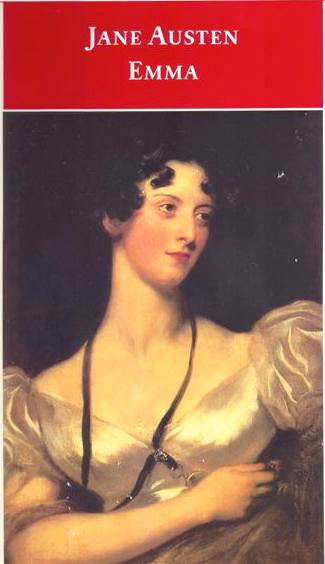
Should your Book Club read Emma by Jane Austen?

As you know, I am currently running a Jane Austen Literary Salon, and we just finished discussing Emma, the fifth of Jane's six novels that we're reading.  One of the members, let's call her Diane, had to miss last month's discussion of Mansfield Park, but she had a good excuse--her first grandchild was born!  And guess what Diane did while helping to care for her new granddaughter?  She read Emma out loud to her--I love it!  A little Janeite in training!

So, should your book club read Emma?  Are you looking for a classic?  Are you looking for one of Jane's novels to read?  I can recommend Emma for the individual reader and for a book club, but I have to be honest here...this is not my very favorite of Jane's novels.  Don't get me wrong--it's a wonderful, sometimes hilarious novel, with much to appreciate on many levels.  I just happen to prefer Mansfield Park (usually everyone's least favorite), or Persuasion.  But that's just me.  Emma is usually everyone else's favorite, along with Pride and Prejudice.

If you do read Emma, there's lots to discuss.

You probably know the plot, or some of the plot.  Emma is rich, spoiled, and rather self-absorbed.  She's also very snobbish, but not when it comes to her new friend and pet project, Harriet.  Harriet's class and rank are hard to pin down, as she has never known her parents--she is "the natural daughter of somebody"--and has lived at Mrs. Goddard's school.  Emma, who sees the world as she would like it to be rather than how it is, decides with no evidence whatsoever that Harriet must be the daughter of a gentleman and therefore deserves to marry a gentleman.  But which gentleman will it be?  And will that chosen man see Harriet the same way Emma sees her?  Emma sets her sights on the perfect man (or men?) for Harriet and the hilarity begins!

There's much more to the plot, but suffice to say that it reads like a Shakespearean comedy with all the confusion of who's in love with whom, and who's falling out with whom and who will end up with whom.  As I said, it's quite funny, but there's an undertone of serious business going on, and the careful reader will pick up on that.

The serious business of marriage, for instance.  Your book club will have a grand time discussing what this novel is saying about romantic love and marriage.  The class system looms large in this story, and impacts everyone and everything--you can see what you think the novel is saying about class and rank in Jane's day.

Actually, the list of what you can discuss would be too long to list here.  How genders are being played with in the story, and what this means, for instance.  Or if Knightley has "proper pride" and whether he is an ideal man.  Or how Jane's use of free indirect discourse impacts the reader's view of the characters and plot.  Or what to make of the themes of duty, the individual versus society, education, and authority, to name a few.
You could spend hours just talking about the characters, like Emma's father, a pathetic hypochondriac, or the inimitable and insufferable Mrs. Elton, one of the more loathsome characters in all of English literature.

I read and re-read Jane's novels because I love her use of language.  She is incomparably brilliant and I am in awe as I read.  I also read her because I appreciate how there seem to be so many different, yet simultaneous, discourses in her novels.  In our Jane Austen Literary Salon, we are trying to get to "know" Jane--through her texts, of course.  But this is tricky, as she can be very slippery--you think you understand what the text is saying only to find it's saying something quite different elsewhere.

Bottom line, Jane's novels can be read on many levels, which may be a key to her staying power.  Have a go with Emma and let me know what you think.  No cheating by just watching the movie, however!  As beautiful as the films of all Jane's novels are, they do not compare to reading the books--I assure you!

Thursday, March 10, 2011

The Yacoubian Building by Alaa Al Aswany

For those of you short on time, I will cut to the chase:  Yes, read this book.  I couldn't put it down.  Should you choose it for your book club?  Yes, with reservations.

This novel was published in 2002 but takes place in Cairo, Egypt, around the first Iraq war, way back at the start of the 1990's.  Written by an Egyptian, it is a slice of life--well, actually several slices of different lives--of people who are tied to each other via The Yacoubian Building.  Yes, the building is the main character of the novel.  Yes, it is a metaphor for what Egypt has gone through in its recent history.  However, I don't think the building itself looms as large in this story as the glass room did in Simon Mawer's novel of the same name, reviewed here.

The Yacoubian Building follows the lives of several different characters who are struggling to survive the Cairo of their present, as opposed to their past.  For the past is gone in a blink (or in a coup), and those who cannot adapt, die.  There is Zaki Bey, for example, whose father was one of the richest men in Egypt--before the revolution.  Now Zaki is reduced to prancing around like a playboy while fighting with his sister over their inheritance.  There is Kamal el Rouli, who grew up poor, but who is now in a position of power to exhort money from those who cannot escape his clutch.  There is Busayna, a innocent young girl whose mother encourages her to do whatever it takes in order to bring home money to help feed the family after the man of the house dies.  And there's many more.  Like the fundamentalist jihadists.  And the homosexual journalist.  (There's a lot of sex in this novel, but none of it gratuitous or "in your face,"; still it caused quite a stir in Egypt when it was published.)

For anyone who has ever been to Cairo, you know it is a place that teems with people, and this novel is teeming with characters, so much so that there is a helpful "Cast of Characters" at the front of the novel.  Don't let that intimidate you, though.  The writing is so good, and the characters so well drawn, you will have no problem remembering who they are and what they are going through.

Now my gripe:  I wasn't happy with the ending of the novel.  In fact, I said "What?  That's the end???" out loud to my book.  I then met with my personal book club, and I felt a bit better after discussing it with them.  Some light was shed on the story, like the "Big Man" being Mubarek.  That had gone sailing clear over my head!  It helps to have some knowledge about Egypt's politics, past and present, and it helps to discuss it with others who can help read between the lines and decode some of what the author has written. 

So, no surprise here, if your book club is willing to put some effort into the discussion, this book can be a great selection for you.  If your book club just likes to "show up and chat," you may have a much shorter evening, unless your members are already quite knowledgeable about Egypt.

This book is fascinating to read now, considering all that's going on in Northern Africa and the Middle East.  And the author, Alaa Al Aswany, has been quite outspoken during the recent revolution.  There is another book by the Egyptian nobel laureate Naguib Mahfouz entitled Midaq Alley, which is often compared with The Yacoubian Building.  I read it a few years ago and liked it, but not as much as this novel.  You should read both and let me know what you think.

Friday, March 4, 2011

Should Your Book Club Read The Glass Room by Simon Mawer?

This is an easy one.  The answer is absolutely yes.  Not only did everyone love this book, it made for a lively discussion in all my Literary Masters book groups.

The Glass Room was short-listed for the Man Booker last year, but defeated by The Finkler Question.  Go figure.  I had never read anything by Simon Mawer, but now I'm looking forward to picking up The Fall, recommended by one of my Literary Masters members.

Quick plot summary:  It's the late 1920's in Czechoslovakia.  Victor and Leisl Landauer want to build a house that embodies the future and that has nothing to do with the past.  They hire an architect who doesn't build walls and ceilings--instead he captures space and light.  Blazing the trail of what will come to be known as the modernist movement in architecture, he builds the Landauer couple a glass house, the main feature of which is the glass room, a sanctuary of calm, reason, and scientific rationality.

The thing is, a lot goes on inside this sanctuary, not all of it calm, reasonable or rational at all.

The book takes us through about 7 decades, and during that time we watch as various characters--with various agendas--enter and leave the glass room.  Do they transform it?  Does it transform them?  That was something we discussed at length in our meetings.

Simon Mawer is a wonderful writer, so it's easy to speed through this book; I found it to be a compelling page-turner.  But there's a lot there to think about and reflect upon, so it's worth slowing down and savoring this novel.  The characters are intriguing, to say the least, and we talked about them in depth--their motivations, their desires, their self-delusions.  How they tried to escape their histories--as well as their present places in time--but to no avail.  And we talked about them as metaphors for what was going on at that time in the world.

Besides the characters, some of the things your book club may want to discuss:  What the glass room represents.  We started off each meeting with this question, and you'd be amazed at the various answers!  I always find it fascinating that we can read the same words and interpret them differently.  Don't forget to discuss the onyx wall!

You can all think about what this book is saying about history.  The structure of the book, with its many parallels and echoes, adds much to this conversation.

This novel explores big ideas, and your book club may want to do the same.  Science versus God, Nature versus Nurture, Science versus Art, Fate/destiny versus Randomness/chaos, Darwinism, Existentialism--they are all in there in some way, and you can have fun 'digging deep' into this literary treasure.  (I am only touching on some of the themes in the book here--I'm telling you, it is chock full!)

The Glass Room is not a perfect book, but it has so many wonderful qualities, a reader can easily put up with the two annoying aspects of it (as mentioned by reader after reader)--the ending, and the continual coincidences that pepper the story and strain credibility.  I happened to find neither annoying, and I think the coincidences underscore one of the main themes of the book, that is fate/destiny versus randomness/chaos.

I feel very comfortable highly recommending this book for an individual reader as well as for book groups.  I cannot believe that The Finkler Question won the Man Booker over The Glass Room, but that's a discussion and a blog post for another day!  Please let me know if your book club reads The Glass Room--and what you all think of it.

Saturday, February 12, 2011

John The Revelator by Peter Murphy

A few years back I read The Gathering by Anne Enright and it put me off Irish writers for a while.  Silly, I know, but I hated that book.  John The Revelator, however, just could bring me back into the fold--what a book.  Bottom line:  Read it!  But only if you like to think about what you read.  Should your book club read it?  I think so, yes.  There's loads to discuss--again, only if your group likes to think and will make an effort to dig into the layers of this gem.

Yes, it is a gem.  With multiple facets.  One facet  is the coming-of-age narrative of John Devine, who lives with his mother in a small village in Ireland.  Their relationship is what anchors John and what, in my opinion, also anchors the book.  John's mom cleans all the houses in the village and tries to keep her son clean and on the straight and narrow with the good guidance of the bible.  She is occasionally helped, whether she likes it or not, by their know-it-all neighbor, Mrs. Nagle.  The love John's mom has for him is palpable, wafting through the cigarette fog that surrounds her.  (Like any decent Irish novel there's lots of drinking and smoking.)

Another facet is the relationship John has with his new found friend, James Corboy, "a self-styled Rimbaudian boy wonder."  James experiences life like John never has, and then writes stories about it.  The question is, are the stories true?  Story-telling, in fact, plays a big role in this book.  The Irish are known for their talent at this, right?, and John loves to hear the tales others tell him.  And what about the Catholic Church?  It tells some whoppers, doesn't it?  A great book club discussion could be about the novel's exploration of story-telling, writing, and where the truth lies.

Don't be fooled into thinking that nothing happens in this book, that it is, as I read someone say about it, just a bunch of stories or anecdotes strung together.  It is far from that.  James Corboy's writing, which are quite revelatory to both John and the reader, move the plot merrily along, but they also add much depth and meaning to the novel as a whole.  

Speaking of writing, that is another facet of this gem; it is superbly poetic at times.  John suffers from horrible dreams, and the descriptions are wonderfully weird, full of symbolism and metaphor.  Great stuff for your book club to dig into.  Hmm...James Corbey.  Initials JC.  Significant?  My suspicion is that if you were raised Catholic, you will love this book!  There's lots of fodder for a discussion about religion here.  There is also a crow who plays a large role in John nightmares.  Hmm...there was a rather important crow in The Twin, which I reviewed here.  What's up with the crows?

All these facets combine to dazzle the reader--this is one of those books that I didn't want to put down, and I looked forward to curling up with it.  Don't get me wrong, though--it's not a ripping page-turner.  It's surprisingly dense and it forces the reader to slowly savor it.  Honestly, it is like holding a gem in your hands--you should really examine it, turning it over to appreciate all its sides, all its splendor.


John The Revelator is on the long-list for the International IMPAC Dublin Award Literary Award, and I have high hopes for it.  According to the book jacket, this is Peter Murphy's debut novel.  I can't wait for more from him!