Should your book club read Amaryllis in Blueberry by Christina Meldrum? A resounding "yes!" is the answer. This intriguing novel is the ideal choice for a book club; it's a compelling read, the writing is beautiful, and there is a lot to discuss. In fact, the publisher, Simon & Schuster, realizing the appeal Amaryllis in Blueberry would have for book clubs, produced a paperback in order to make it more affordable, and completely skipped the hardcover stage.
You may not know Meldrum's work because her first novel, Madapple, was pegged for the YA (young adult) market, where it received immediate and widespread critical and commercial success, landing as a finalist on more than one prize shortlist. (And you know how I like literary prizes!) Amaryllis in Blueberry is her first "grown up" novel, although I think this is a "crossover" book, one that would appeal to the "young adult" market as well as to the "adult" market. Hmm..not sure that's what we're called, but you know what I mean, right?
Quick synopsis:
Dick and Seena Slepy are married, but we get the feeling that their marriage has become a sort of prison for them. Each is unhappy in his/her own way, and we soon learn that each has a secret that is feeding this unhappiness. Dick decides that the only way to escape his miserable situation is to go to Africa as a medical missionary, and he drags his family--his wife and four daughters--along.
The oldest three girls each have the first name of Mary, but are called by their middle names, and each one harbors a corrosive secret of her own. The youngest daughter, Amaryllis, is called Yllis, and early in the book, Amaryllis seemingly discovers yet another family secret and opens it up to the family, unleashing an unforeseen chain of events that will change each and every one of them.
So, what can your book club discuss?
There are lots of secrets in this book, and much to discover. Meldrum weaves mythological stories into the plot of the book, and does it so well and so seemingly effortlessly that the reader ends up learning not only about the Slepy family, but also about age-old stories, and why we tell them. The book explores all sorts of stories, from religion to science to family legends to stories we tell ourselves to get through the day, and your book club will want to discuss the how and why of these tales.
Another theme running through the novel is truth or Truth--what it is, whether it exists, how we reach it, and how we hold onto it. This is quite a philosophical novel, but done in an understated way, through the very compelling main story. A philosophical page-turner, if you will.
Meldrum is a beautiful writer, and some of her prose reads almost like poetry. Your book club will have a blast with the imagery--note the literary nod to Conrad with the light/dark imagery, and have fun deciphering the symbolism in the story--do the characters represent someone or something other than themselves? What does Africa represent? Can we do a Freudian reading of this novel? Pay attention to the names and how they give meaning to the tale.
In the end, this novel seems to be about redemption, about hope, about having a second chance. As the Slepy family returns to America, forever changed by their stay in Africa, they seemed poised to take on a life without secrets. Or do they? Which secrets remain? This is something your book club will want to discuss!
Bottom line: yes, your book club should read Amaryllis in Blueberry--it's a perfect choice--and I am looking forward to more writing from this incredibly talented author!
WHIRL (What Have I Read Lately) Books is a site for readers to find books for themselves and their book clubs. Liz at Literary Masters runs book groups and literary salons where we "dig deep" into literary treasures.
Thursday, September 15, 2011
Tuesday, September 13, 2011
Haruki Murakami
You'll remember from my last post that I am midway through the novel Norwegian Wood by the Japanese author Haruki Murakami. This is the first novel I've read by him, and I suppose I shouldn't say that too loudly, as he is tipped by some to be the next Nobel Prize winner. Where have I been?
Now I read that he is set to "take the West by storm" with a 1000-page book bound as a trilogy entitled 1Q84. Here's the link to the article; I am definitely going to keep my eye on this one.
http://www.guardian.co.uk/books/2011/sep/10/haruki-murakami-trilogy-1q84
And something else about Murakami that makes me want to get to know him better: he's a marathon runner!
Now I read that he is set to "take the West by storm" with a 1000-page book bound as a trilogy entitled 1Q84. Here's the link to the article; I am definitely going to keep my eye on this one.
http://www.guardian.co.uk/books/2011/sep/10/haruki-murakami-trilogy-1q84
And something else about Murakami that makes me want to get to know him better: he's a marathon runner!
Wednesday, September 7, 2011
Man Booker Prize 2011--The Short List!
Exciting news in the world of books--and the prizes that propel them. The short list is out for the Man Booker, and guess which book is not on it! That's right, The Stranger's Child by Alan Hollinghurst! That novel is, as you all know, our Literary Masters book of the month for May 2012. Will I be changing our reading list? Hmm...stay tuned for further details...
To find out which books are on the short list, click here.
Let me know if you've read any of them--what an eclectic selection!
To find out which books are on the short list, click here.
Let me know if you've read any of them--what an eclectic selection!
Sunday, August 28, 2011
Where in the WHIRL Have I Been???
I love you all--thanks for the flood of correspondence wondering where I've been--it's so nice to feel loved and missed! I have been away on a literary mission (!) and as soon as I get my photos downloaded, or is it uploaded?, I will post a couple and blog more about my adventure.
Have I piqued your curiosity?
For today, though, I am blogging about some books that are on my side table. These are books that I am in the midst of reading, but I've put them down because I knew at a certain point in each book that they would not work for my Literary Masters book groups and literary salons. However, these are books that I do intend to finish! We can call it a Mid-way WHIRL, if you like, or an In-Progress WHIRL:
First off, Norwegian Wood by Haruki Murakami. My brother, yes--the one who disdains used books, is a fan of Japanese literature, and he introduced me to Kenzaburo Oe, the author of A Personal Matter, which I reviewed here. Murakami is the author of The Wind-Up Bird Chronicle, which you may have read; I never have. I decided to start with Norwegian Wood on my brother's advice, and I...like it...I don't love it, but I do like it and I am willing to persevere with a rather slowish read. I am not, to be fair, very far into the novel. So far I think I've met the key players, although not a tremendous amount of action has taken place. The back of the book describes it as:
"A magnificent blending of the music, mood, and the ethos that was the sixties with the story of one college student's romantic coming of age, Norwegian Wood brilliantly recaptures a young man's first, hopeless, and heroic love."
Umm...okay. I hope to finish this novel to see why, again stated on the back of my book, "This stunning and elegiac novel propelled Hauki Murakami into the forefront of the literary scene..."
When I do, I will review it at length. Stay tuned!
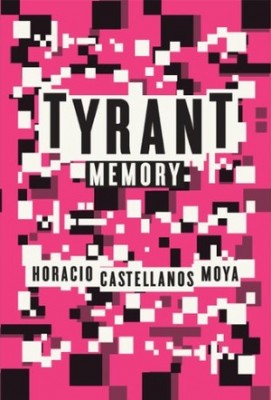
Next, Tyrant Memory, by Horacio Castellanos Moya. You'll remember that I became an instant fan of this author when I read his novel, Senselessness. I eagerly anticipated his new book, and was so impatient, I bought it instead of waiting for a library copy! Although I am thoroughly enjoying it, I don't think it measures up to Moya's previous work--but, to be fair, I have not yet finished reading it, so stay tuned...
It follows a certain family, their trials and tribulations, in El Salvador in 1944 during the month between an attempted coup and a general strike that forced out the dictator Maximiliano Hernandez Martinez. Staggering between laugh-out-loud hilarity and close-your-eyes horror, this novel is a very compelling read. I just didn't think I could subject my book groups and literary salons to it, though.
Finally, for today, The Counterlife by Philip Roth. Many consider this to be his best work, so I was excited to read it. I am a fan of Roth, although I know a lot of women have difficulty reading his work. I've said before, as you know, that one of the funniest books I've ever read is Portnoy's Complaint, which I read many, many years ago.
I am enjoying The Counterlife, and I can see why it is so highly regarded, but I have to admit, I was getting kind of bogged down in the second section, after loving the first...and I imagined my Literary Masters members getting bogged down also. The idea of the novel is a character who dies in the first section, but then who isn't dead in the next. From the little I've read, I'm surmising that we are delving into the area of parallel universes, or the lives we could have, would have, should have lived. Something I find very interesting, so I do hope to finish this book. Again, stay tuned!
Right, now that I am back turning pages and pressing keys, I hope to be posting much more frequently than I did during this past month. What about all of you, though? What Have YOU Been Reading Lately???
Have I piqued your curiosity?
For today, though, I am blogging about some books that are on my side table. These are books that I am in the midst of reading, but I've put them down because I knew at a certain point in each book that they would not work for my Literary Masters book groups and literary salons. However, these are books that I do intend to finish! We can call it a Mid-way WHIRL, if you like, or an In-Progress WHIRL:
First off, Norwegian Wood by Haruki Murakami. My brother, yes--the one who disdains used books, is a fan of Japanese literature, and he introduced me to Kenzaburo Oe, the author of A Personal Matter, which I reviewed here. Murakami is the author of The Wind-Up Bird Chronicle, which you may have read; I never have. I decided to start with Norwegian Wood on my brother's advice, and I...like it...I don't love it, but I do like it and I am willing to persevere with a rather slowish read. I am not, to be fair, very far into the novel. So far I think I've met the key players, although not a tremendous amount of action has taken place. The back of the book describes it as:
"A magnificent blending of the music, mood, and the ethos that was the sixties with the story of one college student's romantic coming of age, Norwegian Wood brilliantly recaptures a young man's first, hopeless, and heroic love."
Umm...okay. I hope to finish this novel to see why, again stated on the back of my book, "This stunning and elegiac novel propelled Hauki Murakami into the forefront of the literary scene..."
When I do, I will review it at length. Stay tuned!
Next, Tyrant Memory, by Horacio Castellanos Moya. You'll remember that I became an instant fan of this author when I read his novel, Senselessness. I eagerly anticipated his new book, and was so impatient, I bought it instead of waiting for a library copy! Although I am thoroughly enjoying it, I don't think it measures up to Moya's previous work--but, to be fair, I have not yet finished reading it, so stay tuned...
Finally, for today, The Counterlife by Philip Roth. Many consider this to be his best work, so I was excited to read it. I am a fan of Roth, although I know a lot of women have difficulty reading his work. I've said before, as you know, that one of the funniest books I've ever read is Portnoy's Complaint, which I read many, many years ago.
I am enjoying The Counterlife, and I can see why it is so highly regarded, but I have to admit, I was getting kind of bogged down in the second section, after loving the first...and I imagined my Literary Masters members getting bogged down also. The idea of the novel is a character who dies in the first section, but then who isn't dead in the next. From the little I've read, I'm surmising that we are delving into the area of parallel universes, or the lives we could have, would have, should have lived. Something I find very interesting, so I do hope to finish this book. Again, stay tuned!
Right, now that I am back turning pages and pressing keys, I hope to be posting much more frequently than I did during this past month. What about all of you, though? What Have YOU Been Reading Lately???
Friday, July 22, 2011
A Wee WHIRL
I will be blogging at length about these two books shortly, but for now, just a "Wee WHIRL":
(And you all know by now that WHIRL stands for "What Have I Read Lately", right?)
State of Wonder by Ann Patchett:
I know this novel is getting lots of positive critical reviews, but I have to say, I was...underwhelmed. I loved Bel Canto, the last Patchett book I read, and I was looking forward to her latest, but I found it rather lackluster and disappointing. The story is about a woman who goes to the Amazon to investigate her company's investment in a drug that will allow women to bear children into their old age. Patchett raises many questions through multiple themes, one being the morality of scientific experiments, but I felt like she was forcing issues rather than authentically exploring them. Stay tuned for a longer review, but meanwhile feel free to weigh in with your own opinion.
Nemesis by Philip Roth:
This is one of the best books I've read all summer. I loved it, and now I want to read the three that precede it in its group, "Nemeses": Everyman, Indignation, and The Humbling. This most recent novel from Roth tells the story of one summer in 1944 in Newark, when the local boys were either off fighting WWII or home awaiting a different kind of enemy, but one that was just as deadly: polio. This is such a thought-provoking book: it raises all sorts of existential questions. I will blog at length about it shortly, but I want to say here that I highly recommend it.
(And you all know by now that WHIRL stands for "What Have I Read Lately", right?)
State of Wonder by Ann Patchett:
I know this novel is getting lots of positive critical reviews, but I have to say, I was...underwhelmed. I loved Bel Canto, the last Patchett book I read, and I was looking forward to her latest, but I found it rather lackluster and disappointing. The story is about a woman who goes to the Amazon to investigate her company's investment in a drug that will allow women to bear children into their old age. Patchett raises many questions through multiple themes, one being the morality of scientific experiments, but I felt like she was forcing issues rather than authentically exploring them. Stay tuned for a longer review, but meanwhile feel free to weigh in with your own opinion.
Nemesis by Philip Roth:
This is one of the best books I've read all summer. I loved it, and now I want to read the three that precede it in its group, "Nemeses": Everyman, Indignation, and The Humbling. This most recent novel from Roth tells the story of one summer in 1944 in Newark, when the local boys were either off fighting WWII or home awaiting a different kind of enemy, but one that was just as deadly: polio. This is such a thought-provoking book: it raises all sorts of existential questions. I will blog at length about it shortly, but I want to say here that I highly recommend it.
Saturday, July 2, 2011
WHIRLing the Summer By!
No, I have not jetted off to some remote island with no internet access--far from it. I've just been busy, busy, busy reading away--trying to choose the absolute BEST books for the upcoming season of Literary Masters Book Groups and Literary Salons. So, have I finalized my list of selected books? No, but I've been having fun trying! Check out some of what I've been reading:
The Memory of Love by Aminatta Forna. This book was shortlisted for the Orange Prize and won the Commonwealth Writers' Prize this year. Is it possible to like and hate a book at the same time? That was my experience. Set in Sierra Leone, the birthplace of the author, the story involves characters who are trying to come to terms with their pasts--in a place that has recently emerged from a civil war. There is much to discuss and think about with this book, but I feel reluctant to choose it for my book groups because...well, I think it drags on too much. I am generally a very patient reader, but I found myself multiple times thinking, "get on with it." So, although I think this is a good book with an important story to tell, I'm not putting it on my list.
Red April by Santiago Roncagliolo. This book won the Independent Foreign Fiction Prize this year. I liked this book a lot, and I'm torn whether to put it on my list. Written by a Peruvian author now living in Spain, it tells the story of the incredibly officious and bureaucratic prosecutor Chalcatana investigating a series of murders. But of course, it's about so much more than that. I was so curious after reading it that I did some research on the Shining Path in Peru, and I even started reading Death in the Andes by Mario Vargas Llosa, but I feel these books could be just too grim for my groups. I recommend Red April for an individual read, though, absolutely. I haven't yet finished Death in the Andes.
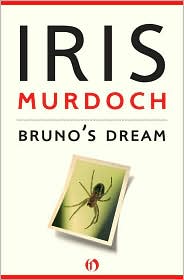
Bruno's Dream by Iris Murdoch. I always wanted to read something by Iris Murdoch, and now I have. I enjoyed this book immensely, but I don't think it will do for my groups, so I'm leaving it off my list. Bruno, an old man who resembles a spider (the description of Bruno is worth reading the book for) and who collects stamps, is dying. Wanting to come to peaceful terms with his estranged son, he calls for him. I'd love to say that he then weaves a wonderful web in which he catches his son and the other characters (the book has quite a few), but alas, the metaphor is not carried through the book, or if it is, I missed it. This novel is quite good and well worth reading, but I don't think it will be on my list. I'll have to try another Iris Murdoch novel--yay!
The Sea by John Banville. This book won the Man Booker Prize in 2005, and John Banville won the Kafka Prize this year. I loved this book. It is beautifully written; it carries the reader along on a tide of lyrical prose. It's about love, loss, grief, and memory, and it is undoubtedly worth reading. I'm not sure if it will land on my list because I'm wondering if most people have already read it. We'll see.
The Memory of Love by Aminatta Forna. This book was shortlisted for the Orange Prize and won the Commonwealth Writers' Prize this year. Is it possible to like and hate a book at the same time? That was my experience. Set in Sierra Leone, the birthplace of the author, the story involves characters who are trying to come to terms with their pasts--in a place that has recently emerged from a civil war. There is much to discuss and think about with this book, but I feel reluctant to choose it for my book groups because...well, I think it drags on too much. I am generally a very patient reader, but I found myself multiple times thinking, "get on with it." So, although I think this is a good book with an important story to tell, I'm not putting it on my list.
Bruno's Dream by Iris Murdoch. I always wanted to read something by Iris Murdoch, and now I have. I enjoyed this book immensely, but I don't think it will do for my groups, so I'm leaving it off my list. Bruno, an old man who resembles a spider (the description of Bruno is worth reading the book for) and who collects stamps, is dying. Wanting to come to peaceful terms with his estranged son, he calls for him. I'd love to say that he then weaves a wonderful web in which he catches his son and the other characters (the book has quite a few), but alas, the metaphor is not carried through the book, or if it is, I missed it. This novel is quite good and well worth reading, but I don't think it will be on my list. I'll have to try another Iris Murdoch novel--yay!
The Sea by John Banville. This book won the Man Booker Prize in 2005, and John Banville won the Kafka Prize this year. I loved this book. It is beautifully written; it carries the reader along on a tide of lyrical prose. It's about love, loss, grief, and memory, and it is undoubtedly worth reading. I'm not sure if it will land on my list because I'm wondering if most people have already read it. We'll see.
Labels:
Banville,
Bruno's Dream,
Forna,
Murdoch,
Red April,
Roncagliolo,
The Memory of Love,
The Sea
Sunday, June 5, 2011
WHIRLing Away!
As you all know by now, WHIRL stands for What Have I Read Lately. Sometimes I read a book and I don't have time to post at length about it, but I don't want you to miss out on a really good read. So I WHIRL and tell you just a little bit about what I've read lately. But you should know--often these are some of the best books I've read in a long time. Here goes:
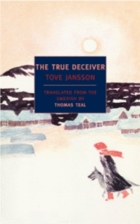
The True Deceiver by Tove Janssen. This is an odd yet thoroughly compelling book. It won the 2011 Best Translated Book Award, which is how it came onto my radar. I checked it out of the library and was surprised to find that it was written in 1982 but wasn't translated into English until 2009. Thomas Teal is the translator and my edition has an introduction by Ali Smith.
The story takes place in a snow-laden village where everyone pretty much knows everyone else's business. Or so they think. Katri Kling, always brutally honest and ferociously protective of her younger brother Mats, has earned the villagers fear and respect. Caring nothing for anyone but Mats, Katri sets out on a relentless mission to secure his future. And so they befriend Anna Aemelin, a children's book illustrator who sees the world as she paints it--full of lovable, fluffy bunnies.
What happens to these individuals as they get closer to each other makes for a thought-provoking and page-turning read. I was very grateful for Ali Smith's introduction, which I read after I finished the book. Her insight into the novel gave me much more to ponder than I would have done on my own. It was like being in a Literary Masters book group!
Senselessness by Horatio Castellanos Moya. Wow. What a book. I want others to read it so I can talk about it with them, but I hesitate to have my Literary Masters book groups read it because it is, how do I say this, not for everyone. It's a short, dense book, and I know it will stick with me for a while. I look forward to reading more from this author.
The narrator tells us his story in a kind of stream-of-consciousness ramble, with long, convoluted sentences that have lots of repetition and end up circling back on each other. He is editing a report that the Catholic Church has pulled together from the testimony of victims of military brutality during the country's civil war. We don't know exactly which country they are in, but from outside reading I've done, I understand the place to be Guatemala, and the events to have taken place in the 1960's. The narrator is fearful of the repercussions from his work; after all, the military whose crimes he is exposing is still in power.
His fear turns into paranoia, but what do paranoid people say? "Just because I'm paranoid doesn't mean they aren't out to get me." Perhaps that's a clue to this book, which is alternately hilariously funny and horrifically shocking.
This is, without a doubt, one of the best books I've read in a long time.
The Privileges by Jonathan Dee is also an excellent read. This is similar to Carol Edgarian's novel Three Stages of Amazement in that it follows the lives of two people who decide to grab their piece of the American Dream, but with vastly different results. I found this novel very literary in how it is crafted, and I would love to discuss that aspect of it with a Literary Masters book group, but even if you read it on your own, it's a terrific story. Very compelling. The kind of book I couldn't wait to get back to.
Perhaps you've heard by now that Philip Roth is the fourth writer to have won the Man Booker International Prize, awarded every other year. He's joined Alice Munro, one of my favorite authors, as well as Chinua Achebe, and Ismail Kadare. So...I went to my local library and checked out The Ghost Writer, the first of a series of novels with Zuckerman as the narrator. Now, you may know that one of my all-time-most-hilarious-fall-off-the-couch-laughing books is Portnoy's Complaint, and I like Philip Roth in general, so I was looking forward to this book.
I really enjoyed it. Many themes are in it that will surface in other Roth novels, and I even thought about picking up The Finkler Question, a book I disliked, again. Something in Roth reminded me of the best bits of Jacobson...
Montana 1948 by Larry Watson won the Milkweed National Fiction Prize, and it is a wonderful little book. I read it in a day. Narrated by a grown man who is looking back on the summer of his twelfth year, the story manages to be both lyrical and riveting. I couldn't help thinking of To Kill A Mockingbird while I read it, although the two stories are nothing alike. I think it is the coming of age quality of it, as well as the unforgettable voice of the narrator that reminded me of Harper Lee's masterpiece.
The True Deceiver by Tove Janssen. This is an odd yet thoroughly compelling book. It won the 2011 Best Translated Book Award, which is how it came onto my radar. I checked it out of the library and was surprised to find that it was written in 1982 but wasn't translated into English until 2009. Thomas Teal is the translator and my edition has an introduction by Ali Smith.
The story takes place in a snow-laden village where everyone pretty much knows everyone else's business. Or so they think. Katri Kling, always brutally honest and ferociously protective of her younger brother Mats, has earned the villagers fear and respect. Caring nothing for anyone but Mats, Katri sets out on a relentless mission to secure his future. And so they befriend Anna Aemelin, a children's book illustrator who sees the world as she paints it--full of lovable, fluffy bunnies.
What happens to these individuals as they get closer to each other makes for a thought-provoking and page-turning read. I was very grateful for Ali Smith's introduction, which I read after I finished the book. Her insight into the novel gave me much more to ponder than I would have done on my own. It was like being in a Literary Masters book group!
Senselessness by Horatio Castellanos Moya. Wow. What a book. I want others to read it so I can talk about it with them, but I hesitate to have my Literary Masters book groups read it because it is, how do I say this, not for everyone. It's a short, dense book, and I know it will stick with me for a while. I look forward to reading more from this author.
The narrator tells us his story in a kind of stream-of-consciousness ramble, with long, convoluted sentences that have lots of repetition and end up circling back on each other. He is editing a report that the Catholic Church has pulled together from the testimony of victims of military brutality during the country's civil war. We don't know exactly which country they are in, but from outside reading I've done, I understand the place to be Guatemala, and the events to have taken place in the 1960's. The narrator is fearful of the repercussions from his work; after all, the military whose crimes he is exposing is still in power.
His fear turns into paranoia, but what do paranoid people say? "Just because I'm paranoid doesn't mean they aren't out to get me." Perhaps that's a clue to this book, which is alternately hilariously funny and horrifically shocking.
This is, without a doubt, one of the best books I've read in a long time.
The Privileges by Jonathan Dee is also an excellent read. This is similar to Carol Edgarian's novel Three Stages of Amazement in that it follows the lives of two people who decide to grab their piece of the American Dream, but with vastly different results. I found this novel very literary in how it is crafted, and I would love to discuss that aspect of it with a Literary Masters book group, but even if you read it on your own, it's a terrific story. Very compelling. The kind of book I couldn't wait to get back to.
Perhaps you've heard by now that Philip Roth is the fourth writer to have won the Man Booker International Prize, awarded every other year. He's joined Alice Munro, one of my favorite authors, as well as Chinua Achebe, and Ismail Kadare. So...I went to my local library and checked out The Ghost Writer, the first of a series of novels with Zuckerman as the narrator. Now, you may know that one of my all-time-most-hilarious-fall-off-the-couch-laughing books is Portnoy's Complaint, and I like Philip Roth in general, so I was looking forward to this book.
I really enjoyed it. Many themes are in it that will surface in other Roth novels, and I even thought about picking up The Finkler Question, a book I disliked, again. Something in Roth reminded me of the best bits of Jacobson...
Montana 1948 by Larry Watson won the Milkweed National Fiction Prize, and it is a wonderful little book. I read it in a day. Narrated by a grown man who is looking back on the summer of his twelfth year, the story manages to be both lyrical and riveting. I couldn't help thinking of To Kill A Mockingbird while I read it, although the two stories are nothing alike. I think it is the coming of age quality of it, as well as the unforgettable voice of the narrator that reminded me of Harper Lee's masterpiece.
Subscribe to:
Posts (Atom)