As you all know by now, Literary Masters are book groups and salons where we dig deep into literary treasures! Membership has been growing in leaps and bounds and to celebrate, we've had a facelift! Our website has a whole new look; check it out here.
Best of all, with a click of a button, you can now purchase your very own "Points to Ponder" for many books, both fiction and non-fiction. If you don't see the title you are looking for, please email us to see if we have it in our archives.
Thanks for visiting; come back often!!! And don't forget to "like" us on Facebook so you can find out all about the latest LM literary news!
WHIRL (What Have I Read Lately) Books is a site for readers to find books for themselves and their book clubs. Liz at Literary Masters runs book groups and literary salons where we "dig deep" into literary treasures.
Showing posts with label book groups. Show all posts
Sunday, April 6, 2014
Friday, June 21, 2013
A Venn Diagram of Sorts
I am supervising teachers this summer, and so I sat in on an English class the other night where the instructor was going over Venn diagrams. You remember those: two circles that connect with an area in the middle. The middle part is what the two circles have in common, while the outer, separate part of each circle holds what is unique to that circle, and therefore holds each circle's differences from the other circle. Venn diagrams are commonly used to teach the organizational concept of compare and contrast.
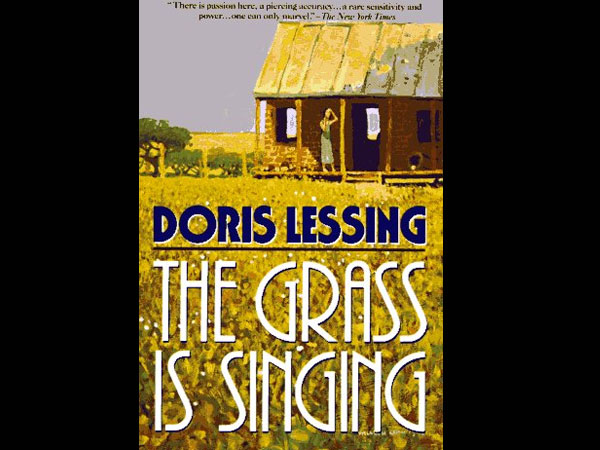
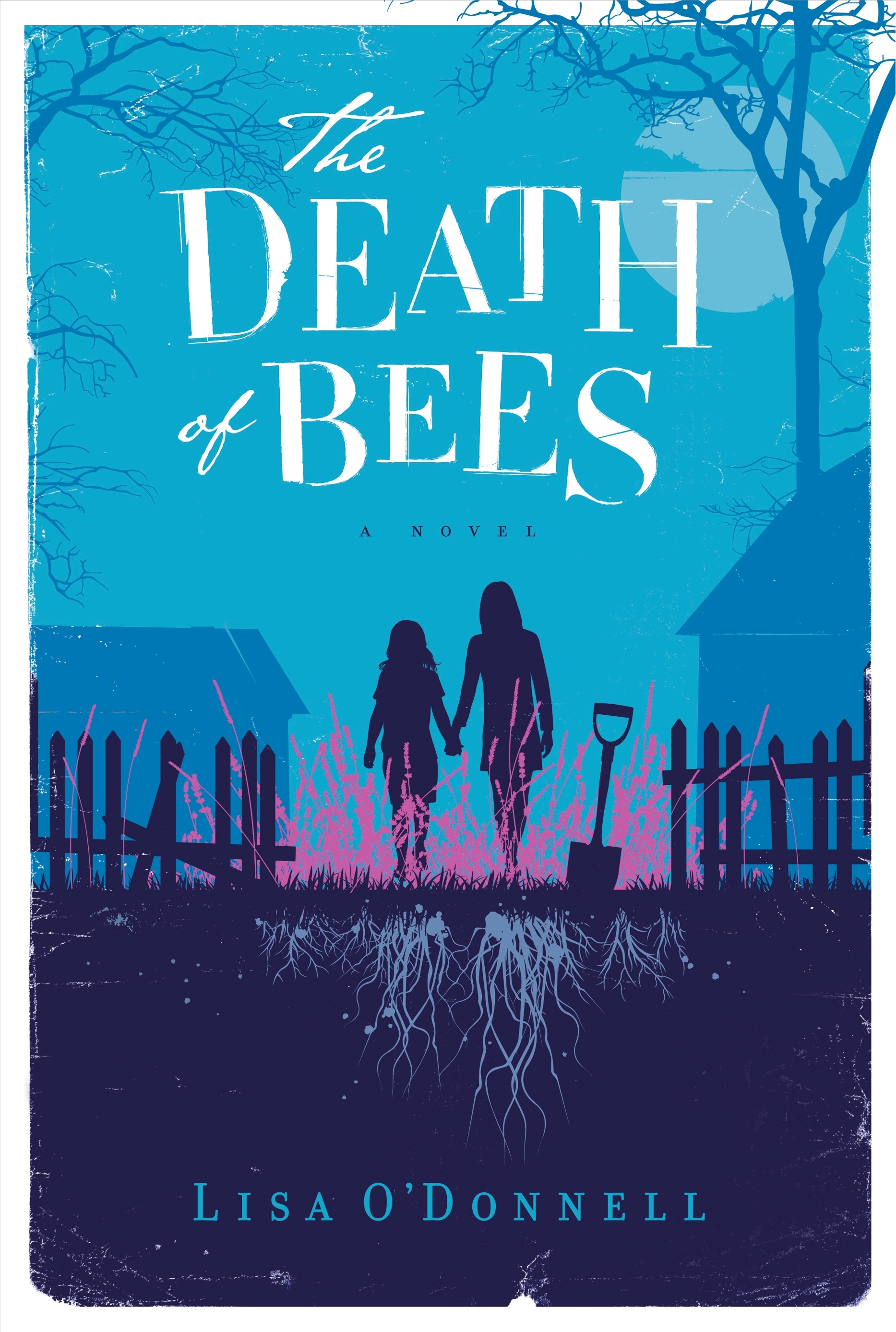
"So what?" did I hear you say? Well, I just finished two very different books that had me pondering over what they had in common. (You see the connection now?) One book is called The Grass is Singing by Doris Lessing and the other is The Death of Bees by Lisa O'Donnell. If one measure of a good book is that you look forward to returning to it after you've put it down, these are darn good books.
I always wanted to read Doris Lessing's work, but The Golden Notebook intimidated me by its girth. So, while browsing the "L" shelf at the library, I came upon her first novel, The Grass is Singing, written in 1950. The book jacket said it takes place in "a sleepy South African town," and that was enough for me; I was sold. (It's summer, so I love to read books set in far away, usually hot places.)
Reading The Grass is Singing is kind of like watching a train wreck about to happen. From the first few pages you know that Mary Turner has been murdered and that Moses the houseboy has confessed to the deed. So there's the wreck. Now you spend the rest of the book watching how and why it happened.
Although at times I felt like Lessing could have used an editor to help her with her sentences (I can't believe I am saying that about a Nobel laureate!) and I wondered if her later works improved with the author's experience and maturity, I was mesmerized by this book. Lessing brings the reader inside the psychological breakdown of Mary Turner, an experience so real and painful--yet utterly compelling--that it leaves you both fascinated and exhausted.
Warp-speed plot summary: Mary Turner, young, white, and naive, has actually stepped out of the 1940's constrictions on her gender, but doesn't realize that her happiness is unusual. Thus, when she hears her more conventional colleagues gossiping about her not being married, Mary falls prey to society's expectations of her and she marries the first available man that comes along. Unfortunately, that man is a not-very-successful farmer who brings Mary from her urban life to live in a hovel in the bush. He may as well have brought her to Mars, and the changes her new, alien environment wreaks upon her have devastating consequences.
I would recommend this book for book groups because there is so much to discuss, especially if you read it through a post-colonial lens (which you know I like to do). The novel caused quite a sensation when it was published, which won't surprise you, so that would be a long conversation all by itself. Just think how we used to look at white versus black. At men versus women. At Europe versus Africa. And then you can discuss whether much as changed.
You can talk about how a white British woman wrote this book, and what meaning the book carries due to the author being a white British woman. Who does the author give voice to? What is the author's intention, and who is her intended audience?
The theme of identity is pervasive, and one angle through which to view this is the prisons we make for ourselves, the chains we allow to bind us. Physical as well as mental and emotional prisons. Spaces, environments--these all play a large role in the story.
One thing that I would love to discuss with someone--so if you read this book, feel free to contact me--is why it is titled as it is. The reference is to a T.S. Eliot poem, but why this line? Why this poem? What does it mean?
Another intriguing title is that of Lisa O'Donnell's new novel, The Death of Bees, which came onto my radar because it won the Commonwealth Prize. For more on that prize, click here. This is a quick read, absolutely perfect for this summer.
Warp-speed plot summary: Marnie and Nelly's parents are dead. Apparently Marnie or Nelly killed Gene, the father; Izzy, the mother, subsequently hanged herself. Rather than become wards of social services (we are in a very poor area of Glasgow, Scotland), Marnie and Nelly bury their dead parents in the backyard and tell everyone that they've gone to Turkey. No one really cares anyway; Gene and Izzy are drug addicts and appallingly neglectful parents, so anything they do doesn't surprise anyone.
Lennie, the gay outcast from next-door, takes pity on the girls and becomes a surrogate parent to them. This seems to be a good solution until the girls' grandfather--Izzy's dad--shows up looking for his daughter. Uh oh. And Izzy and Gene's drug supplier shows up looking for his money. Uh oh. And Lennie's dog keeps digging in the garden. Uh oh.
This book is not perfect (but then, what book is? Oh, we could have a long discussion about that). However, I couldn't wait to find out what happens to all the characters in this dark and charming (yes, dark AND charming) story. The voices of Marnie and Nelly are two of the most memorable I've read, and although the situation of the characters is rather grim, you still find yourself laughing out loud.
Back to the title: it has almost nothing to do with the book whatsoever. Or...perhaps it has everything to do with it. Suffice to say here--this book is not about bees. So, your book group will be able to spend quite a bit of time interpreting the title.
Unlike The Grass is Singing (outside parts of the Venn diagram circles here), The Death of Bees is rather uplifting in its own little way. While both books are dark (you all know by now that I can read dark), Lessing's novel spirals inexorably down into an abyss, while O'Donnell's novel has a much more fairy-tale ending. Truth be told, the ending may annoy some readers, but I enjoyed this book so much, I wouldn't let it bother me.
This post is way too long--have you read all the way to here??? Thanks for doing so, and happy reading to you!
"So what?" did I hear you say? Well, I just finished two very different books that had me pondering over what they had in common. (You see the connection now?) One book is called The Grass is Singing by Doris Lessing and the other is The Death of Bees by Lisa O'Donnell. If one measure of a good book is that you look forward to returning to it after you've put it down, these are darn good books.
I always wanted to read Doris Lessing's work, but The Golden Notebook intimidated me by its girth. So, while browsing the "L" shelf at the library, I came upon her first novel, The Grass is Singing, written in 1950. The book jacket said it takes place in "a sleepy South African town," and that was enough for me; I was sold. (It's summer, so I love to read books set in far away, usually hot places.)
Reading The Grass is Singing is kind of like watching a train wreck about to happen. From the first few pages you know that Mary Turner has been murdered and that Moses the houseboy has confessed to the deed. So there's the wreck. Now you spend the rest of the book watching how and why it happened.
Although at times I felt like Lessing could have used an editor to help her with her sentences (I can't believe I am saying that about a Nobel laureate!) and I wondered if her later works improved with the author's experience and maturity, I was mesmerized by this book. Lessing brings the reader inside the psychological breakdown of Mary Turner, an experience so real and painful--yet utterly compelling--that it leaves you both fascinated and exhausted.
Warp-speed plot summary: Mary Turner, young, white, and naive, has actually stepped out of the 1940's constrictions on her gender, but doesn't realize that her happiness is unusual. Thus, when she hears her more conventional colleagues gossiping about her not being married, Mary falls prey to society's expectations of her and she marries the first available man that comes along. Unfortunately, that man is a not-very-successful farmer who brings Mary from her urban life to live in a hovel in the bush. He may as well have brought her to Mars, and the changes her new, alien environment wreaks upon her have devastating consequences.
I would recommend this book for book groups because there is so much to discuss, especially if you read it through a post-colonial lens (which you know I like to do). The novel caused quite a sensation when it was published, which won't surprise you, so that would be a long conversation all by itself. Just think how we used to look at white versus black. At men versus women. At Europe versus Africa. And then you can discuss whether much as changed.
You can talk about how a white British woman wrote this book, and what meaning the book carries due to the author being a white British woman. Who does the author give voice to? What is the author's intention, and who is her intended audience?
The theme of identity is pervasive, and one angle through which to view this is the prisons we make for ourselves, the chains we allow to bind us. Physical as well as mental and emotional prisons. Spaces, environments--these all play a large role in the story.
One thing that I would love to discuss with someone--so if you read this book, feel free to contact me--is why it is titled as it is. The reference is to a T.S. Eliot poem, but why this line? Why this poem? What does it mean?
Another intriguing title is that of Lisa O'Donnell's new novel, The Death of Bees, which came onto my radar because it won the Commonwealth Prize. For more on that prize, click here. This is a quick read, absolutely perfect for this summer.
Warp-speed plot summary: Marnie and Nelly's parents are dead. Apparently Marnie or Nelly killed Gene, the father; Izzy, the mother, subsequently hanged herself. Rather than become wards of social services (we are in a very poor area of Glasgow, Scotland), Marnie and Nelly bury their dead parents in the backyard and tell everyone that they've gone to Turkey. No one really cares anyway; Gene and Izzy are drug addicts and appallingly neglectful parents, so anything they do doesn't surprise anyone.
Lennie, the gay outcast from next-door, takes pity on the girls and becomes a surrogate parent to them. This seems to be a good solution until the girls' grandfather--Izzy's dad--shows up looking for his daughter. Uh oh. And Izzy and Gene's drug supplier shows up looking for his money. Uh oh. And Lennie's dog keeps digging in the garden. Uh oh.
This book is not perfect (but then, what book is? Oh, we could have a long discussion about that). However, I couldn't wait to find out what happens to all the characters in this dark and charming (yes, dark AND charming) story. The voices of Marnie and Nelly are two of the most memorable I've read, and although the situation of the characters is rather grim, you still find yourself laughing out loud.
Back to the title: it has almost nothing to do with the book whatsoever. Or...perhaps it has everything to do with it. Suffice to say here--this book is not about bees. So, your book group will be able to spend quite a bit of time interpreting the title.
Unlike The Grass is Singing (outside parts of the Venn diagram circles here), The Death of Bees is rather uplifting in its own little way. While both books are dark (you all know by now that I can read dark), Lessing's novel spirals inexorably down into an abyss, while O'Donnell's novel has a much more fairy-tale ending. Truth be told, the ending may annoy some readers, but I enjoyed this book so much, I wouldn't let it bother me.
This post is way too long--have you read all the way to here??? Thanks for doing so, and happy reading to you!
Sunday, April 8, 2012
Should Your Book Club Read Last Man in Tower by Aravind Adiga?
You may know Aravind Adiga from his Booker-winning The White Tiger. I enjoyed that book quite a bit, which propelled me to pick up Last Man in Tower. I'm glad I did. It was the March selection for many of my Literary Masters book groups, and it was a great choice.
Warp-speed plot summary:
The setting is Bombay, or Mumbai, depending on your politics, I suppose, and there is a developer who wants to knock down an old, dilapidated apartment building and replace it with something fantastically new, shiny, and ever so 21st century. He's willing to pay the residents more than market value for their homes so they can become rich off the deal.
Sounds simple, right? Well, there is one man who refuses to sell, and who therefore threatens to ruin the deal for everyone. I won't tell you what happens, but I will say that this is a very readable, very literary, very subtle gem of a novel.
So, what can your book club talk about while discussing Last Man in Tower?
You'll want to discuss Masterji and his motivation. Why does he resist the developer? What does he want? Is he heroic? Is he narcissistic? Is he to blame? What would you do in his place?
Is there a hero in this story? Adiga has stated that the real hero of the novel is Mumbai. What do you make of this? Of all the characters, does anyone act in a heroic manner?
Is there a villain in this story?
What do you think of the Shah? What do you think of his methods of doing business?
You'll really want to discuss all the characters in depth. Each one has a point at which he or she "turns" --a masterly feat of writing on Adiga's part. What happens to each one and why? How do they justify/ rationalize their behavior? How is the realtor different from all the others? This novel is in many ways a true study in psychology.
This novel raises many "big questions," and you'll want to discuss some of those. For instance, can a person even be an individual when living within a society? How much responsibility does one have towards others when living within a society? Do individual rights trump those of the collective? Should they?
Does everyone have a price? Is it possible for a man to want nothing?
You'll want to discuss the saying "Man is like a goat tied to a pole," and the concept of free will in the novel.
You can delve into what the novel seems to be saying about the "old India" versus the "new India." Do you think the novel favors one side over the other? Is there a value system that is privileged in the story? Is there a message we are meant to take away?
Ask yourselves: could anyone who isn't Indian have written this novel? What is the novel saying about corruption?
Make sure to save lots of time to discuss the beautiful imagery and symbolism in the story. Talk about the birds, the stray dog, the black cross, and the caged animals, just for a start!
This ought to get you started. Enjoy the book. If you're anything like me, it will stay with you a long time after you finish it.
Warp-speed plot summary:
The setting is Bombay, or Mumbai, depending on your politics, I suppose, and there is a developer who wants to knock down an old, dilapidated apartment building and replace it with something fantastically new, shiny, and ever so 21st century. He's willing to pay the residents more than market value for their homes so they can become rich off the deal.
Sounds simple, right? Well, there is one man who refuses to sell, and who therefore threatens to ruin the deal for everyone. I won't tell you what happens, but I will say that this is a very readable, very literary, very subtle gem of a novel.
So, what can your book club talk about while discussing Last Man in Tower?
You'll want to discuss Masterji and his motivation. Why does he resist the developer? What does he want? Is he heroic? Is he narcissistic? Is he to blame? What would you do in his place?
Is there a hero in this story? Adiga has stated that the real hero of the novel is Mumbai. What do you make of this? Of all the characters, does anyone act in a heroic manner?
Is there a villain in this story?
What do you think of the Shah? What do you think of his methods of doing business?
You'll really want to discuss all the characters in depth. Each one has a point at which he or she "turns" --a masterly feat of writing on Adiga's part. What happens to each one and why? How do they justify/ rationalize their behavior? How is the realtor different from all the others? This novel is in many ways a true study in psychology.
This novel raises many "big questions," and you'll want to discuss some of those. For instance, can a person even be an individual when living within a society? How much responsibility does one have towards others when living within a society? Do individual rights trump those of the collective? Should they?
Does everyone have a price? Is it possible for a man to want nothing?
You'll want to discuss the saying "Man is like a goat tied to a pole," and the concept of free will in the novel.
You can delve into what the novel seems to be saying about the "old India" versus the "new India." Do you think the novel favors one side over the other? Is there a value system that is privileged in the story? Is there a message we are meant to take away?
Ask yourselves: could anyone who isn't Indian have written this novel? What is the novel saying about corruption?
Make sure to save lots of time to discuss the beautiful imagery and symbolism in the story. Talk about the birds, the stray dog, the black cross, and the caged animals, just for a start!
This ought to get you started. Enjoy the book. If you're anything like me, it will stay with you a long time after you finish it.
Friday, March 2, 2012
Should Your Book Club Read We the Animals by Justin Torres?
We the Animals is a wonderful little book, one you can easily read in one or two evenings. It's about three little boys of mixed-race descent growing up in a household of little income, even less parenting, but, one has to believe, a lot of love. There's not a traditional plot; rather, each chapter is a window into the life of this heart-wrenching family.
This is, as I said, a short novel, which I like, but it's a beautiful one. The language is almost poetic, and considering that the book is narrated by the youngest brother, the contrast between what he says and how he says it lends a level of poignancy to the story that serves it well. One can't help but feel for these little boys, their over-worked and self-effacing mother, and their well-intentioned but frustrated, macho dad.
I don't want to give anything away, but the end of the book, though in some ways shocking, comes as no surprise at all. It left me wondering, "when, oh when, will we know what happens to them? When is the sequel?"
So, should your book club read it? I'd say this is a book most everyone will like, or at least appreciate, but the lack of traditional plot may pose a problem for those book clubs that don't approach their discussion in a structured way. I won't be selecting this for our Literary Masters book groups, but that is not to detract from the novel. I highly, highly recommend it for individuals, and if your book club reads it, do let me know how 'deep' a discussion you end up having.
This is, as I said, a short novel, which I like, but it's a beautiful one. The language is almost poetic, and considering that the book is narrated by the youngest brother, the contrast between what he says and how he says it lends a level of poignancy to the story that serves it well. One can't help but feel for these little boys, their over-worked and self-effacing mother, and their well-intentioned but frustrated, macho dad.
I don't want to give anything away, but the end of the book, though in some ways shocking, comes as no surprise at all. It left me wondering, "when, oh when, will we know what happens to them? When is the sequel?"
So, should your book club read it? I'd say this is a book most everyone will like, or at least appreciate, but the lack of traditional plot may pose a problem for those book clubs that don't approach their discussion in a structured way. I won't be selecting this for our Literary Masters book groups, but that is not to detract from the novel. I highly, highly recommend it for individuals, and if your book club reads it, do let me know how 'deep' a discussion you end up having.
Labels:
Book Clubs,
book groups,
Justin Torres,
Literary Masters,
We the Animals
Saturday, March 19, 2011
Should Your Book Club Read A Room With A View by E.M. Forster?
An Edwardian comedy of manners in the mode of Jane Austen, this little gem can be read as a simple love story--sweet, endearing, and a glimpse back in time. Yet, dig deep, and you will find this book to be very profound.
Quick plot review: Young and innocent Lucy Honeychurch has traveled from her country home in England to the land of art and passion--Florence, Italy--with her older cousin and chaperone, Charlotte Bartlett. They arrive at the Pension Bertolini, run by a Cockney from London, to find that their room has--no view! Two other guests, Mr. Emerson and his son George, offer to swap rooms, as theirs has a view and "women like looking at a view; men don't."
Charlotte Bartlett is horrified. How very improper! If they accept Mr. Emerson's generosity, and let's face it, Mr. Emerson is really not the sort of person one is used to associating with, they will be obligated to him. And Charlotte, who must protect the purity of her charge Lucy, cannot allow that.
Yet Mr. Emerson persists and asks the questions which is perhaps being asked by the book itself--addressed to everyone about everything--"Why?"
We tour Florence and its surroundings with Lucy and the other characters from the Pension Bertolini and witness a murder on the Piazza Signoria. But what can this mean? the reader wonders. Thank goodness Mr. Emerson's son, George, was there to rescue Lucy when she fainted from her shock. Not so, thinks Lucy. Something has happened on that piazza, but not only to the poor Italian who was stabbed. Something has happened to Lucy--and she is changed forever.
What has happened to her, you ask? Well, that's something your book club can--and should--discuss at length. For this scene (and Forster, like Jane Austen, writes in beautifully rendered scenes) is central to the book--on many levels. For this book is about so much--
Yes, it's a coming of age story on one level. But not only for Lucy. This was a time of tremendous change in England, when the gentle countryside was being invaded by urban grit, industry was crowding out agricultural life, and the class system was becoming destabilized. So you can read the novel as a coming of age story for England itself as it moved, inexorably, from the Victorian era into the modern age.
Lucy returns to England and becomes engaged to Cecil. All right, I must say, Forster rivals Jane Austen for his characters, and any book club should take each one and talk at length about him or her. Cecil is priceless. We know he's wrong for Lucy--we know Lucy is in love with George Emerson--but will Lucy do anything about it? Or will Fate step in? Ah, yes, another question running through this novel--is there such a thing as Fate? And going a bit further, does God exist?
I don't want to give anything away, so I'll stop with the plot review here, but if your book club does read the book, pay close attention to Forster's writing. For example, see how the imagery of light versus dark is so prominent in the novel, and how it carries the theme of "coming of age" throughout the story. One can do a wonderful psychoanalytic reading of this novel, digging deep into the unconscious layers.
Pay attention to nature, and how it is being portrayed. What is the importance, for instance, of the scene at the Sacred Lake, when Mr. Beebe, a clergyman, removes his clothes and prances around? Pay attention to the roles that art and music play in the story. And pay close attention to the settings--and how they carry the meaning of the story to the reader.
And, whatever you do, pay very close attention to the muddle. As I said above, I think this book is quite profound. It's full of religion, art, philosophy, and more. But if you miss it all, just take one little pearl of wisdom from it--and it regards the muddle. One of my favorite lines in literature is "only connect" from Forster's Howard's End, and now I have another favorite line from Forster's A Room With a View--"Beware the muddle."
If you, or your book club, reads A Room With A View, enjoy! and let me know what you think!
Quick plot review: Young and innocent Lucy Honeychurch has traveled from her country home in England to the land of art and passion--Florence, Italy--with her older cousin and chaperone, Charlotte Bartlett. They arrive at the Pension Bertolini, run by a Cockney from London, to find that their room has--no view! Two other guests, Mr. Emerson and his son George, offer to swap rooms, as theirs has a view and "women like looking at a view; men don't."
Charlotte Bartlett is horrified. How very improper! If they accept Mr. Emerson's generosity, and let's face it, Mr. Emerson is really not the sort of person one is used to associating with, they will be obligated to him. And Charlotte, who must protect the purity of her charge Lucy, cannot allow that.
Yet Mr. Emerson persists and asks the questions which is perhaps being asked by the book itself--addressed to everyone about everything--"Why?"
We tour Florence and its surroundings with Lucy and the other characters from the Pension Bertolini and witness a murder on the Piazza Signoria. But what can this mean? the reader wonders. Thank goodness Mr. Emerson's son, George, was there to rescue Lucy when she fainted from her shock. Not so, thinks Lucy. Something has happened on that piazza, but not only to the poor Italian who was stabbed. Something has happened to Lucy--and she is changed forever.
What has happened to her, you ask? Well, that's something your book club can--and should--discuss at length. For this scene (and Forster, like Jane Austen, writes in beautifully rendered scenes) is central to the book--on many levels. For this book is about so much--
Yes, it's a coming of age story on one level. But not only for Lucy. This was a time of tremendous change in England, when the gentle countryside was being invaded by urban grit, industry was crowding out agricultural life, and the class system was becoming destabilized. So you can read the novel as a coming of age story for England itself as it moved, inexorably, from the Victorian era into the modern age.
Lucy returns to England and becomes engaged to Cecil. All right, I must say, Forster rivals Jane Austen for his characters, and any book club should take each one and talk at length about him or her. Cecil is priceless. We know he's wrong for Lucy--we know Lucy is in love with George Emerson--but will Lucy do anything about it? Or will Fate step in? Ah, yes, another question running through this novel--is there such a thing as Fate? And going a bit further, does God exist?
I don't want to give anything away, so I'll stop with the plot review here, but if your book club does read the book, pay close attention to Forster's writing. For example, see how the imagery of light versus dark is so prominent in the novel, and how it carries the theme of "coming of age" throughout the story. One can do a wonderful psychoanalytic reading of this novel, digging deep into the unconscious layers.
Pay attention to nature, and how it is being portrayed. What is the importance, for instance, of the scene at the Sacred Lake, when Mr. Beebe, a clergyman, removes his clothes and prances around? Pay attention to the roles that art and music play in the story. And pay close attention to the settings--and how they carry the meaning of the story to the reader.
And, whatever you do, pay very close attention to the muddle. As I said above, I think this book is quite profound. It's full of religion, art, philosophy, and more. But if you miss it all, just take one little pearl of wisdom from it--and it regards the muddle. One of my favorite lines in literature is "only connect" from Forster's Howard's End, and now I have another favorite line from Forster's A Room With a View--"Beware the muddle."
If you, or your book club, reads A Room With A View, enjoy! and let me know what you think!
Labels:
A Room With a View,
Book Clubs,
book groups,
EM Forster,
Jane Austen
Tuesday, March 15, 2011
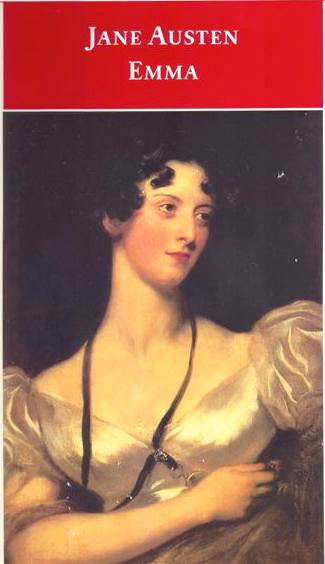
Should your Book Club read Emma by Jane Austen?
As you know, I am currently running a Jane Austen Literary Salon, and we just finished discussing Emma, the fifth of Jane's six novels that we're reading. One of the members, let's call her Diane, had to miss last month's discussion of Mansfield Park, but she had a good excuse--her first grandchild was born! And guess what Diane did while helping to care for her new granddaughter? She read Emma out loud to her--I love it! A little Janeite in training!
So, should your book club read Emma? Are you looking for a classic? Are you looking for one of Jane's novels to read? I can recommend Emma for the individual reader and for a book club, but I have to be honest here...this is not my very favorite of Jane's novels. Don't get me wrong--it's a wonderful, sometimes hilarious novel, with much to appreciate on many levels. I just happen to prefer Mansfield Park (usually everyone's least favorite), or Persuasion. But that's just me. Emma is usually everyone else's favorite, along with Pride and Prejudice.
If you do read Emma, there's lots to discuss.
You probably know the plot, or some of the plot. Emma is rich, spoiled, and rather self-absorbed. She's also very snobbish, but not when it comes to her new friend and pet project, Harriet. Harriet's class and rank are hard to pin down, as she has never known her parents--she is "the natural daughter of somebody"--and has lived at Mrs. Goddard's school. Emma, who sees the world as she would like it to be rather than how it is, decides with no evidence whatsoever that Harriet must be the daughter of a gentleman and therefore deserves to marry a gentleman. But which gentleman will it be? And will that chosen man see Harriet the same way Emma sees her? Emma sets her sights on the perfect man (or men?) for Harriet and the hilarity begins!
There's much more to the plot, but suffice to say that it reads like a Shakespearean comedy with all the confusion of who's in love with whom, and who's falling out with whom and who will end up with whom. As I said, it's quite funny, but there's an undertone of serious business going on, and the careful reader will pick up on that.
The serious business of marriage, for instance. Your book club will have a grand time discussing what this novel is saying about romantic love and marriage. The class system looms large in this story, and impacts everyone and everything--you can see what you think the novel is saying about class and rank in Jane's day.
Actually, the list of what you can discuss would be too long to list here. How genders are being played with in the story, and what this means, for instance. Or if Knightley has "proper pride" and whether he is an ideal man. Or how Jane's use of free indirect discourse impacts the reader's view of the characters and plot. Or what to make of the themes of duty, the individual versus society, education, and authority, to name a few.
You could spend hours just talking about the characters, like Emma's father, a pathetic hypochondriac, or the inimitable and insufferable Mrs. Elton, one of the more loathsome characters in all of English literature.
I read and re-read Jane's novels because I love her use of language. She is incomparably brilliant and I am in awe as I read. I also read her because I appreciate how there seem to be so many different, yet simultaneous, discourses in her novels. In our Jane Austen Literary Salon, we are trying to get to "know" Jane--through her texts, of course. But this is tricky, as she can be very slippery--you think you understand what the text is saying only to find it's saying something quite different elsewhere.
Bottom line, Jane's novels can be read on many levels, which may be a key to her staying power. Have a go with Emma and let me know what you think. No cheating by just watching the movie, however! As beautiful as the films of all Jane's novels are, they do not compare to reading the books--I assure you!
So, should your book club read Emma? Are you looking for a classic? Are you looking for one of Jane's novels to read? I can recommend Emma for the individual reader and for a book club, but I have to be honest here...this is not my very favorite of Jane's novels. Don't get me wrong--it's a wonderful, sometimes hilarious novel, with much to appreciate on many levels. I just happen to prefer Mansfield Park (usually everyone's least favorite), or Persuasion. But that's just me. Emma is usually everyone else's favorite, along with Pride and Prejudice.
If you do read Emma, there's lots to discuss.
You probably know the plot, or some of the plot. Emma is rich, spoiled, and rather self-absorbed. She's also very snobbish, but not when it comes to her new friend and pet project, Harriet. Harriet's class and rank are hard to pin down, as she has never known her parents--she is "the natural daughter of somebody"--and has lived at Mrs. Goddard's school. Emma, who sees the world as she would like it to be rather than how it is, decides with no evidence whatsoever that Harriet must be the daughter of a gentleman and therefore deserves to marry a gentleman. But which gentleman will it be? And will that chosen man see Harriet the same way Emma sees her? Emma sets her sights on the perfect man (or men?) for Harriet and the hilarity begins!
There's much more to the plot, but suffice to say that it reads like a Shakespearean comedy with all the confusion of who's in love with whom, and who's falling out with whom and who will end up with whom. As I said, it's quite funny, but there's an undertone of serious business going on, and the careful reader will pick up on that.
The serious business of marriage, for instance. Your book club will have a grand time discussing what this novel is saying about romantic love and marriage. The class system looms large in this story, and impacts everyone and everything--you can see what you think the novel is saying about class and rank in Jane's day.
Actually, the list of what you can discuss would be too long to list here. How genders are being played with in the story, and what this means, for instance. Or if Knightley has "proper pride" and whether he is an ideal man. Or how Jane's use of free indirect discourse impacts the reader's view of the characters and plot. Or what to make of the themes of duty, the individual versus society, education, and authority, to name a few.
You could spend hours just talking about the characters, like Emma's father, a pathetic hypochondriac, or the inimitable and insufferable Mrs. Elton, one of the more loathsome characters in all of English literature.
I read and re-read Jane's novels because I love her use of language. She is incomparably brilliant and I am in awe as I read. I also read her because I appreciate how there seem to be so many different, yet simultaneous, discourses in her novels. In our Jane Austen Literary Salon, we are trying to get to "know" Jane--through her texts, of course. But this is tricky, as she can be very slippery--you think you understand what the text is saying only to find it's saying something quite different elsewhere.
Bottom line, Jane's novels can be read on many levels, which may be a key to her staying power. Have a go with Emma and let me know what you think. No cheating by just watching the movie, however! As beautiful as the films of all Jane's novels are, they do not compare to reading the books--I assure you!
Labels:
Book Clubs,
book groups,
Emma,
Jane Austen,
Jane Austen Literary Salon
Friday, March 4, 2011
Should Your Book Club Read The Glass Room by Simon Mawer?
This is an easy one. The answer is absolutely yes. Not only did everyone love this book, it made for a lively discussion in all my Literary Masters book groups.
The Glass Room was short-listed for the Man Booker last year, but defeated by The Finkler Question. Go figure. I had never read anything by Simon Mawer, but now I'm looking forward to picking up The Fall, recommended by one of my Literary Masters members.
Quick plot summary: It's the late 1920's in Czechoslovakia. Victor and Leisl Landauer want to build a house that embodies the future and that has nothing to do with the past. They hire an architect who doesn't build walls and ceilings--instead he captures space and light. Blazing the trail of what will come to be known as the modernist movement in architecture, he builds the Landauer couple a glass house, the main feature of which is the glass room, a sanctuary of calm, reason, and scientific rationality.
The thing is, a lot goes on inside this sanctuary, not all of it calm, reasonable or rational at all.
The book takes us through about 7 decades, and during that time we watch as various characters--with various agendas--enter and leave the glass room. Do they transform it? Does it transform them? That was something we discussed at length in our meetings.
Simon Mawer is a wonderful writer, so it's easy to speed through this book; I found it to be a compelling page-turner. But there's a lot there to think about and reflect upon, so it's worth slowing down and savoring this novel. The characters are intriguing, to say the least, and we talked about them in depth--their motivations, their desires, their self-delusions. How they tried to escape their histories--as well as their present places in time--but to no avail. And we talked about them as metaphors for what was going on at that time in the world.
Besides the characters, some of the things your book club may want to discuss: What the glass room represents. We started off each meeting with this question, and you'd be amazed at the various answers! I always find it fascinating that we can read the same words and interpret them differently. Don't forget to discuss the onyx wall!
You can all think about what this book is saying about history. The structure of the book, with its many parallels and echoes, adds much to this conversation.
This novel explores big ideas, and your book club may want to do the same. Science versus God, Nature versus Nurture, Science versus Art, Fate/destiny versus Randomness/chaos, Darwinism, Existentialism--they are all in there in some way, and you can have fun 'digging deep' into this literary treasure. (I am only touching on some of the themes in the book here--I'm telling you, it is chock full!)
The Glass Room is not a perfect book, but it has so many wonderful qualities, a reader can easily put up with the two annoying aspects of it (as mentioned by reader after reader)--the ending, and the continual coincidences that pepper the story and strain credibility. I happened to find neither annoying, and I think the coincidences underscore one of the main themes of the book, that is fate/destiny versus randomness/chaos.
I feel very comfortable highly recommending this book for an individual reader as well as for book groups. I cannot believe that The Finkler Question won the Man Booker over The Glass Room, but that's a discussion and a blog post for another day! Please let me know if your book club reads The Glass Room--and what you all think of it.
The Glass Room was short-listed for the Man Booker last year, but defeated by The Finkler Question. Go figure. I had never read anything by Simon Mawer, but now I'm looking forward to picking up The Fall, recommended by one of my Literary Masters members.
Quick plot summary: It's the late 1920's in Czechoslovakia. Victor and Leisl Landauer want to build a house that embodies the future and that has nothing to do with the past. They hire an architect who doesn't build walls and ceilings--instead he captures space and light. Blazing the trail of what will come to be known as the modernist movement in architecture, he builds the Landauer couple a glass house, the main feature of which is the glass room, a sanctuary of calm, reason, and scientific rationality.
The thing is, a lot goes on inside this sanctuary, not all of it calm, reasonable or rational at all.
The book takes us through about 7 decades, and during that time we watch as various characters--with various agendas--enter and leave the glass room. Do they transform it? Does it transform them? That was something we discussed at length in our meetings.
Simon Mawer is a wonderful writer, so it's easy to speed through this book; I found it to be a compelling page-turner. But there's a lot there to think about and reflect upon, so it's worth slowing down and savoring this novel. The characters are intriguing, to say the least, and we talked about them in depth--their motivations, their desires, their self-delusions. How they tried to escape their histories--as well as their present places in time--but to no avail. And we talked about them as metaphors for what was going on at that time in the world.
Besides the characters, some of the things your book club may want to discuss: What the glass room represents. We started off each meeting with this question, and you'd be amazed at the various answers! I always find it fascinating that we can read the same words and interpret them differently. Don't forget to discuss the onyx wall!
You can all think about what this book is saying about history. The structure of the book, with its many parallels and echoes, adds much to this conversation.
This novel explores big ideas, and your book club may want to do the same. Science versus God, Nature versus Nurture, Science versus Art, Fate/destiny versus Randomness/chaos, Darwinism, Existentialism--they are all in there in some way, and you can have fun 'digging deep' into this literary treasure. (I am only touching on some of the themes in the book here--I'm telling you, it is chock full!)
The Glass Room is not a perfect book, but it has so many wonderful qualities, a reader can easily put up with the two annoying aspects of it (as mentioned by reader after reader)--the ending, and the continual coincidences that pepper the story and strain credibility. I happened to find neither annoying, and I think the coincidences underscore one of the main themes of the book, that is fate/destiny versus randomness/chaos.
I feel very comfortable highly recommending this book for an individual reader as well as for book groups. I cannot believe that The Finkler Question won the Man Booker over The Glass Room, but that's a discussion and a blog post for another day! Please let me know if your book club reads The Glass Room--and what you all think of it.
Saturday, February 12, 2011
John The Revelator by Peter Murphy
A few years back I read The Gathering by Anne Enright and it put me off Irish writers for a while. Silly, I know, but I hated that book. John The Revelator, however, just could bring me back into the fold--what a book. Bottom line: Read it! But only if you like to think about what you read. Should your book club read it? I think so, yes. There's loads to discuss--again, only if your group likes to think and will make an effort to dig into the layers of this gem.
Yes, it is a gem. With multiple facets. One facet is the coming-of-age narrative of John Devine, who lives with his mother in a small village in Ireland. Their relationship is what anchors John and what, in my opinion, also anchors the book. John's mom cleans all the houses in the village and tries to keep her son clean and on the straight and narrow with the good guidance of the bible. She is occasionally helped, whether she likes it or not, by their know-it-all neighbor, Mrs. Nagle. The love John's mom has for him is palpable, wafting through the cigarette fog that surrounds her. (Like any decent Irish novel there's lots of drinking and smoking.)
Another facet is the relationship John has with his new found friend, James Corboy, "a self-styled Rimbaudian boy wonder." James experiences life like John never has, and then writes stories about it. The question is, are the stories true? Story-telling, in fact, plays a big role in this book. The Irish are known for their talent at this, right?, and John loves to hear the tales others tell him. And what about the Catholic Church? It tells some whoppers, doesn't it? A great book club discussion could be about the novel's exploration of story-telling, writing, and where the truth lies.
Don't be fooled into thinking that nothing happens in this book, that it is, as I read someone say about it, just a bunch of stories or anecdotes strung together. It is far from that. James Corboy's writing, which are quite revelatory to both John and the reader, move the plot merrily along, but they also add much depth and meaning to the novel as a whole.
Speaking of writing, that is another facet of this gem; it is superbly poetic at times. John suffers from horrible dreams, and the descriptions are wonderfully weird, full of symbolism and metaphor. Great stuff for your book club to dig into. Hmm...James Corbey. Initials JC. Significant? My suspicion is that if you were raised Catholic, you will love this book! There's lots of fodder for a discussion about religion here. There is also a crow who plays a large role in John nightmares. Hmm...there was a rather important crow in The Twin, which I reviewed here. What's up with the crows?
All these facets combine to dazzle the reader--this is one of those books that I didn't want to put down, and I looked forward to curling up with it. Don't get me wrong, though--it's not a ripping page-turner. It's surprisingly dense and it forces the reader to slowly savor it. Honestly, it is like holding a gem in your hands--you should really examine it, turning it over to appreciate all its sides, all its splendor.
John The Revelator is on the long-list for the International IMPAC Dublin Award Literary Award, and I have high hopes for it. According to the book jacket, this is Peter Murphy's debut novel. I can't wait for more from him!
Yes, it is a gem. With multiple facets. One facet is the coming-of-age narrative of John Devine, who lives with his mother in a small village in Ireland. Their relationship is what anchors John and what, in my opinion, also anchors the book. John's mom cleans all the houses in the village and tries to keep her son clean and on the straight and narrow with the good guidance of the bible. She is occasionally helped, whether she likes it or not, by their know-it-all neighbor, Mrs. Nagle. The love John's mom has for him is palpable, wafting through the cigarette fog that surrounds her. (Like any decent Irish novel there's lots of drinking and smoking.)
Another facet is the relationship John has with his new found friend, James Corboy, "a self-styled Rimbaudian boy wonder." James experiences life like John never has, and then writes stories about it. The question is, are the stories true? Story-telling, in fact, plays a big role in this book. The Irish are known for their talent at this, right?, and John loves to hear the tales others tell him. And what about the Catholic Church? It tells some whoppers, doesn't it? A great book club discussion could be about the novel's exploration of story-telling, writing, and where the truth lies.
Don't be fooled into thinking that nothing happens in this book, that it is, as I read someone say about it, just a bunch of stories or anecdotes strung together. It is far from that. James Corboy's writing, which are quite revelatory to both John and the reader, move the plot merrily along, but they also add much depth and meaning to the novel as a whole.
Speaking of writing, that is another facet of this gem; it is superbly poetic at times. John suffers from horrible dreams, and the descriptions are wonderfully weird, full of symbolism and metaphor. Great stuff for your book club to dig into. Hmm...James Corbey. Initials JC. Significant? My suspicion is that if you were raised Catholic, you will love this book! There's lots of fodder for a discussion about religion here. There is also a crow who plays a large role in John nightmares. Hmm...there was a rather important crow in The Twin, which I reviewed here. What's up with the crows?
All these facets combine to dazzle the reader--this is one of those books that I didn't want to put down, and I looked forward to curling up with it. Don't get me wrong, though--it's not a ripping page-turner. It's surprisingly dense and it forces the reader to slowly savor it. Honestly, it is like holding a gem in your hands--you should really examine it, turning it over to appreciate all its sides, all its splendor.
John The Revelator is on the long-list for the International IMPAC Dublin Award Literary Award, and I have high hopes for it. According to the book jacket, this is Peter Murphy's debut novel. I can't wait for more from him!
Tuesday, January 25, 2011
Should Your Book Club Read Family Album by Penelope Lively?

As you know, Family Album was this month's Literary Masters book groups' novel. Wow, did it generate great discussions. If you're just reading for the bottom line, here it is: this is a really good book, but not everyone likes it. Some dismiss it as too light (until they are in one of my literary salons!) and some think it's just ho-hum. Most people, though, loved it. And it is a great choice for a book club.
Quick plot summary: Nine people living under the same roof, a large Edwardian house--called Allersmead--in the English countryside, are remembering their time there as a family. And family is what Allersmead is all about. Alison, the mother, raises a brood of six children with the help of her au pair Ingrid while the father Charles writes books in his library. Alison is, well, picture a frumpy Martha Stewart on steroids. If it's something that will scream "this is what a happy family does," then Alison does it. Anything to raise a happy family, right?
But as Tolstoy told us all, "All happy families are alike; each unhappy family is unhappy in its own way." As we get to know, through the various characters, what it was like growing up in Allersmead, we begin to sense something rather dark lurking under all that happy family business. And we come to learn why the family really is quite unhappy--in its very own way.
Penelope Lively's writing is ironic, subtle, and nuanced, and her portrait of the family seems simple but is deeply complex. Your book club could spend the entire meeting discussing the varied configurations of family members alone. You can discuss Allersmead as a character, some would say the most important character of the novel, and how it is a metaphor.
But there is so much more to discuss! The novel is a meditation on how memory works in many ways, and how it constructs our reality. You can talk about whether one can ever know, really know, a sibling or parent, or one's self for that matter. You can talk about how family stories or myths are built, and how they differ among family members. You can ponder why we remember some things from our childhood but not others.
Well, I could go on, but instead why don't you contact me for "Points to Ponder" for your book club to use. Now, I want to tell you to ask your book club the following question, but stop now if you haven't yet read the book. Come back when you have finished it, and ask them: SPOILER ALERT--"Who do you think cut up Charles' manuscript?"
Now, most people will think that Clare did it, because Ingrid tells Clare that she did it. However, a very astute reader in one of my groups has a different theory.
She thinks that Ingrid did it because she was angry with Charles. Remember now, this is the scene where Ingrid says to Charles "I am a servant." When Ingrid later tells Clare that she did it, Clare has no recollection of having done so. Yet Ingrid plants the myth of Clare's guilt by telling Clare she has done it, and this becomes the "truth" so to speak. As Gina says at the beginning of the story--"I'm never sure if you remember or are told."

Now don't forget to get back to me on what your book club thinks!
Wednesday, January 12, 2011
Should Your Book Club Read Foreign Bodies by Cynthia Ozick?

My personal book club met the other night to discuss Foreign Bodies by Cynthia Ozick and the reception was extremely tepid. I don't want to beat a dead horse here, so for my first blog post on this book, look here.
I was a tad surprised at the group's consensus on this book. Everyone felt it was confusing for no apparent reason, and came away from it saying "huh?" There were eight of us gathered, and the other seven, like me, felt that perhaps they had missed something because they hadn't read The Ambassadors by Henry James. One member, let's call her Becky, actually made the effort to read about The Ambassadors on Wikipedia, but came away from it with very little insight--into either book!
Another member, let's call her Susan, said that she thought the book was all about people who didn't fit in somewhere--or who were foreign--struggling to belong. Marvin (the horrid father) is Jewish and so hasn't had entry to many places he desired; his son Julian is a foreigner in Paris, as is his wife. Her foreign status is underscored by the fact that she's a refugee, and being Romanian, a not very welcome refugee to boot. So, yes, that is that concern running through the story.
Someone, let's call her Mary, mentioned that Bea undergoes the biggest transformation in the novel. I alluded to her change in my earlier blog post, and I can add here that she succeeds in shedding the suffocating control of her former husband and her horrid brother. Someone, let's call her Barbara, thought that the former husband was worse than Bea's brother. Which brings me to another point we discussed:
The lack of sympathetic characters in this book.
Let's call her Lisa said she did like one person--Margaret, whom Marvin had sent off to the looney bin. The rest of us, however, couldn't find anyone we cared about (well, maybe Lily a little bit), and wondered if that's what was wrong with the book. Not that I think the characters have to be likable or sympathetic for a book to be good--I don't think that at all. But there was something about this book that left us all...unsatisfied.
We then discussed the "group-think" of book critics, and wondered whether Cynthia Ozick was just getting by on her reputation. Most of us liked her writing quite a bit; you'll remember that in my earlier blog post I said it sparkled. But this novel is not as wonderful as the book critics made it out to be, and that makes me wonder about the book critics!
Now, is it a good choice for a book club? I would say yes IF you read The Ambassadors along with it. Otherwise, I'm not sure I would select it. There are other books out there I would choose first.
Do you disagree? Tell me, what do you think of Foreign Bodies?
Labels:
Book Clubs,
book critics,
book groups,
Cynthia Ozick,
Foreign Bodies
Monday, January 10, 2011
The Hand That First Held Mine by Maggie O'Farrell

Two alternating narratives, one taking place in bohemian London, mainly set in Soho during the fifties and sixties, the other mostly in North London in the present day. Seemingly unconnected at first, the trajectories of the parallel stories will arrive at the same point.
Lexie and Innes are living in Soho, trying to get a fledgling magazine on its feet. They are captivating and compelling characters, as is the time in which they live. We watch them meet, court, work together, grow as individuals, and make what mark they can on London and on history. We get drawn into their lives, but then, just as we're feeling pretty cozy with them, we switch to the story of...
...Elina and Ted in present day North London. Elina has recently given birth to Jonah, and evidently it was a horrific experience that she almost didn't survive. I'm not sure what relevance that has to the story (something your book club can discuss!), but we spend quite some time worrying with Ted over Elina's well-being and stability. We experience the daily reality of new motherhood with her, and see the impact the new baby is having on her and Ted's relationship. It takes us awhile to realize that it is Ted we should be worrying about, not Elina. What is wrong with him? What are the flashes of memory he's experiencing? What has he been through that we don't know--that he doesn't know?
Eventually the mystery starts to clear, and we can work out what the connection between the two narratives is. I don't know if I was slow or spot on at this, but even when I was fairly certain I had it all worked out, I still wanted to read on, to find out the whys and the hows and the what nexts. And I think I just wanted more of the characters. I really liked them. In fact...
I quite enjoyed this book. Although let me say up front that the same things I liked about it also annoyed me a tiny bit.
The writing, for instance. Maggie O'Farrell is a terrific writer and some passages were fabulous, really fabulous; I especially liked when she would rewind a scene, taking the reader through it as though we were actually viewing it. I felt like I was watching a screen. She also built a good deal of suspense into the story, and I was sucked into reading late into the night, needing to know more.
But--paradoxically--I found the pace of the novel somewhat slow at times. I only say this because I can imagine some book group members getting frustrated, and, after giving it some thought, I feel any reader of The Hand That First Held Mine has to...just succumb to its timing and rhythms--they are part of the beauty of the book.
Another book group frustration I'm anticipating: the characters aren't deep enough. Well, I loved these characters, every one. Did I want more of them? Yes. Could I have appreciated more depth? Yes. But these characters are so interesting, I think each one could stand his or her own novel. Again, this is something your book group can discuss.
All in all, this is a worthy novel (it did just win the Costa Award!), and one that I think is good for a book group discussion. If you want "Points to Ponder" for this novel, contact me!
Tuesday, January 4, 2011
How Not to Act Old by Pamela Redmond Satran

This book is hilarious! A friend gave it to me recently (hmm...was she hinting at something?) and I have been laughing ever since. Comprised of 185 tips on how not to act old, this little gem was written precisely with me in mind, I am sure. Its aim is for anyone over the advanced and senile age of 40, but I swear, it really was written just for me.
Take, for instance, tip #52: don't yell into your cell phone. How many times have my children accused me of doing just that? Well, every time I'm on my cell phone, actually. And what about tip #32: don't be proud of being befuddled by technology. Right, I'm going to stop referring to myself as a luddite immediately. Just using the word "luddite" is probably old.
As I was gobbling down each tip as if it were a rejuvenating vitamin sure to reverse the decay and decline that has already set in, I kept thinking, yes, that's true, that's right, that's exactly how it is. I must be old!
Satran has a razor sharp eye and wit to go with it, and I thoroughly enjoyed her book. She also has a blog--from which the book was launched--you can access it at www.hownottoactold.com. You can access it? I'm sure there's a younger way to say that.
Tuesday, December 28, 2010
Comedy in a Minor Key by Hans Keilson

Written in 1947 by Hans Keilson, this German novella, translated brilliantly by Damion Searls, is a quick little read that will stick with you for quite some time. The story is simple: Wim and Marie, a Dutch couple, take the decision to hide a Jew called Nico in their home. Although the trio is faced with an extraordinary situation, they endeavor to keep life as ordinary as possible.
Until Nico unexpectedly dies.
I didn't give anything away there; you find out about his death in the first few pages. But Wim and Marie must now deal with his body, and therein lies the 'comedy' mentioned in the title. I must warn you, though: you'll only laugh if you find the cosmic sense of humor funny.
There's a lot in this novel for a book club to discuss, but most of it will be quite heavy. If your group is up for an existential journey, then it could be a good choice. If not, I still highly recommend this book for any individual reader--it really makes you stop and think about life and its meanings, or lack thereof. For a more in-depth and wonderful review by Francine Prose of this and Keilson's other work, The Death of the Adversary, click here: http://www.nytimes.com/2010/08/08/books/review/Prose-t.html
Monday, November 22, 2010
The Twin by Gerbrand Bakker

The Twin by Gerbrand Bakker first came to my attention as I sought recent prize-winning novels for my Literary Masters book groups to read. The Twin won the International IMPAC Dublin Literary Award for 2010. I read a couple of bloggers' reviews and the book sounded a tad slow and dull, not something that would appeal to my members. My library doesn't carry it, and I never saw it in any book store, so it sort of fell off my radar.
Then one day recently I visited a local school's book fair and there it was. And it just looked so...inviting. I know that's silly. I mean, I've blogged about whether one should judge a book by its cover, but there was something about the aesthetics of this book that compelled me to buy it.
I'm so glad that I did.
I felt like I escaped into a different world while I read this book. The prose is spare but so captivating, I had a hard time putting the book down and looked forward to curling up with it whenever I had the chance.
The setting is a farm in Holland that seems to have escaped the progress of time. Helmer, the narrator and son who lives on the farm with his now dying father, seems to have missed the progress of time, but not of his own choosing. We find out that Helmer is the surviving twin of Henk, who died twenty years previously in an accident caused by his then fiance, Riet. Banished from the family, Riet hasn't been heard from in twenty years. Out of the blue, she contacts Helmer to ask if he will take on her somewhat troubled son, also named Henk, as a farm-hand. Young Henk comes to stay for awhile, and the reader now not only spends time with Helmer, his dad, and the young Henk, but also encounters the many ghosts that Helmer conjures as he shares his memories.
The thing about this book is that the writing makes it seem like there's nothing going on; the daily life as described by Helmer, the narrator, isn't exactly exciting. He tells us about his redecorating the house, taking care of the farm animals, interacting with the few people he comes in contact with.
And then every so often, something happens--something significant--and the reader realizes that there is a whole heck of a lot going on. The writing is so subtle, though, the depth of the story as well as the depth of the characters can be missed. You know by now that when I read a book I always have my book groups in mind. Will the members find it fascinating? Does it lend itself to a good discussion? Well, I can't say the tone and pace of the book are for everyone, but there is plenty there to "dig deep into."
There is emotion and feeling pulsing beneath the restraint of the surface--of both the writing and the characters. And there's plenty of metaphors sitting there just waiting to be 'dug into' by a book group. Clocks, crows, the rooms of the house and other spaces, are just a few.
I look forward to reading this book again so I can glean more than I did the first time. And I know I'll enjoy re-reading it; it's just that pleasurable.
Saturday, November 20, 2010
Wednesday, November 17, 2010
The Lonely Passion of Judith Hearne by Brian Moore

I loved this book! I sat down and practically finished it in one reading. Written in 1955, it tells the story of Judith Hearne, a woman with a limited life view, a rigid code of behavior, an imagination that often supplants reality, and a wicked secret that threatens to destroy her.
Judith has done the right thing, much to the detriment of her own happiness. Caring for her dying aunt, Judith has missed out on life. No husband, no job, no opportunities. But she has a way of coping. Well, more than one way, but I don't want to give too much of the story away. Suffice to say, and this is what I loved about this book, one way she copes is by imagining an alternative reality. And she does it so subtly (Moore's writing is so brilliant) that you go along with her, thinking it's real until you realize, hold on, she's got it all wrong. However, by that time you can see just how and why her fantasies would have carried her so far; after all, you've been carried along as well. Moore makes Judith such a pitiable character, not only do you allow her those fantasies--you wish for them to come true.
I finished this book and put Brian Moore on my list of authors that I must read more of. His writing immediately carried me to a place and time that I now feel I know intimately. This book is a winner--run, don't walk, to your bookstore and enjoy it!
Monday, November 15, 2010
Great House by Nicole Krauss

Thanks for all your emails and phone calls; I am doing just fine, thanks. The reason I've not blogged in a while is that I've been reading! As you know, my Literary Masters Book Groups' selected book for this coming February has not yet been announced. I purposely left that month open so I could choose a red-hot-just-won-the-award prize-winning novel. After all, this time of year is quite exciting; we have the Nobel in Literature, the Man Booker, and, days away, the National Book Award.
The book I'm blogging about today--Great House by Nicole Krauss--is a finalist for the National Book Award. I read a great review of this novel, and I love last year's National Book Award Winner, Let the Great World Spin, by Colum McCann. You know I love that book--it's this month's selected novel!
But back to Great House. I am so torn about this book. I feel like the author wrote the book on a pile of cards, shuffled the cards, dropped the cards, picked them and shuffled them some more, then published the book. I get the post-modern literary thing, really, I do, but I just kept thinking while reading this book, did she have to make it this so bloody difficult to follow? Is the structure carrying some meaning to me as reader?
The different chapters or sections of the book are mirror-imaged against each other, with the center (or roof if you like an image of a house) being "Lies Told by Children." The chapters are tied together through the seemingly disparate characters and a certain significant desk, although I can understand an impatient reader missing the connections altogether. I confess, I finished the book--and believe me, I read this book carefully--and I am still wondering who was related to whom and who did what. I think the lies (referred to above in the chapter title) are actually told by the father, not the children, but I'm not sure.
There are certain books with a complicated structure whose writing is so beautiful it pulls you through the difficulty of the plot and in the end you realize that the structure of the story is indeed perfect to its whole. I'm thinking of The English Patient, for example. And Let the Great World Spin, while not having an extremely complex structure, still demands a certain amount of attention from the reader to make all the wonderful connections between the ostensibly separate chapters. But McCann's writing is so poetic, the effort that the reader makes is a pleasurable one.
I'm sorry I can't say the same for Great House. Perhaps a second reading with illuminate a lot for me, but I'm not sure I want to spend my time re-reading it. On the one hand, I'd like my book groups to read it, so we can all figure it out. On the other hand, I'm not sure I want to subject my members to such a task.
I'm going to wait for the National Book Awards announcement this week. Should Great House win, I'm sure lots of people will write about it, and perhaps I can glean something from what they say. Perhaps even Nicole Krauss will shed some light on her work. So, stay tuned. Perhaps there's more to come.
Saturday, September 18, 2010
Wrapping Up The Lacuna by Barbara Kingsolver

Well, this was not an easy read, and some members couldn't stick with the book; I understand--Kingsolver is not for everyone. However, most of us loved The Lacuna. We liked that it is such a rich novel--there are so many layers to it and so much to discuss. And we even made an attempt to look at the novel through some lenses of literary theory: New Criticism, Cultural Criticism, and Post-colonialism.
Some of the members' insightful comments that I want to highlight here (these are almost bullet points because I am short on time--I have to move on to The Picture of Dorian Gray--and go to the grocery store!):
A big part of what this book is about is voice. Harrison has to find his and he does so by giving a voice to the "mute culture" of the ancient Mexicans. However, his own voice is then silenced by the howler monkeys--the press--as he refuses to answer or respond to their claims of 'fact' and their allegations against him. His silence here got us talking about the public vs private person of a writer or other notable. Just how much does a writer owe his/ her readers? Harrison's voice, through his words, are refused an audience as the public turns against him, but in the end, his voice, through the words of Violet Brown, are written down--and survive.
Voice leads to words and language and we all talked about the power of language and how it can create a 'reality' that is then taken for fact, but isn't necessarily 'real' or 'true.' Or perhaps isn't the entire story. This led into a discussion of perspective.
Even the structure of the book, a mix of journal, memoir, clippings, and more, seems to shout out that there are different angles from which to view something or someone. Which led us into a discussion about what truth is--is there such a thing, or is it just a perspective? Or is it a consensus of perspectives?
This led us into a discussion of the lacuna--the missing part to the story. Well, there were a lot of lacunae that we discussed. For example, one member saw the lacuna as an empty space to be given definition by others. And tied this to the identity of Harrison.
Other members saw the lacuna as a void or abyss. A scary, potentially fatal place to pass through and come into a sort of rebirth on the other side. We tied this to the birth of identity of Harrison when Frida sent him his notes and papers--when he could then become a writer.
Some members saw the lacuna as a gap to be filled--the missing part of the story--and tied this to what the press does when they don't know the full story--they just fill it in with whatever they want.
Which then got us talking--isn't there always more to the story? Can we ever know all there is to know about someone or something?
We also talked about the gap as what we fill in as readers--it's the space of interpretation between what is said and what isn't.
We all loved the howler monkeys--and we talked about the game of telephone--one person tells another who tells another and by the end of the chain--gossip, rumor, innuendo becomes fact, becomes reality, becomes truth and history.One member brought up the fear that is pervasive in the book--Harrison's fear, the public's fear, the fear of those times, the fear of our times.
And we talked about history. Everyone agreed that the book was saying that history repeats itself--so watch out! Many of us found this to be depressing, but one member said, no, there is a hopeful message that we can get off this runaway train of history through art. I really love thinking about this...
We talked about art and politics and I look forward to more discussions about art as the season progresses. Does art, and this includes literature, have an obligation to be political? Or is it political without even trying to be? Can you separate politics from art?
Many of us agreed that this novel is an indictment of the press and of group-think. An indictment of taking what others have told us for fact and not looking deeper ourselves for the missing parts. And then, interestingly, we talked about how this novel is just another source of information that we need to consider in the context of its missing parts. Kingsolver can be pretty heavy-handed politically, and isn't she doing the exact same thing that she is criticizing others for doing? Isn't she only telling part of the story, her version of the story? Yet again, can you ever tell the whole story? Isn't there, as we asked above, always more to the story? Isn't there always another lacuna?
We talked about flatness of the characters, especially Harrison, and agreed that he is really a vehicle to get the points of the story across to us, and to take us on a journey through history. Many didn't like the book because they couldn't warm up to the characters, and one member said she absolutely hated the novel and thought it was absurd. Most everyone enjoyed reading about Frida and Diego--how could you not?We talked about lots more, but I'm going to wrap this up right now and let YOU weigh in and POST A COMMENT. Tell me what I've forgotten, tell me your thoughts, tell me whatever you like!
Sunday, August 29, 2010
I'll Read These Books 'Cuz the Movies Were Great!

Okay, I think I'm a tad behind everyone else here, but I recently watched two films that blew me away, and now I want to read the books they were based on. The first film, Touching the Void, was so good, I did something I never do--I watched the special features about how the movie was made. And I loved that part, too!
Quick plot summary: It's 1985 and two climbing partners, both from England, head out to the Peruvian Andes to climb the 20,813 foot Siula Grande. As yet, no one has been able to do this, but that doesn't stop Simon and Joe.
The film alternates between Simon and Joe facing the camera, telling their story, and movie actors reenacting the expedition. It sounds sort of cheesy, but it works--I got so sucked in, even though I knew I was watching actors, my heart was racing as I worried for them!
I'm not giving anything away--you must know that the climb goes wrong, because there wouldn't be a film about it otherwise, right? So, anyway, the two climbers make it to the summit. It's quite dramatic along the way, and we cheer for them at the top. However--did you know that 80% of mountain accidents happen on the descent? I didn't know that, but Simon and Joe do--and they realize that their job is not even close to being over.
So, down they climb.
And things are going quite well. Until Joe breaks his leg--badly. At this point, Simon could ditch Joe, but he doesn't; instead he engineers some sort of knot and pulley system that will allow him to lower the two of them down the mountain. A brief side note here: never, ever underestimate the importance of knowing how to tie knots. I wish I had been a boy scout. Or a sailor. (I was a girl scout for a short while, and I did earn a cooking badge. No jokes, those of you who have experienced my cuisine.)
Back to the story: things are going quite well. Simon lowers Joe down via the rope, waits for his signal--a tug from Joe--and then Simon can rework the pulley system and lower himself. The system is working until, all of a sudden, things go disastrously wrong.
Joe goes flying over a precipice and is literally dangling in mid-air.
Simon, waiting well up the mountain for his signal, has no idea why Joe is not tugging. As he begins to fear the worst, Simon waits and waits. He is seated precariously on a slope, holding onto the rope, and he sees a storm blowing in. Eventually it is clear: either Simon has to cut the rope, sending Joe to a certain death, or he--Simon--will be pulled off his perch and the two of them will die.
Well, what would you do?
Simon cuts the rope, Joe plunges, and then the story really gets good. Because Joe doesn't die. And what he goes through, what he survives, what he does in his situation, is beyond astonishing. From a psychological viewpoint, I found it fascinating to listen to him speak about being so close to death--almost going through it as it were--and then finding life on the other side.
What or who do you turn to when faced with almost certain death? God? Your wits? Fate? And can there ever be something good to come out of such a harrowing experience? These and other questions are answered by Joe, but I wonder, how different would the answers be coming from someone else? How different would my own answers be? I don't want to know!
What Simon goes through is a whole other story. I'm telling you--if the book is even half as good as the film, it would be fantastic for a book group!
Okay, moving on: the next film is Revolutionary Road. First of all, can I ask, is there anything that Kate Winslet cannot do? She is extraordinary! I was reading a lot and not going to the movies the year she was nominated for two Oscars, one for The Reader and one for Revolutionary Road. It took me awhile to rent the dvd's and I must say, I really disliked The Reader.However, I loved Revolutionary Road. Quick plot summary (really, this time I will be quick): a married couple in the 1950's thinks they are special. They have an idea of an ideal life, one that doesn't contain middle-management jobs, mortgages, and children. In other words, one that isn't exactly like the life they are living.
So they decide to throw it all in and move to Paris. The passion that Kate Winslet's character displays drives them, but will it be able to surmount all the obstacles, both societal and personal, that are thrown in their way?
Again, from a psychological viewpoint, this portrait of a 1950's marriage is riveting, and its insight into human nature and human needs grabs one by the throat with its bold truth.
I loved this movie, and cannot wait to get my hands on the book. What about YOU? Have you read either of these books? Are they as good as the films?
Subscribe to:
Posts (Atom)